
Real prices, real data, and zero guesswork. This guide breaks down what artificial turf actually costs for a backyard in 2026 from materials to installation, from 500 sq ft to large-scale fields.
Artificial Turf for Backyard Cost Overview (2026)
The cost of artificial turf for a backyard in 2026 ranges from $5.50 to $19.75 per square foot installed, depending on turf grade, site conditions, and region. For a typical 1,000 sq ft backyard, homeowners are spending between $8,000 and $15,000 for a professional installation from start to finish.
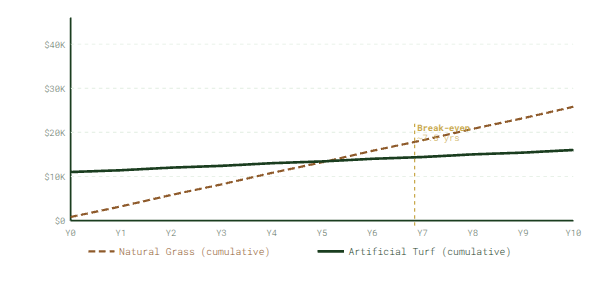
These numbers include everything: turf material, base prep, infill, labor, and disposal. What the numbers do not include is the long-term water and maintenance savings that typically pay back the investment within 6 to 10 years for homeowners.
Sources: Home Advisor 2026, Angi Cost Report 2025, Texas Water Development Board, RS Means Construction Data 2026
Cost Per Square Foot: Full Breakdown
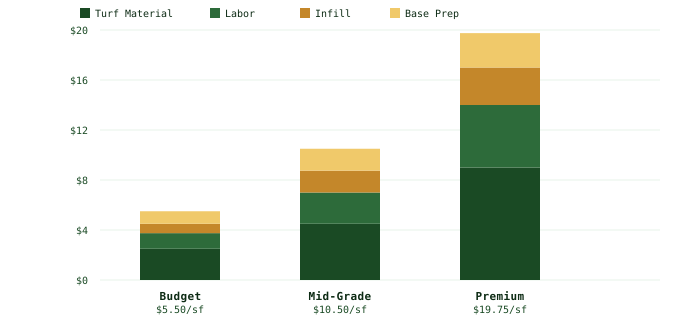
Understanding what makes up the per-square-foot price is the fastest way to identify where your project cost falls. Every installation has four core cost layers. The chart below shows how each layer stacks at different quality tiers.
Cost Component Stack by Quality Tier ($/sq ft installed)
Artificial Turf Backyard Cost by Project Size
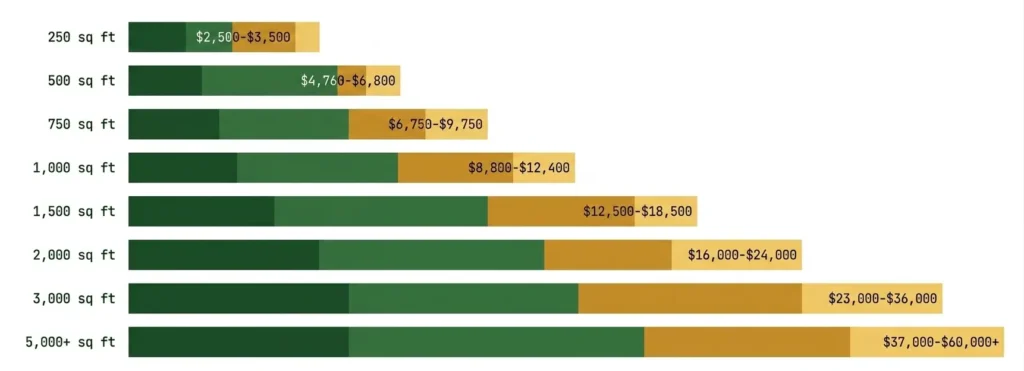
The larger your project, the lower your per-square-foot cost typically drops. Contractors can price larger jobs more efficiently, and bulk turf pricing from suppliers kicks in above 500 sq ft. Use this table as a direct reference for your specific backyard square footage.
Total Installed Cost by Backyard Size (Mid-Grade Turf)
| Backyard Size | Budget Install | Mid-Grade Install | Premium Install | $/sq ft Range |
|---|---|---|---|---|
| 250 sq ft | $1,375 | $2,625 | $3,900 | $5.50 - $15.60 |
| 500 sq ft | $2,750 | $5,250 | $7,875 | $5.50 - $15.75 |
| 750 sq ft | $4,050 | $7,500 | $11,250 | $5.40 - $15.00 |
| 1,000 sq ft | $5,200 | $9,500 | $14,500 | $5.20 - $14.50 |
| 1,500 sq ft | $7,200 | $13,500 | $20,000 | $4.80 - $13.33 |
| 2,000 sq ft | $9,000 | $17,000 | $25,500 | $4.50 - $12.75 |
| 3,000 sq ft | $12,900 | $24,000 | $36,000 | $4.30 - $12.00 |
| 5,000 sq ft | $20,000 | $38,000 | $57,000 | $4.00 - $11.40 |
Turf Material Cost Comparison by Type
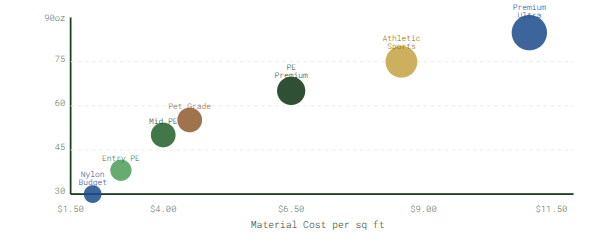
The single biggest variable in artificial turf backyard cost is the turf product itself. Pile height, face weight (oz per sq yd), blade shape, and fiber type all affect price. The table below compares the common turf categories Texas Tuff carries and installs across the state.
Total Installed Cost by Backyard Size (Mid-Grade Turf)
| Turf Type | Face Weight | Pile Height | Material Cost/sf | Best Use | Lifespan |
|---|---|---|---|---|---|
| Budget Nylon | 28-32 oz | 1.0" - 1.25" | $1.25 - $2.00 | High-traffic utility areas | 8-12 yrs |
| Entry Polyethylene | 34-40 oz | 1.25" - 1.5" | $2.00 - $3.00 | Small patios, low use | 10-14 yrs |
| Mid-Grade PE | 42-55 oz | 1.5" - 1.75" | $3.00 - $5.50 | Residential backyard | 12-16 yrs |
| Pet-Specific | 48-60 oz | 1.5" - 2.0" | $3.75 - $6.00 | Homes with dogs/pets | 12-15 yrs |
| Premium Landscape | 58-72 oz | 1.75" - 2.25" | $5.50 - $8.00 | Showcase backyards | 15-20 yrs |
| Sports Athletic Grade | 70-80 oz | 2.0" - 2.5" | $7.00 - $10.00 | Backyard courts, fields | 15-20 yrs |
| Ultra Premium / Noodle | 80-92 oz | 2.25" - 3.0" | $9.50 - $13.00 | Luxury residential | 18-25 yrs |
Labor and Installation Cost Breakdown
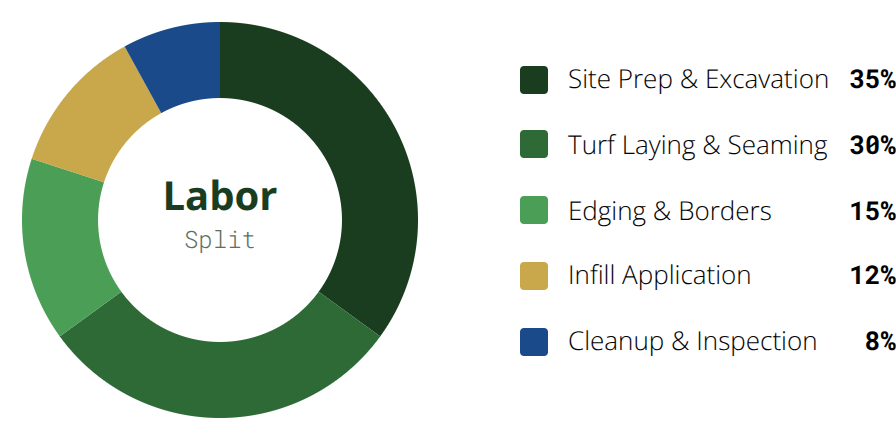
Labor accounts for roughly 25% to 35% of total artificial turf backyard installation cost. The range is wide because installation complexity varies by site. A flat, rectangular backyard with no existing structures costs far less to install than a sloped lot with trees, retaining walls, or existing concrete.
Where Labor Hours Go: Installation Time Allocation
Installation Complexity Multipliers
Every site has a complexity factor that adjusts the base labor rate. Pricing is calculated upfront so there are no surprises at project completion.
| Site Condition | Complexity Level | Labor Multiplier | Typical Extra Cost |
|---|---|---|---|
| Flat rectangular lawn, easy access | Standard | 1.0x | $0 |
| Moderate slope (under 10%) | Moderate | 1.15x | +$0.30-$0.60/sf |
| Irregular shape, landscaping obstacles | Moderate | 1.20x | +$0.40-$0.80/sf |
| Existing sod removal required | Moderate | 1.25x | +$0.50-$1.00/sf |
| Steep slope or terraced yard | High | 1.40x | +$1.00-$2.00/sf |
| Tree roots requiring removal | High | 1.35x | +$0.75-$1.50/sf |
| Heavy clay soil, drainage install needed | High | 1.50x | +$1.25-$2.50/sf |
| Rooftop or balcony application | Very High | 1.75x | +$2.00-$4.00/sf |
What Drives the Final Price of Artificial Turf
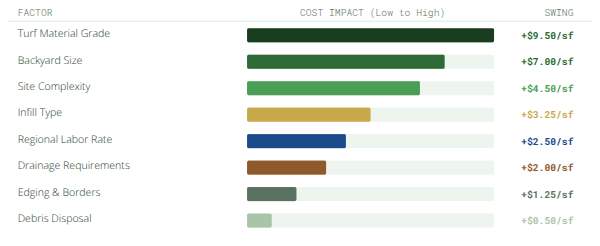
Artificial turf backyard cost is not a fixed number. Eight primary variables push a project toward the low end or high end of the pricing spectrum. Knowing where your project sits on each variable gives you an accurate estimate before you call a contractor.
Cost Impact by Factor: Low vs High Influence
Long-Term ROI: Artificial Turf vs Natural Grass in DFW
The backyard artificial turf cost comparison against natural grass looks unfavorable in year one. By year five, the math flips. DFW homeowners spend an average of $1,800 to $3,200 per year maintaining natural grass, accounting for water, fertilizer, mowing, and seasonal repair. Artificial turf eliminates nearly all of that.
Cumulative Cost Comparison: Artificial Turf vs Natural Grass (1,000 sq ft)
DIY vs Professional Artificial Turf Installation Cost
DIY artificial turf installation looks attractive on paper. The reality for most homeowners is that base preparation, drainage, and seaming are skills that take years to develop. Poor installation voids most manufacturer warranties and creates drainage problems that are expensive to fix.
How Artificial Turf Gets Installed: Step-by-Step Flowchart
Understanding the installation sequence helps you evaluate contractor bids and identify which steps are being skipped on low-cost proposals. Every legitimate professional artificial turf installation follows these eight stages.
01. Site Measurement and Assessment
Contractor measures the area, evaluates soil type, existing drainage, and slope. Soil core tests may be done in clay-heavy DFW markets.
02. Existing Material Removal
Sod, rocks, and organic debris are removed to a depth of 3 to 4 inches. Skipping proper depth is the most common cause of turf failure.
03. Grading and Drainage
Sub-base is graded for a 1% to 2% slope to ensure water runoff. In Houston and other high-rainfall Dallas Fort-Worth markets, perforated pipe drainage may be required.
04. Crushed Aggregate Base Installation
3 to 4 inches of compacted decomposed granite or crushed aggregate is laid and compacted in two lifts. This is the structural foundation of the turf system.
05. Weed Barrier Installation
Commercial-grade weed fabric is laid over the compacted base. Residential fabric from big-box stores does not hold up under turf applications.
06. Turf Cutting, Laying, and Seaming
Turf rolls are cut to fit, laid in the same pile direction, and seamed with adhesive and seam tape. Seam quality determines whether the finished installation looks professional or amateur.
07. Securing and Edging
Turf perimeter is secured with galvanized nails or staples at 6-inch intervals. Borders are installed in concrete, bender board, or steel edge depending on design spec.
08. Infill Application and Final Brushing
Infill is applied at manufacturer-specified rate (typically 1.5 to 3 lbs per sq ft), then power-brushed into the turf blades to lift pile and achieve final appearance.
Frequently Asked Questions
How much does artificial turf cost per square foot in 2026?
Most homeowners pay between $5.50 and $19.75 per square foot installed. The price depends on the type of turf, the size of the yard, and how complex the installation is. A common price range for standard backyards is $8.50 to $14.50 per sq ft.
What is the average total cost for a backyard turf installation?
For a typical 1,000 sq ft backyard, the total cost is usually between $8,000 and $15,000. This cost of artificial turf in a backyard includes turf, labour, base materials, and cleanup after the job is done.
What factors affect the total cost the most?
The biggest cost factors are turf quality, yard size, soil condition, drainage needs, and yard shape. The cost of artificial turf backyard projects can vary significantly depending on these factors. For example, a flat yard costs less than a sloped or uneven yard.
How much does artificial turf cost for a backyard?
The cost to install artificial turf in a backyard depends on the size of the area, turf selection, ground preparation, drainage requirements, and installation complexity. Larger and straightforward yards generally have a lower cost per square foot than smaller or more challenging sites.
Is artificial turf cheaper than natural grass over time?
Yes, in most cases. Artificial turf costs more at the start, but it saves money over time. Most homeowners recover their cost in about 6 to 10 years because they no longer pay for watering, mowing, or lawn care.
Does artificial turf increase home value?
Yes, it can. A clean, low-maintenance yard is attractive to buyers. In some cases, it can increase home value by 5% to 15%, especially in areas where water savings matter.
How much does artificial turf cost for backyard projects with complex landscaping?
The cost of artificial turf in backyard projects with slopes, curves, drainage work, existing landscaping, or difficult access can be higher than a standard installation. A professional site assessment is the best way to determine the actual project cost.
How to Get an Accurate Artificial Turf Quote in Dallas Fort-Worth
To get an accurate artificial turf quote in the Dallas–Fort Worth area, you need more than a basic price per square foot. At Texas Tuff, every estimate starts with a full on-site check. We look at soil type, drainage, slope, access, and turf choice. These details can change the cost a lot, which is why every yard is priced based on its real conditions.
Each Texas Tuff quote includes a clear breakdown of materials, base work, labor, infill, and disposal. This helps homeowners see exactly what they are paying for. In the DFW area, clay soil and drainage needs are common, so a detailed estimate helps avoid surprise costs during the project.
When you book an on-site visit with Texas Tuff, you get a detailed and honest quote made for your specific yard. You also get expert advice on turf options and long-term value. This helps you choose the right solution based on quality, durability, and cost over time.
Get a fast, accurate estimate for your backyard artificial turf project. Your final cost depends on size, turf type, and site conditions, with no guesswork and clear pricing tailored to your space.