

Infill is the part nobody notices until it’s wrong. The turf looks great in every listing photo. What actually decides whether your yard smells fine in August, or whether the blades stay standing after two years of a Labrador using it as a racetrack, is the material packed down between the fibers.
Picking the right artificial grass infill for dogs comes down to three things: odor control, heat, and how long the stuff actually lasts under a pet’s routine. Get it wrong, and you’ll be regrading the yard sooner than you’d like. Get it right,t and the turf just works, season after season.
What Infill Actually Does
Infill sits low, between the blades, and does three jobs most people never think about. It weighs the turf down so it doesn’t shift underfoot. It holds the fibers upright instead of letting them mat flat. And depending on the material, it either helps drainage or gets in the way of it.
Skip infill entirely and turf still looks fine in the showroom. Six months in, with a dog running on it daily, it flattens fast and starts sliding at the seams.
Silica Sand: Cheap, but It Ignores the Real Problem
Silica sand is the default infill on a lot of budget installs. It’s affordable, it’s everywhere, and it does one job well: it adds weight so the turf stays put.
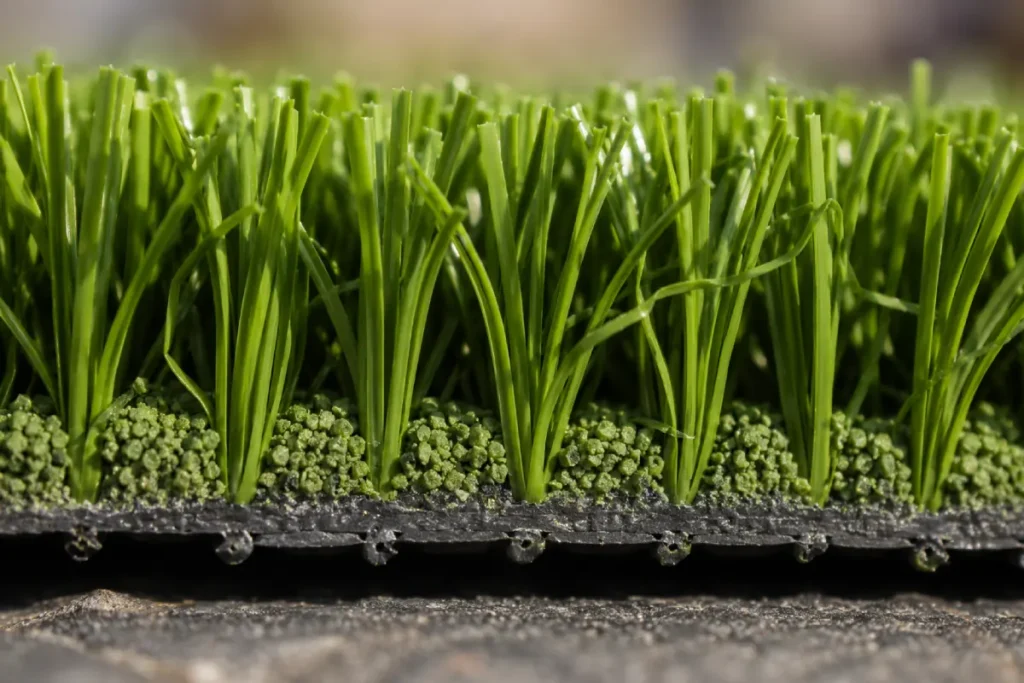
That’s about where the benefits stop for a dog owner. Sand has no odor-fighting properties at all, so urine just sits in it until you rinse the area yourself. It also holds heat. On a hot afternoon, sand-infilled turf can get uncomfortable enough that a dog avoids the yard entirely, which somewhat defeats the purpose of installing it. Fine for a low-traffic decorative lawn. Not great where a pet actually lives.
Zeolite: The Go-To for Odor
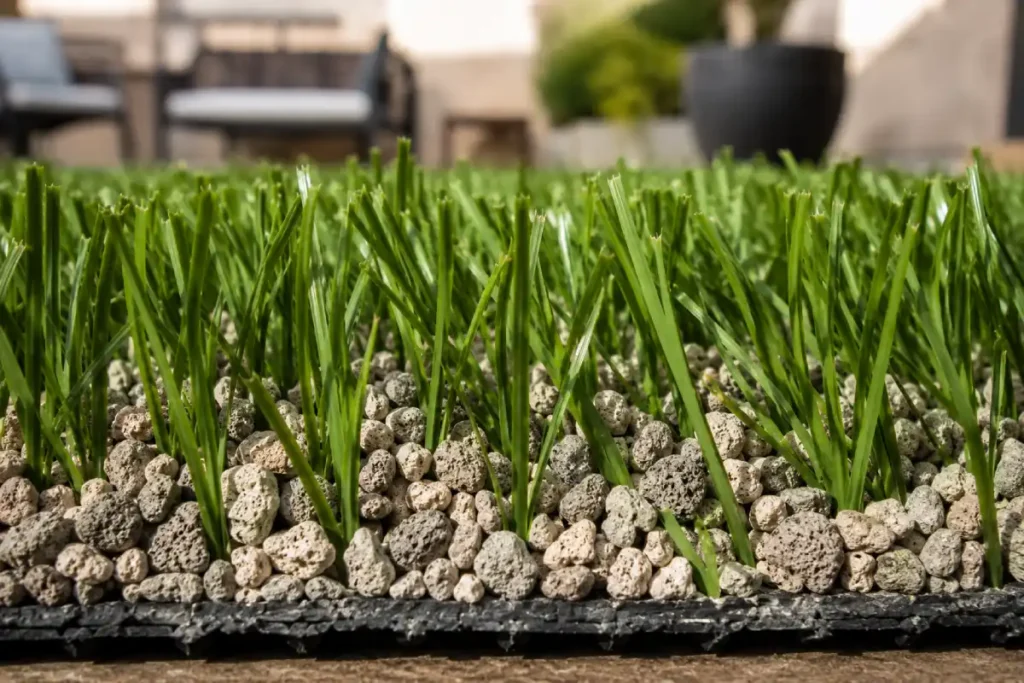
Zeolite is a natural volcanic mineral, and it’s become the standard answer for pet odor because it actually works on the chemistry of the problem instead of masking it. The mineral structure grabs ammonia molecules from urine and neutralizes them, rather than letting them sit and off-gas every time the yard warms up.
It also runs cooler than plain sand, since the material holds moisture and releases it slowly, which pulls some heat out of the surface through evaporation. That’s a real advantage in a Texas summer, where turf surface temperature is often the actual complaint, not the grass itself.
The tradeoff: zeolite breaks down and needs topping up periodically, usually every year or two depending on how many dogs are using the space and how often it gets rinsed.
Coated Sand: The Middle Ground
Acrylic-coated sand infill takes a regular silica core and wraps it in a resin coating, often paired with an antimicrobial treatment that resists bacteria and mold growth. The rounded shape drains better than raw sand and resists compacting over the years, which keeps the turf performing the same way in year four as it did on install day.
It costs more upfront than plain sand. For a household with more than one dog, or a yard that gets heavy daily use, it tends to pay for itself by cutting down on how often you’re rinsing and re-treating the area.
Organic Infill: Worth Knowing, Worth a Caveat
Walnut shell, coconut fiber, cork, and similar organic infills show up a lot in “natural” pet turf recommendations, and there’s a real case for them. They’re soft underfoot, chemical-free, and drain well.
The catch is durability. Organic material breaks down faster than sand or zeolite and typically needs replacing every year or so in a high-traffic dog area. Worth considering for a low-traffic side yard. Less practical as the main infill under a daily-use dog run.
Best Pet-Friendly Infill Options for Dog Runs
A dedicated dog run is a different situation than a general backyard, and it changes the calculation. Concentrated urination in one fixed area, heavier daily traffic, and less room for infill to spread the load all push toward the more resilient options rather than the cheapest one.
For a real dog run, a layered approach tends to hold up best: a coated sand base for structure and drainage, topped with a zeolite layer for odor control where the dog actually goes. Installers who build a lot of dog runs generally land on somewhere around two to three pounds of infill per square foot. Less than that, and the blades stop standing up straight within a season.
A Final Thought on Choosing the Right Infill for Your Yard
None of these materials are wrong, exactly. They’re built for different situations. A rarely-used side lawn can get by on plain sand. A yard with one dog and moderate use does well with zeolite alone. A multi-dog household, or a dedicated run, usually needs the combination approach.
Choosing the right artificial grass infill for dogs really is a matter of matching the material to how the space actually gets used, not just picking whatever the installer had left over from the last job.
If you’re putting in turf for a yard your dogs will actually live on, we can walk through infill options with you before installation, based on how many dogs you have and how the space gets used day to day. That decision matters more for long-term performance than most people expect going in.
Frequently Asked Questions
Do I need special infill if I only have one dog?
Not necessarily. A single dog with a large yard puts far less concentrated stress on the turf than multiple dogs or a small run. Zeolite alone often handles it fine.
How often does pet turf infill need to be replaced?
Zeolite and organic infills typically need topping up every one to two years. Coated sand lasts longer, often five years or more, since it resists breaking down.
Can I mix different infill types?
Yes, and it’s common. A base layer of coated sand for structure with a top layer of zeolite for odor control is one of the more effective combinations for pet areas.
Does infill affect how hot the turf gets?
Significantly. Sand-based infills, especially dark or coated ones, retain more heat than zeolite, which cools somewhat through moisture evaporation. In hot climates, that difference is often what a dog actually reacts to.