
Most artificial turf projects that look bad at six months did not fail because of the turf. They failed because of the tools used to install it. Wrinkled seams, uneven base, loose edges, and poor drainage all trace back to shortcuts taken during installation.
In DFW, those shortcuts hurt more than they would in other climates. Summer ground temperatures here regularly exceed 160 degrees Fahrenheit on hardscape. Turf that was not properly tensioned or infilled correctly during installation will shift, bubble, or delaminate once that heat gets to work on it. That is not a product problem. That is an installation problem.
This guide covers every category of artificial grass installation tools you need, from base prep through final grooming. We break down which tools are worth owning, which ones are worth renting, and where the DIY line actually sits for a North Texas project.
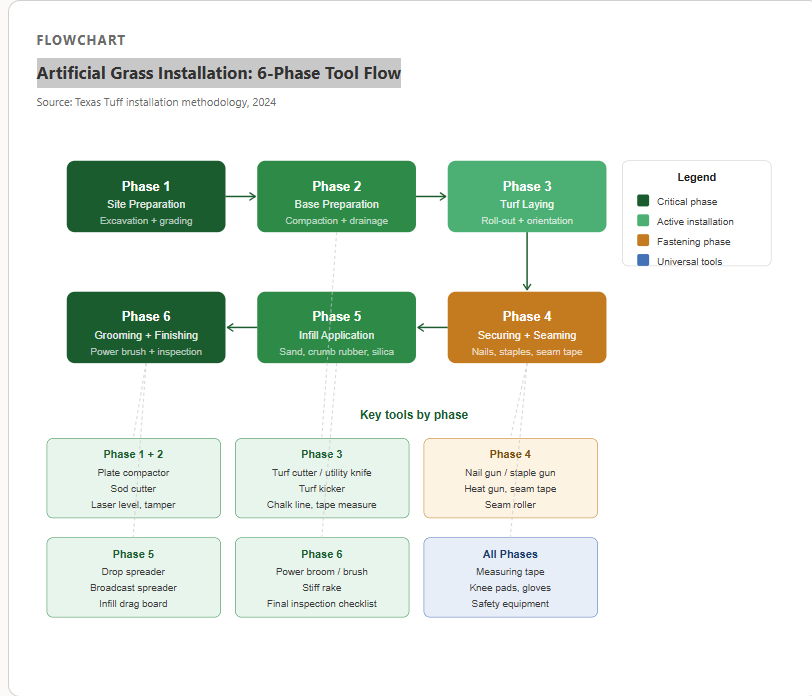
Full Artificial Grass Installation Tools List at a Glance
Before the section-by-section breakdown, this table gives you the complete picture. Every tool is categorized by phase, typical cost, and whether it suits a DIY project or requires professional-grade equipment.
| Tool / Equipment | Phase | Avg. Cost | Rent / Own | DIY or Pro |
| Plate compactor | Base prep | $200/day rental | Rent | Both |
| Sod cutter | Site prep | $80/day rental | Rent | DIY |
| Laser level / transit level | Base prep | $40–$300 | Own | Both |
| Compaction depth gauge | Base prep | $25–$60 | Own | Pro |
| Turf cutter / electric cutter | Cutting | $120/day rental | Rent | Both |
| Hook-blade utility knife | Cutting | $15–$35 | Own | DIY |
| Straight edge / aluminum guide | Cutting | $20–$50 | Own | DIY |
| Chalk line | Layout | $10–$20 | Own | DIY |
| 25 ft. tape measure | All phases | $15–$30 | Own | DIY |
| Turf kicker / power stretcher | Laying | $60/day rental | Rent | Both |
| Pneumatic nail gun | Securing | $200–$400 | Own/Rent | Pro |
| Galvanized nails (6-inch) | Securing | $30–$60/box | Buy | Both |
| Hammer stapler | Securing | $40–$80 | Own | DIY |
| Seam tape (hot melt) | Seaming | $0.80–$1.50/ft | Buy | Both |
| Heat gun / iron | Seaming | $40–$150 | Own | Both |
| Seam roller | Seaming | $25–$60 | Own | Both |
| Drop spreader | Infill | $50–$180 | Own | DIY |
| Broadcast spreader | Infill | $60–$200 | Own | DIY |
| Infill drag board | Infill | $30–$80 | Own | Both |
| Power broom / turf brush | Grooming | $300–$900 | Rent/Own | Pro |
| Stiff poly broom | Grooming | $20–$45 | Own | DIY |
| Knee pads | All phases | $20–$50 | Own | DIY |
| Work gloves | All phases | $10–$20 | Own | DIY |
Base Preparation Equipment
The base is everything. In DFW’s black clay soil, getting this phase right means the difference between turf that drains properly and turf that turns into a soggy mat after a spring storm. Every tool in this section does one job: create a firm, level, permeable foundation.
Plate Compactor
A plate compactor is the single most important piece of synthetic turf installation equipment in the entire project. You use it to compact the decomposed granite or crushed rock base to the density needed for long-term stability. Hand tampers do not get there. The vibrating plate reaches compaction levels that a manual tool cannot replicate.
Sod Cutter
If existing grass or vegetation needs to go, a sod cutter removes it cleanly at a consistent depth. Walk-behind electric models work for most residential projects. The alternative, hand digging, is slower and leaves an uneven subgrade that causes problems later.
Laser Level or Transit Level
Proper grade is what keeps water moving toward drains rather than pooling under your turf. A laser level tells you exactly where high and low spots are so you can fix them before laying anything. If you’re planning to install turf in your backyard, this step matters even more, since DFW’s natural grade variation can throw off drainage if it’s missed.
Compaction Depth Gauge
Professional installers use a compaction depth gauge to verify that the base meets density specs before continuing. For a DIY install, you can substitute a visual check: a properly compacted DG base should not leave shoe prints when you walk on it.
Cutting and Shaping Tools
Artificial turf equipment for cutting falls into two categories: tools that make straight cuts across large rolls, and tools that handle curves, custom shapes, and tight corners. Get both.
Hook-Blade Utility Knife
The hook blade is the workhorse of turf cutting. The curved blade grabs the backing and pulls it apart cleanly without cutting through individual fiber strands. Standard utility blades tear the backing. A hook blade is not optional. Buy several replacements before you start, because they dull fast on thicker backings.
Electric Turf Cutter
For large, straight cuts across a full roll, an electric turf cutter gets the job done in a fraction of the time. It’s worth renting for any project over 600 square feet. The motor drives a blade through even the thickest commercial-grade backings without the fatigue that comes with hand cutting.
Aluminum Straight Edge
A 4-foot aluminum straight edge is the guide for your hook blade. Do not cut turf freehand. A wandering cut at a seam creates a gap that shows from 10 feet away and only gets wider as the backing relaxes. Clamp the straight edge down, score once on the guide, then make the full cut in a second pass.
Chalk Line
Snap a chalk line before any significant cut. This is especially important when you need to orient pile direction the same way across two panels that will be seamed together.
Common mistake: Cutting from the face side instead of the backing side. Always flip the turf over or cut from the back. Cutting slices face-up through fiber strands creates a visible bald line at every seam edge.
Securing and Fastening Tools
How you anchor turf to the base determines whether it stays flat for 15 years or starts creeping and bubbling after the first summer. DFW’s heat cycles expand and contract materials more aggressively than milder climates. Proper fastening is what keeps that tension stable.
Pneumatic Nail Gun (Framing Nailer)
A pneumatic framing nailer loaded with 6-inch galvanized nails drives fasteners through the backing and into the base at the correct angle and depth in a single motion. The consistent depth prevents the nail head from dimpling the backing surface. Manual hammering at the perimeter of a 1,000-square-foot install is both slow and inconsistent.
6-Inch Galvanized Nails
The nail matters as much as the gun. Galvanized nails resist corrosion that develops from moisture in the base layer. Standard bright nails rust within two seasons in DFW’s soil and lose holding strength. Use 16-gauge, hot-dipped galvanized nails at minimum. Space them 6 inches apart along all perimeter edges and 12 inches along interior seams.
Hammer Stapler
A hammer stapler works well for lighter-gauge turf and securing perimeter edges where a nail gun is awkward. It is the right tool for attaching turf to wood decking or timber perimeter boards. Use 1.5-inch to 2-inch staples with a crown wide enough to grip the backing without tearing it.
Turf Kicker
This is a carpet installer’s tool, and it is one of the most useful pieces of artificial turf installation equipment that DIYers overlook. The turf kicker stretches the panel tight before fastening. Without it, small wrinkles and tension inconsistencies show up after the turf settles. Rent one for any project over 300 square feet.
Seaming Tools
A visible seam is the number one complaint on artificial grass installations done without proper seaming tools. Seaming synthetic turf is part adhesive work, part heat application, and part patience.
Hot-Melt Seam Tape
Seam tape is a woven polyester strip pre-coated with a thermoplastic adhesive that activates at heat gun temperatures. It sits under the joined edges of two turf panels and bonds them to a single backing. Use tape rated for outdoor UV exposure. Cheap seam tape delaminates under DFW summer temperatures and will pull apart within a season.
Artificial Turf Seam Iron
A dedicated seam iron heats the tape evenly across its full width, which a standard heat gun cannot do consistently. The flat base plate applies uniform pressure as you move it forward. Seam irons run at around 300 degrees Fahrenheit, which is the activation temperature for most hot-melt tapes. This is the correct tool for production seaming on large areas.
Heat Gun
A heat gun works for small seam repairs and touch-up work where a full iron would be overkill. Use it on short runs under 3 feet or for re-activating tape at a failed seam edge. Keep the gun moving constantly. Dwelling in one spot overheats the tape and weakens the bond.
Seam Roller
Immediately after pressing the turf edges into the activated tape, a seam roller applies the downward force that drives the backing into the adhesive. Roll perpendicular to the seam line in short passes. This step is what determines whether the bond holds long-term or peels up at the edges.
Infill Application Equipment
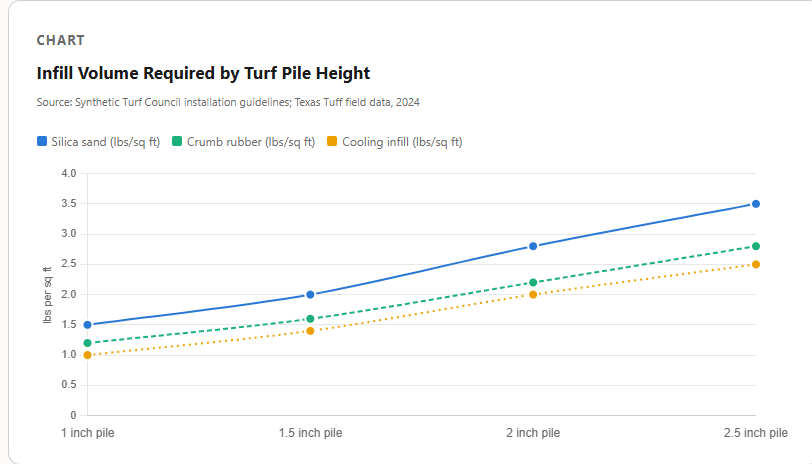
Infill is the material spread into the turf pile after installation. It keeps blades upright, adds drainage, provides cushioning, and stabilizes the turf in high-traffic areas. Getting infill application right requires the right spreading equipment and the right volume.
Drop Spreader vs. Broadcast Spreader
A drop spreader delivers infill directly below the hopper in a controlled band. It is the better choice for crumb rubber and heavier infill because it reduces scatter and overspray onto surfaces you do not want to cover. A broadcast spreader covers more area per pass and works better for silica sand, which flows more freely and does not need the precision of a drop spreader.
Infill Drag Board
After spreading, a weighted drag board levels the infill evenly through the turf pile. Pull it in multiple directions to work infill down between the fiber rows. Without this step, infill sits on top of the pile and displaces with the first foot traffic.
Finishing and Grooming Equipment
The grooming phase is what makes a freshly installed turf field look like a professionally finished lawn versus a carpet sample. Power grooming equipment lifts the fiber blades that get flattened during installation, distributes remaining infill, and removes the installation footprints left from foot traffic during the project.
Power Broom / Turf Brush
A power broom with nylon or poly bristle heads is the most effective piece of synthetic turf maintenance equipment for post-installation grooming. Counter-rotating brushes lift the pile and push infill down simultaneously. Professional installers use self-propelled units on larger areas. Rental units from equipment centers are available for residential projects.
Stiff Poly Broom
A quality stiff poly broom handles finishing detail work in corners, along edges, and in narrow spaces where a power broom cannot reach. Choose one with tightly packed, medium-stiff nylon bristles. Soft bristles do not lift the pile. Stiff metal bristles can snag and pull turf fibers out of the backing.
Leaf Blower
After brooming, a leaf blower removes loose debris and clears any infill that landed on surrounding hardscape or garden beds during the spread process. This is also how you clear fine debris from the surface during ongoing maintenance without damaging the pile.
Cost Breakdown by Project Size
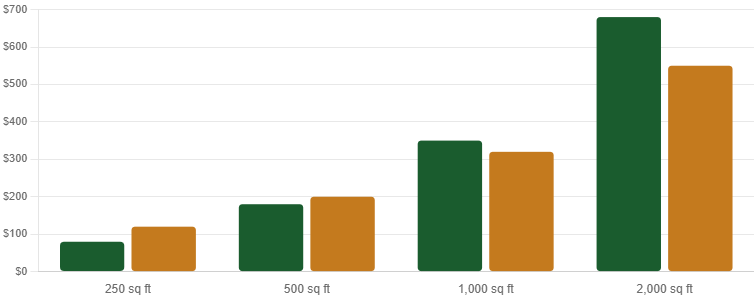
Tool costs for synthetic turf installation scale with project size because larger projects justify rental of professional-grade equipment that would be overkill for a 250-square-foot patio installation. The numbers below are based on DFW market rental and retail pricing as of 2025.
DIY vs. Professional Installation: Where the Tool Line Sits
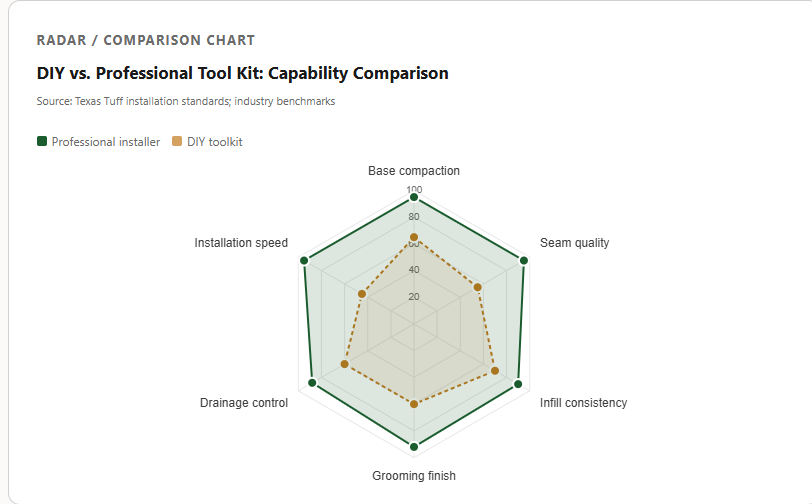
The honest answer is that a motivated DIYer can complete a residential artificial turf install with rented and purchased tools. But the complexity grows fast once you get past a simple rectangular area with no seams.
- DIY-Friendly Projects: Simple rectangular or L-shaped areas under 600 sq ft with one or no seams
- Borderline DIY: Multiple panels with seams, tight curves, or areas adjacent to pool coping or concrete
- Call a Pro: Sports surfaces, slopes, drainage re-grading, or areas over 1,500 sq ft.
- Tool costs absorbed into labor
- Always Use a Pro: Commercial properties, HOA-governed spaces, or projects requiring permits.
The Equipment Gap
The biggest difference between a DIY tool kit and a professional installer’s truck is not the quality of individual hand tools. It is the specialized equipment: the production seam iron, the self-propelled power broom, the compaction testing gauge, and the laser-guided grading system. These tools either cost too much to own for a one-time project or require training to use correctly.
What a professional installer brings is not just a better tool set. It is the judgment that comes from using those tools on hundreds of installs. Knowing how much tension to apply before fastening, reading a base for drainage problems before they develop, and setting seams that are invisible from any angle takes repetition that tools alone cannot replace.
Pre-Installation Tool Checklist
Before the first roll of turf touches the ground, make sure every tool on this list is on site. Missing equipment mid-install causes delays that compound, especially when adhesives and seam tapes are time-sensitive once activated.
- Plate compactor (rented)
- Laser level or string line and stakes
- Hook-blade utility knife with 6 spare blades
- 4-foot aluminum straight edge
- Chalk line and chalk
- 25-foot tape measure
- Turf kicker (rented)
- Pneumatic nailer with compressor OR hammer stapler
- 6-inch galvanized nails (minimum 2 boxes)
- Hot-melt seam tape (linear footage of all seams plus 15%)
- Seam iron or heat gun
- Seam roller
- Drop spreader or broadcast spreader.
- Infill drag board
- Stiff poly broom
- Leaf blower
- Knee pads and work gloves
- Safety glasses
Frequently Asked Questions
What is the most important tool for artificial grass installation?
The plate compactor. The entire system, including the turf, the infill, and the seams, depends on having a stable, firm, properly graded base underneath. If the base fails, the installation fails. Everything else is secondary to getting the subbase right.
Can I install artificial turf without a turf kicker?
You can, but you should not on projects over 300 square feet. Without a kicker, you cannot apply consistent tension across the panel before fastening. Uneven tension creates wrinkles and bubbles that become visible after the turf relaxes in the heat. Rent a carpet kicker from any equipment rental location for under $60 per day.
What kind of knife do you use to cut artificial grass?
A utility knife with a hook blade, also called a J-blade or carpet knife hook. Standard flat utility blades cut through the backing but also slice through fiber strands at the cut edge. The hook blade separates the backing between fiber rows without touching the strands. Always cut from the backing side, never the face side.
Do I need special tools for seaming artificial grass?
Yes. You need hot-melt seam tape, a seam iron or heat gun, and a seam roller. Pressure-sensitive tape and staples alone do not create a seam durable enough for DFW’s heat cycles. The seam iron activates the thermoplastic adhesive on the tape at the correct temperature, and the seam roller drives the backing into the adhesive before it cools.
How do I spread infill without a drop spreader?
You can scatter infill by hand from a bucket and then drag it level with a stiff broom, but the result is uneven infill depth, which affects pile height and drainage consistency. A drop spreader costs around $60 to $80 at any hardware store and makes the job significantly more consistent. For a one-time install, it is worth buying.
How many nails per linear foot do you need to secure artificial turf?
The industry standard is one 6-inch galvanized nail every 6 inches along all perimeter edges, and one nail every 12 inches along interior seam edges. For a 500-square-foot rectangular installation with a perimeter of roughly 90 linear feet, you need approximately 180 perimeter nails plus whatever interior seam length you have.
What tools do I need for ongoing synthetic turf maintenance?
For routine maintenance, keep a stiff poly broom, a leaf blower, and a garden hose on hand. A power brush once or twice per year restores the pile after heavy use. Pet areas benefit from a diluted enzyme cleaner applied with a garden sprayer. You do not need the installation tools for maintenance.
Let Texas Tuff Handle the Tools and the Installation
Our DFW crews bring every piece of professional-grade synthetic turf equipment to your project. No rentals, no guesswork, and a 10-year installation warranty behind the work.