

Skip the infill, and a brand-new lawn can start looking weary in a single summer! The blades lie flat, the seams begin to lift. And a yard that cost thousands ends up looking cheap, usually because the layer underneath was either the wrong type or missing altogether.
That layer is artificial turf infill. It’s the sand or coated granules settles at the base where you never really see it. But even though it stays out of sight, it’s doing much of the work, keeping the grass standing upright, helping water drain, and holding odor down over time.
So before you order any, this guide walks through what turf infill does, which type actually suits your yard, and how much you’ll need to buy.
What Is Artificial Turf Infill?
Infill is the loose granular material spread over the turf and brushed down to the backing once the grass is laid. People search for it a dozen ways. What is turf infill? What is infill for turf? What is infill for artificial turf? Same thing, same answer. It is sand, rubber, or a coated mineral sitting at the base of the blades, doing the structural work you never see.
Suppliers label it all sorts of ways: artificial grass infill, infill for synthetic grass, fake grass infill, and on some bags, turf filler, artificial grass filler, or artificial turf filler. Different words, one job.
A couple of terms trip people up. Turf beads and turf pellets almost always mean rubber granules. Synthetic turf infill is just the umbrella term. Whatever the bag says, once it is down, it all works the same way.
What Does Turf Infill Actually Do?
Infill for turf does several jobs at the same time, and that is exactly why no careful installer leaves it out. It weighs the lawn down. It shields the turf. It keeps the surface looking right season after season. The specifics break down like this:
- Blade support. Without it, the fibers lie down, and the lawn looks matted within a season.
- Weight. A loaded lawn does not lift, ripple, or creep at the seams.
- Protection for the backing and the stitching that anchors every blade, which is what buys you the extra years.
- Drainage, so water passes through instead of sitting on top. The right infill also keeps pet odor in check.
Types of Artificial Turf Infill
There is no single winner here, only the right match for the job. Budget, heat, drainage, pets; each one pushes the choice in a different direction. These are the ones you will see most.
Silica Sand
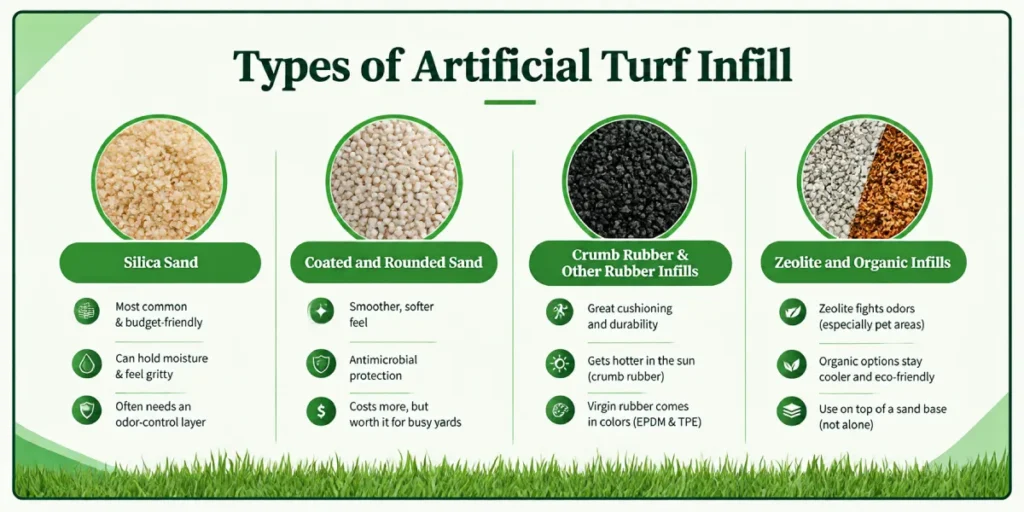
Silica sand is the old reliable, and by far the most common. It is sold under a pile of names: turf sand, sand for artificial grass, sand on artificial turf, synthetic grass sand infill, fake turf sand, but strip the label and it is washed quartz every time.
It is also the cheapest, so artificial turf sand infill is the default for low-traffic lawns and plain landscaping. The downside is the grains are sharp. Cheap artificial grass sand can feel gritty underfoot and can hold moisture, which is why silica sand for turf infill usually gets an odor-control layer on top in pet yards.
Plenty of installers skip the raw grit and go straight to a coated artificial grass sand infill or a cleaner synthetic turf infill sand blend. Either way, sand for artificial turf and sand for turf stay the go-to base.
Coated and Rounded Sand
Coating fixes the sharp-edge problem. Envirofill, SmartFill (you will also see it written smart fill), and GreenFill use rounded, acrylic-coated grains, most with an antimicrobial finish, so they fight bacteria and feel softer to walk on.
They cost more than raw sand. In a busy yard, or one with kids and dogs, they earn it.
Crumb Rubber and Other Rubber Infills
Rubber is what sports fields use, because it cushions a fall. Crumb rubber turf infill comes from recycled tires, cheap and tough, though Penn State research shows it gets hotter in the sun than anything else.
Virgin rubber, the EPDM and TPE kind, is cleaner and comes in colors. For a normal backyard, synthetic turf rubber infill is overkill. But artificial grass rubber infill does make sense for a play area or a putting fringe where you want some bounce.
Zeolite and Organic Infills
Zeolite is a porous volcanic mineral, and it soaks up the ammonia that makes pet areas smell. That is its whole appeal as a top layer. Organic picks like cork and walnut shell run cooler and suit eco-minded homeowners.
None of these should go down alone, though. They are too light to hold the turf, so they ride on top of a sand base.
What Is the Best Infill for Artificial Turf?
The real answer is that it depends, so pair the material to the use. A quiet backyard does not need what a dog run or a putting green needs. Start here:
- General lawns and landscaping: silica sand, or coated sand for a finish that lasts longer.
- Pets: coated antimicrobial sand as the base, with a zeolite top layer. This mix is the most reliable turf infill for pets, and it is what most installers point to as the best artificial grass infill for dogs.
- Putting greens: fine silica sand, which fills the short blades evenly for a true ball roll.
- Sports and play areas: crumb rubber or EPDM for shock absorption.
For a yard that takes a beating from pets, artificial turf infill for pets comes down to drainage and odor, and the sand-and-zeolite combination beats any single product.
How Much Infill Do You Need?
How much you need tracks mostly with pile height, since longer blades need more material to stay upright. Rough rule: one 50-pound bag covers 15 to 25 square feet.
The table sorts out the rest.
| Turf Use/Pile Height | Infill Needed (lbs per sq ft) |
|---|---|
| Putting green (short pile) | 1.5 to 2.5 |
| Standard lawn (1.25 to 1.75 in.) | 1.5 to 2 |
| Tall landscape turf (2 in.+) | 2 to 3 |
| Pet area | 2 to 3, plus a zeolite top layer |
| Sports field | 5 or more, in layers |
(Treat these as ballpark, not the final word. The real number moves with blade height, density, and use, so check the spec sheet for your exact product before ordering. Sorting out how much infill for turf, or how much infill for artificial grass, before you buy saves a second trip for more.)
Is Turf Infill Safe for Pets and Kids?
Sand and coated sand are widely treated as safe, and the antimicrobial versions add another layer against bacteria. Crumb rubber is where the argument sits.
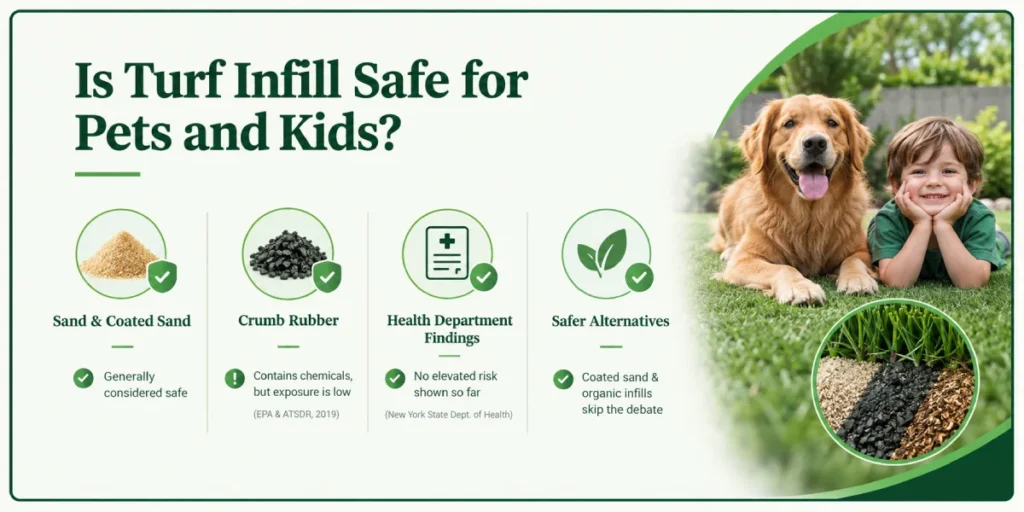
A 2019 study from the EPA and ATSDR found recycled tire crumb does contain various chemicals, but measured exposure came back low.
The New York State Department of Health landed in the same place: no elevated risk shown so far, with research still going. If any of that nags at you, coated sand and organic infills skip the debate.
Final Thoughts
Infill is the part nobody sees, and the part most turf problems trace back to. Silica or coated sand for everyday lawns, zeolite on top for pets, rubber saved for sports, and the coverage rate taken straight off the product sheet.
Get the artificial turf infill right, and the lawn stands tall, drains clean, and lasts. It is a small line item on any install, but it decides how the whole lawn ages, so it is worth a few minutes of thought before you place the order.
If you want a second opinion on which material fits your yard, the team at Texas Tuff can talk it through with you.
FAQs
Do you really need infill for artificial turf?
Almost always, yes. A few products are built to stand without it, but standard turf leans on the infill to hold the blades up, weigh the lawn down, and guard the backing. Leave it out, and you get matting and early wear.
What is the best infill for artificial turf if you have dogs?
Coated, antimicrobial sand for the base, zeolite on top. The sand handles weight and drainage, and the zeolite locks up the ammonia in urine that causes the smell. Skip plain rubber for pets, since it holds too much heat.
How much infill per square foot should you use?
Most home lawns want roughly 1.5 to 3 pounds per square foot, more for taller blades. Putting greens sit at the low end, sports fields well above. Check your turf maker’s number to be sure.
Is crumb rubber infill safe?
So far, government research, including the EPA and state health departments, has not flagged an elevated health risk, though they note the review is ongoing. If you would rather not weigh it at all, coated sand or organic infill are easy alternatives.