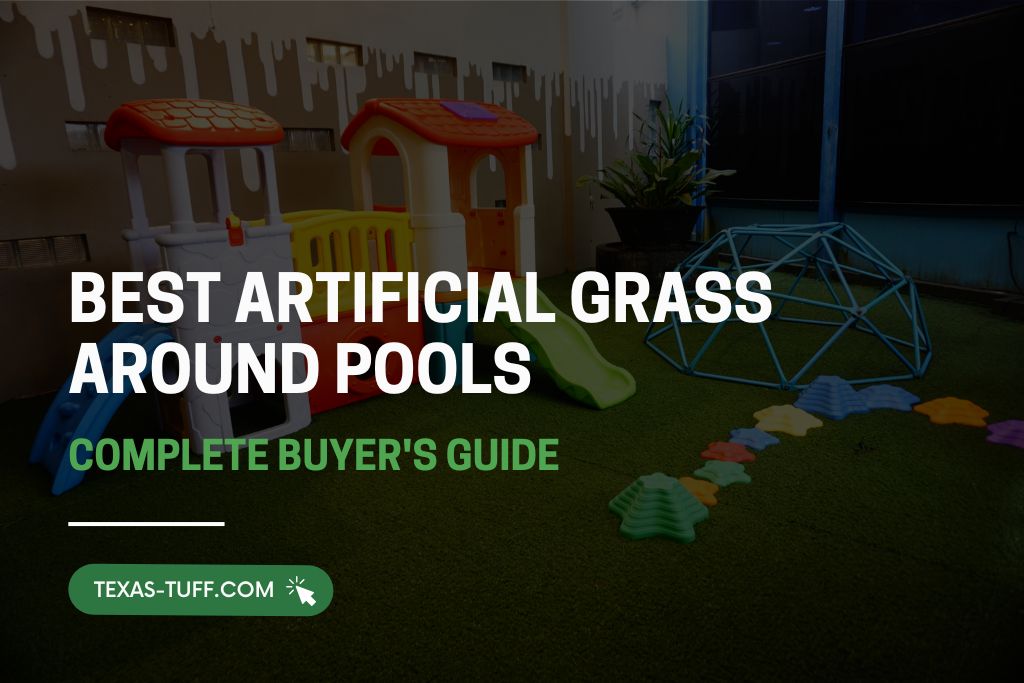
A green poolside that never gets muddy. No slipping. No mowing. Even after cannonballs and pool parties, it stays perfect.
Natural grass cannot handle these conditions. Water and chlorine damage it. Muddy footprints appear easily. Artificial grass solves these problems. It stays safe, clean, and durable.
Learn why artificial grass works best around pools. Find out the benefits, how to choose the right turf, top recommendations, installation tips, and maintenance advice.
The guide is for beginners, pros, budget-conscious buyers, and anyone in different climates.
Poolside installations can be tricky. Professional advice is recommended for complex projects.
Dive in to find your perfect poolside turf and turn your backyard into a paradise.
Why Choose Artificial Grass for Pool Areas?
Artificial grass is a smart choice for poolside areas. It solves common problems that natural grass cannot.
Cleaner and Safer
It stays clean when water splashes. No mud, dirt, or grass clippings. Better traction than wet concrete or grass reduces slips and falls.
Lasting Green Look
Stays green year-round, even with heavy use. No mowing, watering, or fertilizing needed. Resists fading from chlorine and UV rays.
Better Drainage and Durability
Water drains quickly, preventing puddles and slippery spots. Withstands foot traffic and pool chemicals, lasting longer than natural grass.
Comfortable Underfoot
Soft and cool compared with concrete or stone. Makes walking, playing, and lounging around the pool more comfortable.
Visual Comparison: Natural Grass vs. Artificial Grass
| Feature | Natural Grass | Artificial Grass |
| Drainage | Poor (muddy after rain/splashes) | Excellent (perforated backing) |
| Maintenance | High (mow, water, chemicals) | Low (brush, rinse) |
| Safety | Slippery when wet | Non-slip textures |
| Cost Over Time | Ongoing expenses | Upfront cost, long-term savings |
| Durability | Wears from chlorine/traffic | UV and chlorine-resistant |
This table makes it easy to see why artificial grass is often a better choice for pool areas. It solves drainage issues, stays green, and reduces maintenance work.
This table makes it easy to see why artificial grass is often a better choice for pool areas. It solves drainage issues, stays green, and reduces maintenance work.
Key Factors to Consider When Buying Artificial Grass for Pools
Choosing artificial grass for a pool is different from picking turf for a yard. Poolside turf must handle water, sun, chemicals, and heavy use. Look at these key features to pick the best option.
Material and Construction
Blade Material
Artificial grass is made from plastic fibers. Polyethylene (PE) feels soft and natural. It is comfortable for bare feet. Polypropylene (PP) is tougher but stiffer. Choose turf that feels soft and safe to walk on.
Backing and Drainage
The backing holds the fibers in place. For pools, it must allow water to drain. Perforated or permeable backing prevents water buildup. This keeps the surface dry and safe.
Pile Height
Pile height is the blade length. 1.0–1.5 inches works best for pool areas. It drains water well and feels soft. Taller blades can trap moisture and dry slowly.
Durability Features
UV Resistance
Pool areas get a lot of sun. UV rays can fade or weaken turf. Choose turf with UV protection to keep it looking new longer.
Chemical Resistance
Pool water contains chlorine and other chemicals. Look for turf that resists chemical damage. This prevents fading and weakening over time.
Heat Management
Pool areas get hot in the sun and on pavement. Some turf reflects heat or uses lighter colors. This keeps it cooler under bare feet.
Safety and Comfort
Non-Slip Surface
Wet turf should still provide grip. Textured blades reduce slips and falls.
Comfort Underfoot
Pool areas see a lot of barefoot traffic. Soft, dense turf feels safer and more pleasant. It protects feet and joints.
Environmental and Installation Considerations
Climate Suitability
Humid areas can retain moisture. Turf with antimicrobial properties resists mold and bacteria.
Base Requirements
Turf needs a solid base. Crushed stone or gravel improves drainage. On hard surfaces, you may need drainage tiles or mats. Good drainage prevents puddles.
Eco-Friendly Options
Some turf is made from recyclable or non-toxic materials. Look for lead-free, certified options if environmental impact matters.
Budget Breakdown
Price Ranges
Basic turf costs less but may lack pool-ready features. Higher-quality turf costs more but lasts longer and is more comfortable.
Hidden Costs
Professional installation adds to the cost. You may also need infill, edging, or base prep. Plan your budget to cover all parts.
Expert Tip
Try a Water Test: Before buying, get a sample of the turf. Pour water on it. Watch how fast it drains. Check for odors or color changes. If it drains quickly and stays stable, it is pool-ready.
Quick Checklist
Before you buy, make sure your turf has:
✔ Perforated or permeable backing for fast drainage.
✔ UV protection so it won’t fade.
✔ Chemical resistance for chlorine and pool splashes.
✔ Non‑slip texture for safety.
✔ Comfortable, soft fibers for barefoot walking.
✔ A stable base plan for water flow.
✔ A budget that covers installation and accessories.
When you choose the right features, your poolside turf will stay safe, look great, and last for years without the issues that come with natural grass.
Installation Guide for Artificial Grass Around Pools
Installing artificial grass around a pool creates a safe, clean, and beautiful space. You can do it yourself, or hire a professional. Both options have pros and cons.
| Installation Option | Pros | Cons |
|---|---|---|
| DIY Installation | • Lower upfront cost. • Full control over the process. • Personal satisfaction from completing the project. | • Time-consuming and labor-intensive. • Mistakes can be expensive to fix. • Difficult for slopes, curves, or large areas. |
| Professional Installation | • Faster and more precise results. • Expertise in drainage, seams, and edging. • Ideal for complex layouts and pool areas. | • Higher upfront cost. |
Recommendation: Hire a professional for sloped, large, or complex areas. Small, flat yards may be suitable for DIY if you have the right tools and patience.
Step-by-Step DIY Installation
1. Planning
- Measure your pool area carefully. Include all edges, corners, and curves.
- Plan a 2–4% slope away from the pool. This ensures water drains properly.
- Mark where turf seams, edges, and accessories will go.
2. Site Preparation
- Excavate the area to a depth of 4–6 inches. Remove grass, roots, rocks, and debris.
- Lay a weed barrier to prevent unwanted growth.
- Add a crushed granite or stone base for stability and drainage.
- Compact the base with a plate compactor. Make it level but maintain the slight slope.
3. Edging
- Install edging to contain the turf. Use bender board, plastic edging, or concrete curbs.
- Ensure edges are smooth and secure. This prevents turf from shifting.
- Keep edging slightly below pool coping for a seamless look.
4. Laying Turf
- Roll out the turf over the prepared base.
- Align blades in the same direction for a natural look.
- For multiple rolls, use seam tape and glue to join pieces.
- Avoid bubbles or wrinkles. Stretch the turf lightly for a flat surface.
5. Infill
- Spread silica sand or specialized antimicrobial infill evenly over the turf.
- Infill supports the blades and improves drainage.
- Brushing the turf while adding infill helps blades stand upright.
- Some infills help cool the surface and reduce heat absorption.
6. Finishing
- Brush blades upright using a stiff broom or power brush.
- Secure edges with stakes, nails, or adhesive as needed.
- Inspect seams, edges, and corners to make sure everything is tight.
- Rinse the area to remove dust or debris.
Pool-Specific Tips
- Integrate with pool coping: Turf should meet the pool edge cleanly without gaps.
- Avoid spikes or sharp stakes near plumbing: Pipes and lights can be damaged.
- Use permeable adhesives: Glue should allow water to drain through, preventing puddles.
- Check slope regularly: Even a slight deviation can cause water to pool near the pool deck.
- Consider heat-reflective infill to keep the turf comfortable under bare feet.
Common Pitfalls
Many installation mistakes are preventable. Cross-reference with our post “11 Artificial Grass Mistakes (and How to Fix Them)”.
- Skipping proper base preparation.
- Poor seam placement.
- Ignoring drainage.
- Using low-quality turf or adhesives.
Following the steps above and avoiding these errors ensures a smooth, safe, and long-lasting installation.
Tools Needed
Here’s a basic tool list for DIY pool turf installation:
- Tape measure and chalk line – for accurate layout.
- Shovel and wheelbarrow – to remove old soil.
- Plate compactor – to level the base.
- Bender board or edging – to secure turf edges.
- Utility knife – for cutting turf to shape.
- Seam tape and adhesive – for joining turf rolls.
- Stiff broom or power brush – to lift blades and spread infill.
- Rake – to distribute base and infill evenly.
Installing artificial grass around a pool takes planning, the right materials, and attention to detail. Proper slope, drainage, and edging are key. Turf must be secured, brushed, and properly infilled.
Whether you DIY or hire a professional, following these steps ensures a safe, clean, and beautiful poolside. Artificial grass can last many years with minimal maintenance when installed correctly.
Pro Tip: Always test water flow and drainage before finalizing the turf. This avoids puddles and slipping hazards.
Maintenance and Longevity Tips
Keeping artificial grass around your pool clean and long-lasting is easier than natural grass. Small habits prevent problems like matting, odors, and fading.
Routine Care
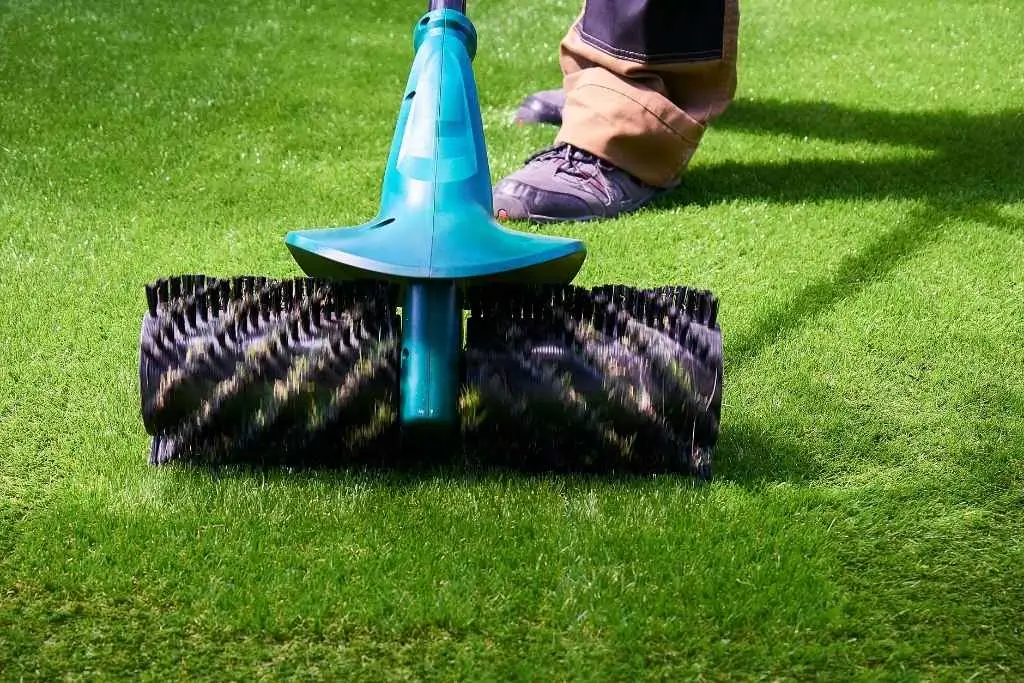
- Brush Weekly: Use a stiff bristle broom, push broom, or turf rake to lift the blades. This prevents them from flattening. Weekly brushing keeps the turf looking natural and helps infill settle evenly.
- Rinse Monthly: Spray the grass with water once a month. This removes dust, pollen, dirt, and debris. Rinsing also helps the drainage system work properly.
- Enzyme Cleaners for Pets or Pollen: If pets use the poolside area or pollen settles on the turf, use enzyme cleaners. These break down organic material without damaging the turf. Avoid harsh chemicals like bleach, which can void warranties.
Pool-Specific Maintenance
- Remove Chlorine Residue: Chlorine from pool splashes can leave a film on the turf. Rinse turf regularly near the pool. Mild soap and water can remove residue. Avoid strong chemicals or high-pressure washers.
- Check for Algae or Mold in Seams: Even with good drainage, tight seams or shaded areas may trap water. Look for green or dark spots. Rinse and scrub gently with a soft brush if needed. Regular checks prevent algae growth.
Seasonal Advice
- Winter Preparation: If your area gets snow, remove heavy snow from the turf instead of letting it sit. Snow melt should drain through the turf backing. Avoid using shovels or metal tools that could damage the fibers.
- Summer Heat Mitigation: Artificial grass can get hot under direct sun. Add shade with umbrellas, sails, or pergolas. Cool the surface with a light water spray. Using heat-reflective infill products like T°Cool helps lower surface temperature.
Troubleshooting
- Matting: If the grass looks flat or crushed, brush it upright. Brushing also redistributes infill evenly.
- Odors: Rinse spills and pet messes quickly. Enzyme cleaners remove organic buildup and prevent smells. Proper drainage keeps water from pooling, reducing odors further.
- Fading: UV-resistant turf resists fading, but long-term sun exposure may slowly dull colors. Rinsing and providing shade help maintain the original look.
Warranty Insights
Most turf warranties cover defects, fade, or fiber loss. However, warranties can be voided if:
- You use improper chemicals like bleach.
- Debris is left to trap moisture.
- Turf is damaged with sharp tools or high-pressure washers.
Always follow the manufacturer’s care instructions. Proper maintenance protects your investment and ensures the warranty remains valid.
Lifespan Expectations
With proper care, artificial grass can last 10–20 years or more. Factors that affect lifespan include:
- Turf quality and UV protection.
- Frequency of brushing and rinsing.
- Drainage and exposure to pool chemicals.
- Foot traffic and environmental conditions.
High-quality turf, combined with proper maintenance, will stay soft, safe, and visually appealing for years.
FAQs and Common Questions
1. Is artificial grass safe for kids around pools?
Yes. Modern turf is made without harmful chemicals. Cushioned underlay options provide extra safety for children.
2. How does it handle pool chemicals?
Choose turf labeled as chlorine- and chemical-resistant. Rinse splashes promptly. High-quality turf will not fade or degrade from pool water.
3. Can I install it over concrete pool decks?
Yes. You need proper padding and drainage. This ensures comfort and prevents water pooling.
4. What’s the best infill for hot climates?
Cooling infill products like T°Cool reduce surface heat. They also have antimicrobial properties to prevent odor or bacteria buildup.
5. Will artificial grass fade from sun?
UV-protected turf resists fading. Over many years, direct sun may slightly dull colors, but quality turf maintains a natural look for a long time.
6. Can water and pet urine drain through the turf?
Yes. Turf with permeable backing and a proper base allows water and liquids to pass through quickly. This prevents puddles and keeps the area clean.
7. Do I need to brush it regularly?
Yes. Brushing lifts the blades and helps the infill settle evenly. It also keeps the turf looking natural.
8. How long does artificial grass last?
Most pool-grade turf lasts 15–20 years with proper installation and maintenance. Lifespan depends on quality, care, and environmental factors.
Conclusion
Adding artificial grass around your pool transforms your backyard. It stays green, safe, and mud-free year-round. With the right product and proper care, it lasts 10–20 years.
Choose turf that is UV- and chlorine-resistant, drains well, and feels soft underfoot. Brush regularly, rinse often, and follow seasonal tips to keep it looking its best. Avoid shortcuts to protect your investment and warranty.
For poolside areas in Dallas-Fort Worth and beyond, Texas Tuff Artificial Grass offers durable, safe, and realistic turf. Our experts help you select and install the perfect product for your space.
Make your pool area a paradise today, contact Texas Tuff Artificial Grass for a free consultation!