

Does artificial grass attract mosquitoes just by sitting in your yard? No, it doesn’t.
Mosquitoes don’t care about grass, natural or synthetic. They’re after water, and a synthetic lawn takes most of it out of the picture. So if you’re worried that switching your yard over will make the biting worse, you can set that worry aside. It usually goes the other way.
So does artificial turf reduce mosquitoes? In a way, yes, though not because of anything the blades do. It’s what turf removes from a yard that counts: standing water, damp soil, and the shaded spots mosquitoes rest in during the day. Remove those and most of the mosquito’s life cycle stalls. In a hot climate with a long bug season, even a dent in that makes a yard far more livable.
The mechanics are simple, and so is the one mistake that undoes them.
Do Mosquitoes Live in Artificial Grass?
Not really. Not the way they’d settle into an overgrown natural lawn.
Mosquitoes breed in water. A turf surface that drains properly gives them nowhere to lay eggs and nothing to feed on. No damp soil. No thatch holding moisture. Nothing underneath for larvae to sit in. And since larvae need water to grow, a turf system that’s built properly simply doesn’t give them any.
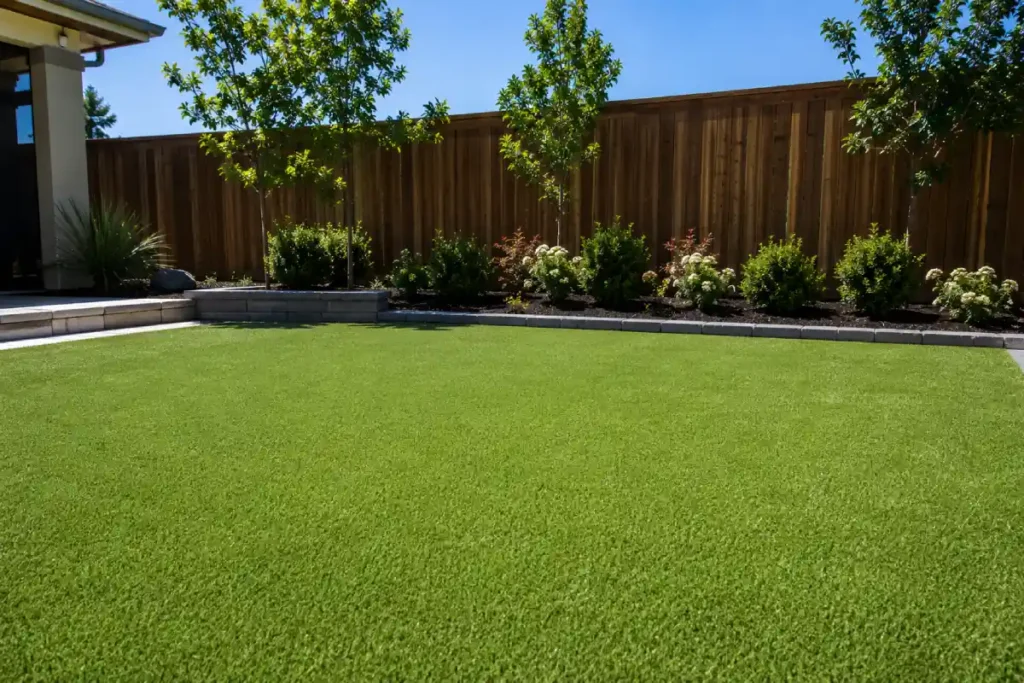
That’s the split between turf and a neglected lawn full of damp shade and slow-draining low spots. One gives mosquitoes what they need. The other doesn’t.
One honest caveat, though. Grown mosquitoes still have to rest somewhere during the day, and the CDC notes they shelter in grass, shrubs, and weeds when they aren’t active. Turf won’t cover them the way an overgrown flower bed will.
So when people spot mosquitoes in artificial turf areas anyway, it’s almost always a water source close by, or poor drainage under the surface, doing the work. Not the grass on top.
Three Ways Turf Cuts Mosquitoes Down
Turf breaks the mosquito’s life cycle in three places. So, does artificial turf reduce mosquitoes once it’s in the ground and not just on paper? These three things are the reason it does. Each one removes something the insects can’t do without, which is why the difference in artificial grass and mosquitoes shows up so quickly once a yard is converted.
Drainage Removes Standing Water
Mosquitoes lay their eggs in standing water. No water, no eggs. The problem with a natural lawn is that it holds water in all the wrong spots. Low areas, divots, hard-packed soil. Rain or a sprinkler run fills them, and the water can sit there for days.
Turf handles water differently, thanks to what sits under it. A porous crushed-rock base, a perforated backing, and water drops straight through into the ground instead of pooling on top.
It clears far faster than bare soil. The timing is what does it. A mosquito needs about a week of standing water to grow from egg to adult, and a lawn that never holds a puddle never gives it that week.
No Damp Soil or Thatch
Water isn’t the only draw. Mosquitoes also go for moist soil and the decaying plant matter in a living lawn. Natural grass builds up thatch over time, that spongy mat of dead and living blades at the base. It traps moisture. It keeps a warm, damp pocket right at ground level. That’s what draws them.
Synthetic turf removes all of it. You’ve got a synthetic base and sand or rubber infill where the soil used to be, so the organic material and steady moisture they rely on are no longer there.
No Cool Daytime Shelter
Adult mosquitoes can’t handle long stretches of sun and heat. So they hide through the day. Tall grass, weeds, thick brush, anywhere cool and shaded and a bit damp. A turf lawn gives them the opposite. The blades don’t hold moisture, and the surface soaks up sun and runs hotter than a natural lawn by mid-afternoon.
Where is a mosquito supposed to rest on that? It doesn’t. Hot, dry, and exposed, the turf pushes it to look somewhere else. A small effect on its own. Across a whole yard, though, it adds up to fewer mosquitoes near your patio.
Installation Is Where Turf Can Backfire
Artificial grass is a strong mosquito deterrent, but only when it’s installed with drainage in mind. That part isn’t optional.
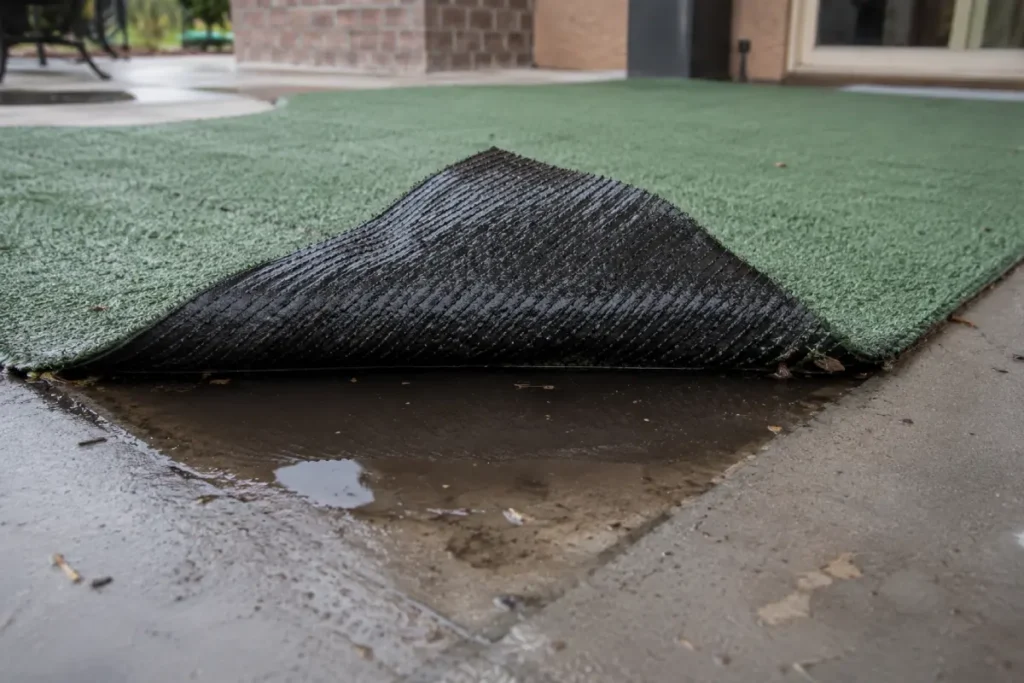
Lay turf directly over a sealed surface, like a concrete patio or a wood deck, with no drainage plan, and water gets trapped under the backing with nowhere to go. That trapped layer of moisture can become the exact breeding ground you were trying to remove. A hidden one, which is worse.
So the base does the heavy lifting. A skilled installer grades the ground to move water toward a drain path before any turf goes down, and a well-graded, permeable aggregate base is what lets the water escape. That’s the honest split: turf helps against mosquitoes, but only when it’s built to drain properly.
A Final Thought on Does Artificial Turf Reduce Mosquitoes?
Yes. Just not down to zero, and not on its own.
A well-drained turf lawn clears out the breeding sites in your grass. It can’t repel grown mosquitoes, it can’t kill them, and it can’t do anything about water sitting somewhere else on your property. A birdbath. A clogged gutter. A saucer under a potted plant. A forgotten bucket. Any of those will still breed mosquitoes a few feet from your brand-new lawn.
So treat turf as one strong part of the plan. Not the whole plan. Keep the water around it drained, clear your gutters, and empty anything that collects rain. Do that alongside a lawn that no longer holds water, and you get your evenings back.
If you want a yard graded and drained so that water, and the mosquitoes that come with it, never get a foothold, we install synthetic turf building every base to move water off your yard from day one. Fewer fleas and ticks along with it is one more of the underrated benefits of artificial grass for families who want their backyard back.
Frequently Asked Questions
Will artificial grass get rid of mosquitoes completely?
No. It removes the conditions they breed in, which brings the numbers down, but it won’t repel or kill the adults. You’ll still want to clear standing water nearby and use repellent when the season peaks.
Does artificial grass help with fleas and ticks too?
It does. The same dryness and missing soil, moisture, and overgrowth that puts off mosquitoes makes turf far less welcoming to fleas and ticks. We cover that in our guide on how to get rid of fleas on artificial grass.
Can artificial grass make a mosquito problem worse?
Only when it’s installed wrong. Turf over a sealed surface with no drainage can trap water underneath and start a hidden breeding spot. On a proper permeable base that drains freely, that risk goes away.