

Artificial turf has real advantages in hot, sunny climates: no watering restrictions, no brown patches in peak summer, and low long-term maintenance costs. But anyone who has walked barefoot across synthetic grass on a hot July afternoon already knows the issue. The surface gets hot. Not just warm, uncomfortably, even dangerously hot.
Unlike natural grass, which cools itself through a process called evapotranspiration, synthetic turf has no biological mechanism for releasing heat. The fibers absorb sunlight and hold it. On a 100-degree summer day, turf surface temperatures routinely climb between 140°F and 180°F depending on the fiber color, infill type, and whether there is any shade.
This guide covers exactly how to keep artificial turf cool, covering both the methods you can do yourself today and the longer-term artificial turf cooling system solutions Texas Tuff installs for homeowners in hot-summer climates.
How Hot Does Artificial Turf Actually Get?
The temperature gap between artificial turf and natural grass is significant. Research from Penn State University and the Synthetic Turf Council provides consistent documentation of this difference across multiple climate zones, and hot, sun-intense regions sit at the extreme end of that range.
The difference between natural grass (around 90°F) and standard crumb rubber infill turf (around 175°F) in the same conditions is nearly 85 degrees Fahrenheit. That gap is why cooling turf is not just a comfort issue; it is a safety consideration for children and pets who use the surface.
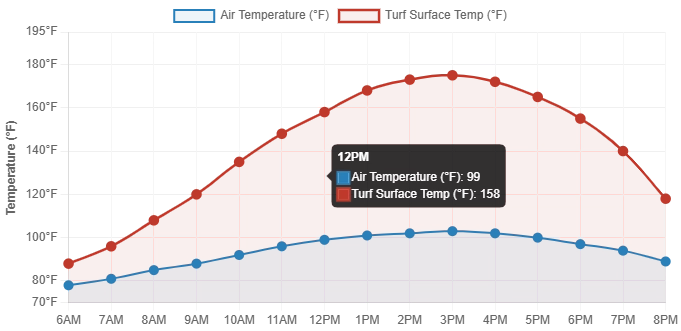
The hottest window on a typical summer day runs from about 1:00 PM to 5:00 PM. This is when turf management whether that means running a misting system, adding shade, or simply timing use around these hours makes the biggest difference.
Infill Type: The Single Biggest Factor in Cool Synthetic Turf
If you are planning a new installation or a full replacement, infill selection is the most impactful decision you will make for turf temperature. The infill sits between and beneath the fiber blades. It makes up most of the thermal mass of the turf system. It determines the baseline temperature before any other cooling method is applied.
Switching from crumb rubber to a cork or Envirofill infill can reduce peak surface temperatures by 30 to 50 degrees Fahrenheit without any active cooling system at all.
Infill Comparison Matrix: Temperature, Cost, and Performance
| Infill Type | Est. Peak Temp (100°F Ambient) | Temp Rating | Cost vs. Crumb Rubber | Best For |
| Crumb Rubber (SBR) | 165–180°F | Very Hot | Baseline (lowest) | Sports fields with limited budget |
| Silica Sand | 145–160°F | Hot | Similar | General residential |
| Coated Sand (HydroChill) | 110–130°F | Moderate | +15–25% | Residential, schools, daycares |
| Envirofill (Acrylic Coated) | 100–120°F | Moderate | +20–30% | Family lawns, pet areas, backyard play |
| Cork Infill | 105–125°F | Moderate | +25–40% | Eco-conscious residential |
| Durafill / Thermoplastic | 115–135°F | Moderate | +20–35% | Multi-sport, residential |
| Zeolite / Organic Blends | 100–115°F | Cooler | +35–50% | High-end residential, odor control + cooling |
How to Keep Turf Cool: 7 Proven Methods
Beyond infill selection, there are several active and passive strategies for cooling turf in real time or reducing how much heat it absorbs in the first place. These methods work whether you have an older installation or a brand-new one.
01. Misting Systems
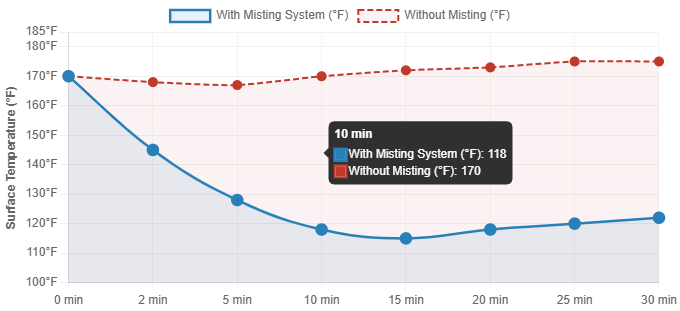
Perimeter misting lines cool the air above and the turf surface directly. The most effective active method drops surface temps 30 to 50°F within minutes. Texas Tuff installs integrated misting systems designed for extreme summer heat.
02. Direct Water Rinsing
A garden hose rinse cools turf 20 to 30°F almost immediately. The effect lasts 15 to 20 minutes in full sun. Best used right before use rather than as ongoing management.
03. Shade Structures
Pergolas, shade sails, and patio covers directly block solar radiation. Shaded turf stays 40 to 70°F cooler than unshaded turf in the same ambient conditions. The most passive and durable cooling method available.
04. Lighter Fiber Color
Lighter green and olive-toned fibers reflect more solar radiation than darker, saturated greens. Choosing a lighter-colored turf product at installation time reduces baseline heat absorption by 5 to 15°F.
05. Mature Tree Canopy
Existing or planned trees that cast dappled shade across the turf area significantly reduce surface temps during the peak 1 to 5 PM window. Works alongside turf rather than against it when planned correctly.
06. Scheduled Peak-Hour Avoidance
Not a temperature reduction, but timing play and use to before 11 AM or after 6 PM removes safety concerns without any equipment. The simplest management strategy for families with kids or pets.
07. Evaporative Cooling Infill
HydroChill and similar infill retain moisture from morning dew or scheduled irrigation, releasing it through evaporation during hot periods. Provides 8 to 12 hours of passive cooling after wetting.
Which Cooling Method Drops Turf Temperature the Most?
Cooling performance varies throughout the day based on sun exposure, ambient temperature, and airflow. Areas in direct midday sun heat up the most, while shaded or well-ventilated sections stay cooler. Planning for shade and targeting cooling in high-exposure zones can significantly improve overall usability.
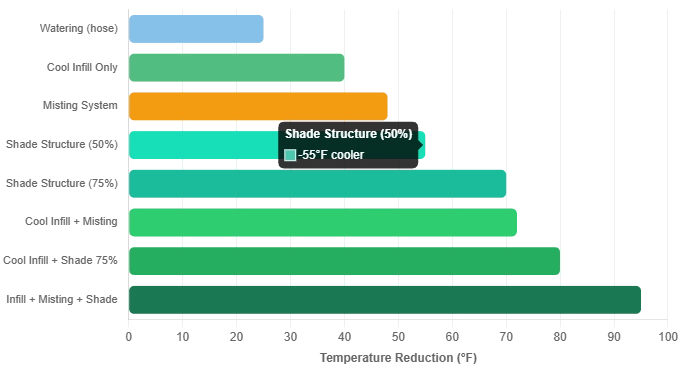
The data shows that no single method solves the heat problem completely on its own during extreme summer conditions. The most effective approach combines a cool infill at installation with an active misting system and some form of shading, either from structures or tree canopy. That combination can bring surface temperatures from a dangerous 175°F down to a safe and comfortable range below 100°F.
Misting Systems: The Most Effective Active Solution
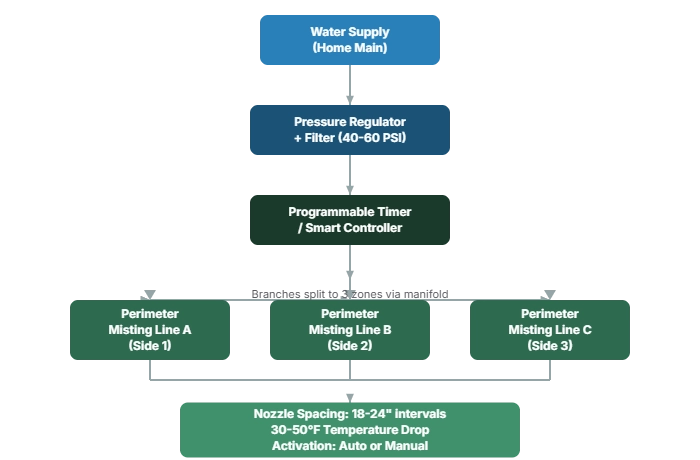
A dedicated artificial turf cooling system, typically a perimeter misting line connected to a timer and your home’s water supply is the closest thing to a complete solution for cooling synthetic turf in extreme summer heat. Here is how these systems work and what to expect from one.
Misting System Cost and Specifications
For a typical residential backyard turf installation, say 400 to 800 square feet, a perimeter misting system runs between $800 and $2,500 installed, depending on line length, nozzle count, and whether a programmable controller is included. Systems with smart home integration cost slightly more but allow scheduling tied to weather data.
How to Keep Artificial Turf Cool Without a Misting System
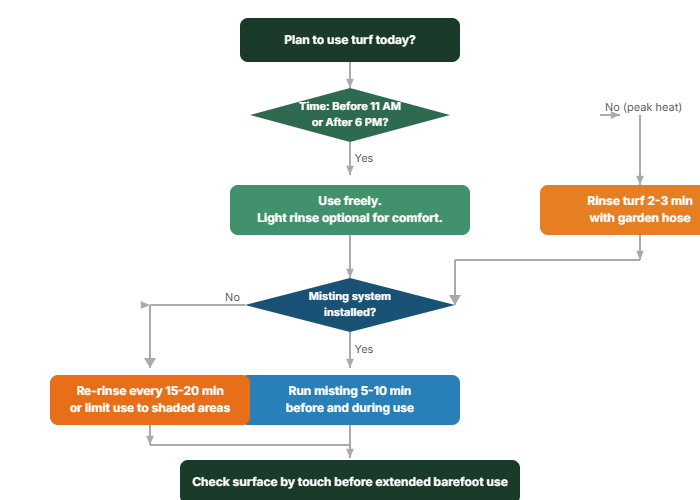
If you do not have a misting system installed yet, a simple hand watering schedule is the most practical approach for keeping turf cool enough for use during summer. The key is timing watering right before use rather than hours before, since turf in full sun reheats quickly.
Shading: The Most Durable Solution for Cool Artificial Grass
Shade is the most fundamental cooling mechanism available. It works by blocking solar radiation before it ever reaches the turf surface. Unlike watering or misting, which address heat that has already built up, shade prevents heat from accumulating in the first place.
Practical shade options include permanent pergola structures, shade sail systems, existing mature trees, and new plantings positioned on the south and west sides of the yard. West-facing shade matters most: afternoon sun between 1 PM and 5 PM delivers the highest solar intensity of the day, and blocking that window produces the largest temperature reduction.
At 75% or greater shade coverage, turf surface temperatures drop into a range that is genuinely comfortable for bare feet and safe for extended pet and children use even during peak afternoon hours. This is why Texas Tuff frequently recommends pairing turf installation with at least a partial shade structure, especially for customers who plan to use the space for entertaining or as a primary play area.
Choosing Cooler Fiber: What Texas Tuff Recommends
Not all artificial grass fibers behave the same under heat. Fiber material, color, and pile height all affect how much heat a given turf product absorbs and holds. If you are selecting a new product for installation, these factors are worth understanding before you commit.
| Fiber Characteristic | Cooler Option | Hotter Option | Temp Difference | Notes |
| Color | Light olive / lime green | Deep emerald / dark green | 5–15°F cooler | Lighter colors reflect more solar radiation |
| Material | Polyethylene (PE) | Nylon | 10–20°F cooler | PE absorbs less heat; nylon has higher thermal mass |
| Pile Height | 30–37 mm | 50 mm+ | 5–10°F cooler | Taller piles trap heat in the blade canopy |
| Blade Shape | W-shape / C-shape | Flat blade | 3–8°F cooler | Shaped blades shade the infill below, reducing ground-level heat |
| Thatch Layer | Minimal thatch | Dense brown thatch | 5–12°F cooler | Dark thatch absorbs and holds heat at the infill level |
Texas Tuff carries several product lines specifically suited for hot-climate conditions. When you book a consultation, the team walks through the surface temperature data for each product in your shortlist based on your yard’s sun exposure, expected use, and aesthetic preferences.
Artificial Turf Heat: Your Questions Answered
How hot does artificial turf get in summer?
In hot, sunny climates, artificial turf surface temperatures can reach 140°F to 180°F on peak summer afternoons when ambient temperatures are around 100°F. Standard crumb rubber infill installations reach the higher end of that range. Products with cooling infills or shade coverage stay significantly lower.
What is the best artificial turf cooling system?
A perimeter misting system is the most effective active cooling method for residential turf. Properly sized and positioned, a misting system can drop surface temperatures by 30 to 50°F within minutes. Texas Tuff installs misting systems as part of complete turf packages or as standalone add-ons for existing installations.
Does rinsing cool artificial grass down?
Yes, a garden hose rinse immediately drops turf temperatures by 20 to 30°F. However, in direct summer sun, the surface reheats within 15 to 20 minutes. Rinsing is effective as a pre-use routine rather than as a lasting management strategy.
What infill keeps artificial turf coolest?
Zeolite blends and HydroChill perform best among available infills. Envirofill and cork are close behind. All of these options reduce peak surface temperatures by 30 to 50°F compared to standard crumb rubber SBR infill.
Is artificial turf too hot for dogs in summer?
With standard crumb rubber infill and no cooling measures, yes, turf temperatures above 140°F can burn a dog’s paw pads. With a cooling infill, shade coverage, and pre-use rinsing, the surface stays within a safe range. Texas Tuff installs pet-specific turf packages that factor in paw safety alongside drainage and odor control.
How to keep turf cool without a misting system?
The most practical DIY approach: schedule use before 11 AM or after 6 PM, rinse the surface with a garden hose for 2 to 3 minutes before use, and add shade sails or a pergola on the south or west side. Choosing a product with a cool infill at installation is the best long-term passive option.
Final Thoughts
Keeping artificial turf cool isn’t about finding one perfect fix; it’s about stacking small wins until they add up to a real difference. A cooler infill lowers the baseline. Lighter fiber color shaves off a few more degrees. Shade blocks the sun before it ever hits the surface. And a quick rinse or misting system handles whatever heat still builds up during the hottest hours of the day.
None of these methods alone will make turf comfortable on a 100°F afternoon, but combined, they can take a surface from a painful 175°F down to a range that’s safe for bare feet, kids, and pets. If you’re planning a new installation, the biggest wins come from decisions made upfront; infill and fiber choice are far cheaper to get right at install time than to fix later. If you already have turf down, shade and a simple watering habit will get you most of the way there without any major investment.