
Everyone with a dog and a yard has thought about switching to artificial turf sooner or later. People with dogs face several issues in natural yards, such as dry grass, mud after light rain, and dogs digging holes everywhere.
It brings the question: Is turf actually a better choice for dogs?
In a word, yes. But there are some strings attached that you must have a firm grasp of. So, before you go get a turf, let’s break down what you are getting into.
What Is Artificial Turf for Dogs?
Artificial turf or fake grass is synthetic grass made of polyethylene or polypropylene fibers. It looks like real grass but has several perks. With artificial turf, you don’t need to worry about:
- Growing
- Watering
- Mowing
But how do you know that the turf is dog-friendly? Look for features like
- A permeable backing so urine drains through
- A base layer of crushed rock for good drainage
- Antimicrobial infill that reduces odor and bacteria
With these features, you will be ready with an ideal turf setup for your dog.
Why Do Dog Owners Switch to Turf?
A big chunk of dog owners eventually switch to turf because it makes life way easier. Natural grass just can’t keep up with a dog’s daily activities. Your dog may bring mud from the yard after digging holes. Or the grass may dry out from the urine of your dog.
Apart from the dog problems, you also have to mow the yard and water the grass regularly. Here is an interesting fact: the U.S. Environmental Protection Agency says that outdoor water use can account for up to 60% of the total water used in your home. In simple terms, the amount of water you use outdoors is more than half of the total amount of water you use.
And a turf solves that for you! It’s like hitting 2 birds with one stone; both the dog issue and the water issue are solved.
A well-known veterinarian, Dr. Marty Becker, says:
“Dogs don’t care if the grass is natural or artificial. What matters is that the surface is clean and safe for the dog.”
This is exactly what modern dog-friendly turf systems ensure.
Is Artificial Turf Safe for Dogs?
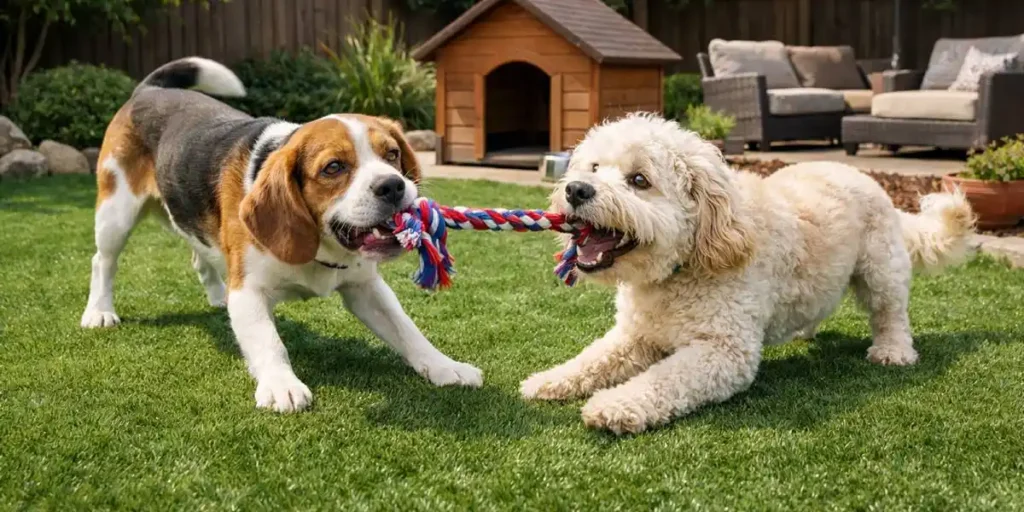
Well, if you get high-quality pet-friendly turf, then it is really safe for your dog. Real pet turfs are made of non-toxic polyethylene fibers. This is the same fiber used in food containers. So, there is nothing to worry about.
Here are the factors that ensure turf is safe:
- Non-toxic materials
- Smooth blades don’t scratch the paws
- Urine flows through drainage holes
- The base layer absorbs shock
Remember, you must install the turf properly. Without proper drainage, you will face odor issues from bacteria buildups. That’s why professional turf installation is crucial.
What Are The Benefits of Installing Turf for Dogs?
It may seem insignificant at first, but in the long run, installing turf for dogs is a great decision. It comes with some perks that make life easier.
- No mud in the house: With a bit of heavy watering or slight rain, the yard gets muddy, and your dog brings that home. Turf solves that issue.
- No dead sports: The nitrogen in dog urine kills natural grass. A couple of dead spots can ruin the yard’s aesthetics. Turfs remain evergreen!
- Low Maintenance: Turf doesn’t need watering, mowing, or fertilizers! With professional maintenance, you will have less stress and more relaxation.
- High durability: Active dogs love to run around, dig, and play hard. Turf can handle that better than natural grass.
What Are The Downside of Installing Turf?
Well, nothing is perfect in this world. So, there are some disadvantages of turf too!
The main issue is heating. Truf can heat up quite a bit in hot weather. Studies from Brigham Young University show that synthetic turf can reach temperatures of 30 to 60°F in summer. That’s really hot.
But there are also ways to handle this heat. You can easily manage the heat by:
- Rinsing the turf with water
- Provide shed
- Choose light color turf material
Sounds pretty easy, right? Apart from the heat, there are no other significant issues to mention.
Is Turf Better Than Natural Grass for Dogs?
Both have their own share of pros and cons. So, it mainly depends on your priorities. Here is a side-by-side comparison to help you decide:
| Feature | Artificial Turf | Natural Grass |
| Mud | No | Yes |
| Maintenance | Low | High |
| Water Use | No | High |
| Durability | High | Medium |
| Cooling | Hot surface | Cool surface |
| Appearance | Consistent | Risk of dead spots |
You can see what brings what to the table. Considering the comparison, artificial turf wins the contest for dogs when it comes to durability and hygiene.
Bottom Line
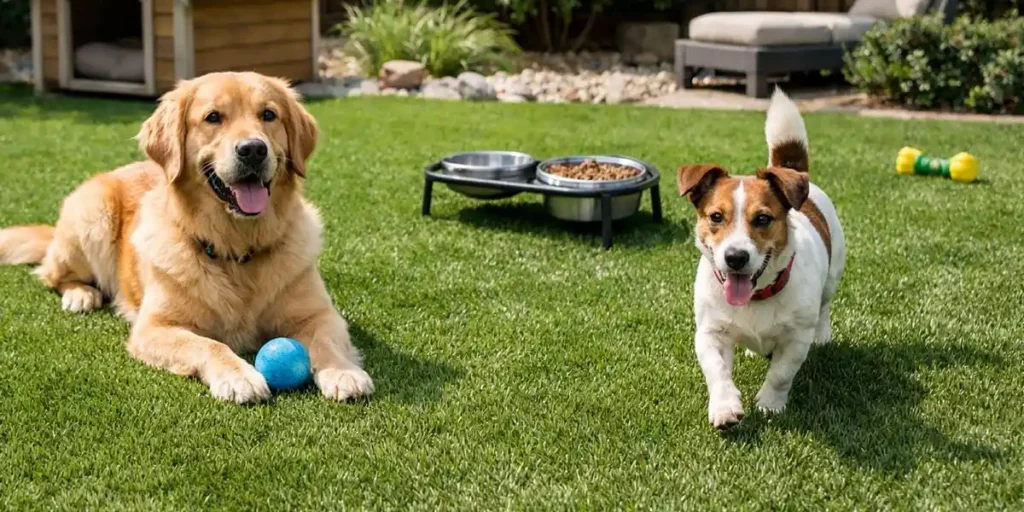
So, is turf good for dogs? In most cases, YES, it is.
Overall, turf is more durable, cleaner, & more consistent. On the other hand, it doesn’t need very heavy maintenance. It removes mud, water use, and hassle in your daily life. The only catch is that you have to choose a pet-friendly turf and install it properly. After that, both your and your dog’s daily activities will be more fun and relaxing.
FAQs
1. Is artificial turf safe for dogs to pee on?
Yes. Pet turf systems are designed with drainage holes and permeable backing, allowing urine to pass through into the base layer. This prevents pooling and helps control odor when the turf is rinsed regularly.
2. Does dog urine ruin artificial turf?
No. Unlike natural grass, dog urine does not damage synthetic turf fibers. However, regular rinsing is recommended to prevent odor buildup.
3. Does artificial turf smell with dogs?
It can smell only if it isn’t cleaned regularly. Rinsing the turf weekly and using pet-safe enzyme cleaners helps eliminate bacteria and odor.