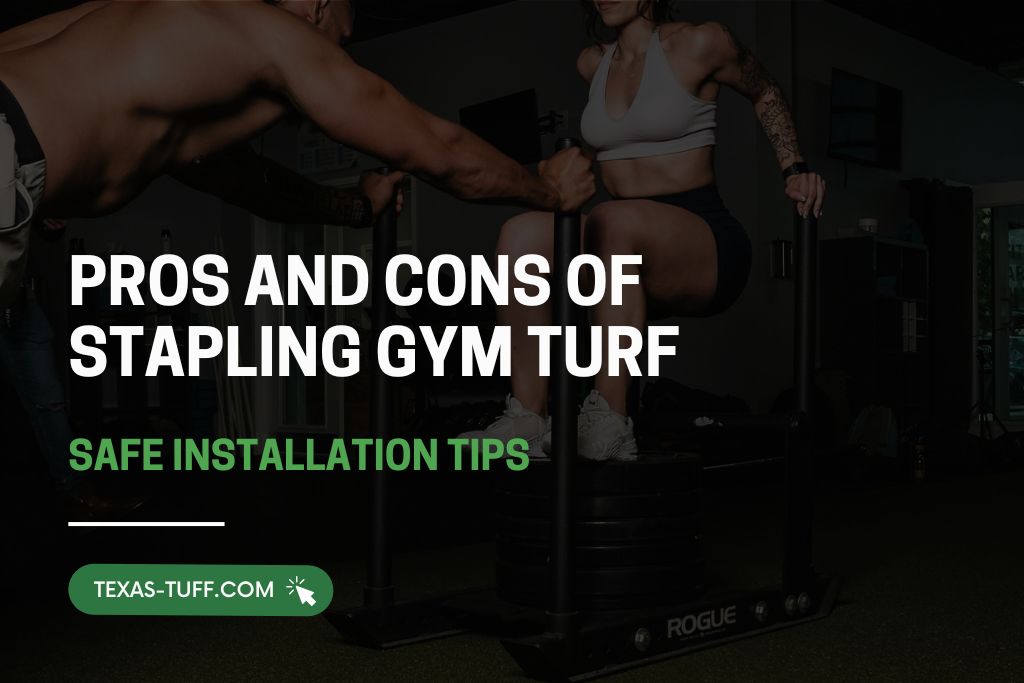
Gym turf is a strong, grass-like surface used in fitness centers and home gyms. People use it for sled pushes, agility drills, stretching, and speed training. Turf must stay flat and secure to prevent slips and injuries.
One common question is whether you can staple gym turf to the floor. Stapling may seem fast and low cost. However, it may not be the best long-term solution. This article explains the pros and cons of stapling gym turf in clear, simple terms.
What Does Stapling Gym Turf Mean?
Stapling gym turf means using heavy metal staples to attach the turf to the subfloor. Installers place staples along edges and sometimes across the center to hold the turf in place.
This method often appears in small gyms, home gyms, or quick DIY projects. Some people use staples alone. Others combine staples with glue or seam tape.
The goal is simple: stop the turf from moving. But the method you choose affects safety, durability, and performance.
Pros of Stapling Gym Turf
Stapling gym turf offers a simple way to secure the surface. Many gym owners choose this method for small spaces or short-term use. It requires basic tools and less preparation than some other methods.
1. Fast Installation
Staples install quickly. This reduces setup time. Small areas can be secured in one day. No drying or curing time is required. The space can be used soon after installation.
2. Lower Upfront Cost
Staples cost less than adhesive systems. This lowers initial expense. Fewer materials are needed. The process does not require special equipment. For short-term setups, this can reduce overall spending.
3. Edge Control
Staples help hold turf edges down. This reduces corner lifting and small curls. Edges stay flatter during early
Cons of Stapling Gym Turf
Stapling gym turf can cause long-term problems. Gyms experience heavy use and strong movement. Staples often cannot handle this stress.
1. Turf Damage
Staples puncture the turf backing. Over time, holes may widen. Heavy sled pushes and foot traffic increase stress on these weak spots. The backing may tear, causing sections to lift.
2. Loose Staples
Gym activity creates vibration and force. Staples may loosen and rise. Exposed staples can scratch skin or catch shoes. This creates safety risks.
3. Poor Grip on Hard Floors
Concrete and rubber flooring do not hold staples well. Staples may pull out under pressure. Without adhesive support, turf may move or bunch up.
4. Shorter Lifespan
Improper fastening can lead to bubbling, shifting, and tearing. These issues wear down the turf faster. This reduces turf life and increases repair or replacement costs.
Installation Considerations
Before stapling gym turf, check the type of floor. Concrete, rubber, and vinyl floors do not hold staples well. Plywood holds staples better, but still may loosen over time.
Make sure the floor is clean and level. Dirt, dust, and bumps can cause the turf to shift or form bubbles. A smooth surface helps the turf lay flat and last longer.
Spacing also matters. Too few staples allow movement. Too many staples damage the backing. Even with careful spacing, staples alone may not provide strong, long-term support in high-traffic gyms.
Better Alternatives to Stapling
Stapling is not the only way to secure gym turf. Other methods provide stronger hold and longer life, especially in high-traffic areas.
1. Adhesive and Seam Tape
Adhesive creates a strong bond between the turf and the floor. Seam tape connects sections securely. This method works well on concrete and rubber surfaces. It keeps the turf flat and stable for long-term use.
2. Turf Nails (for Wood Subfloors)
Special turf nails hold better than regular staples in plywood subfloors. They reduce the chance of pull-out and provide a firmer grip. Turf nails are stronger and last longer under heavy use.
3. Modular Turf Tiles
Interlocking turf tiles connect without glue or staples. They are easy to install and replace. This option works well in home gyms or temporary setups. Tiles can be moved or replaced individually if damaged.
Safety and Performance Impact
How turf is installed affects both safety and performance. Loose or damaged turf can shift during exercises. This can cause slips, trips, or uneven footing.
Staples that rise above the surface create extra risk. Exposed metal can scratch skin or catch shoes. Heavy movements, like sled pushes or jumping, put stress on weak spots.
Proper installation keeps the turf flat and secure. Stable turf improves traction and control. It reduces the chance of injuries and helps athletes perform better.
Conclusion
Stapling gym turf may seem quick and cheap, but it has several drawbacks. Staples can damage the turf, loosen over time, and fail on hard floors. This can shorten the turf’s lifespan and create safety risks.
Better options include adhesive with seam tape, turf nails for wood floors, or modular turf tiles. These methods provide a stronger hold, longer life, and safer surfaces. Choosing the right installation keeps the gym safe, protects the turf, and ensures better performance for everyone.
If you are looking for quality turf options, Texas Tuff Artificial Grass offers durable turf solutions with professional installation in the Dallas–Fort Worth area. Their products and services can help you choose the right turf and secure it properly for long-lasting use.