

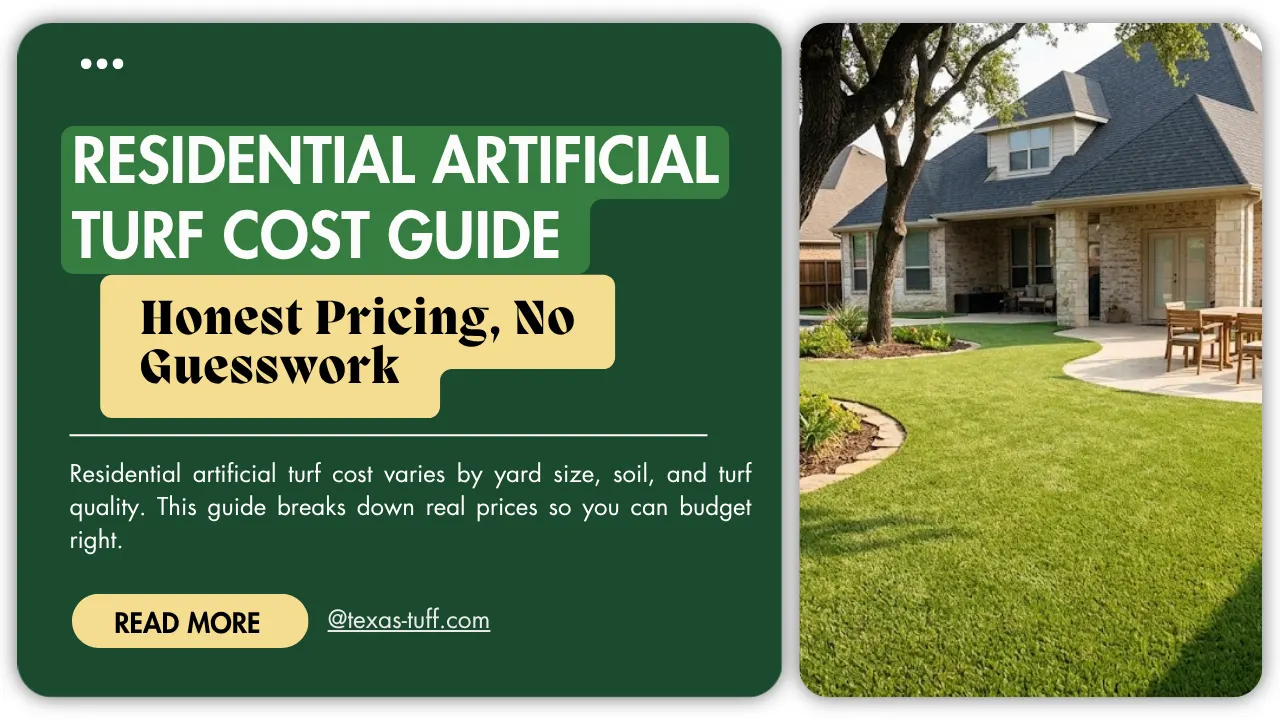
Residential artificial turf costs between $8.00 and $12.50 per square foot installed. The total cost for a home depends on the site preparation required and the quality of synthetic grass chosen. A small front yard might need a lower total budget, but larger backyard projects often involve extensive grading and drainage work, which increases the total cost.
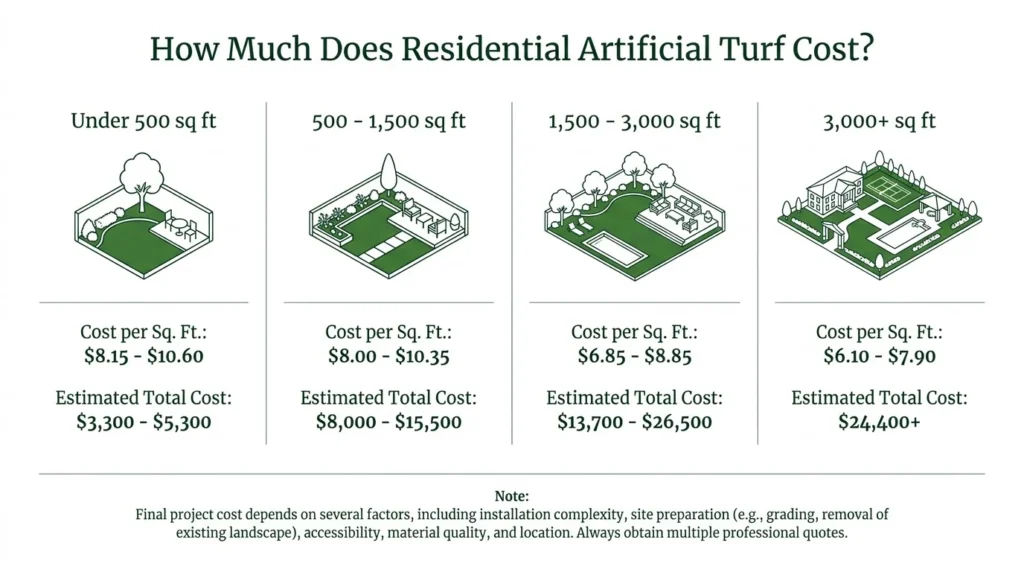
How Much Does Residential Artificial Turf Cost?
Homeowners in North Texas should expect total project costs to vary based on yard size and complexity. Per-square-foot pricing gives a useful baseline, but the total invoice depends on how much transformation the yard needs, such as removing old sod or extensive site preparation.
| Project Size | Cost per Sq Ft | Typical Total Cost | Notes |
|---|---|---|---|
| Under 500 sq ft | $8.15–$10.60 | $3,300–$5,300 | Small areas, pet runs, or side yards; higher per-sq-ft costs due to fixed setup expenses. |
| 500–1,500 sq ft | $8.00–$10.35 | $8,000–$15,500 | Most common residential backyard size. |
| 1,500–3,000 sq ft | $6.85–$8.85 | $13,700–$26,500 | Larger backyards with better per-sq-ft pricing. |
| 3,000+ sq ft | $6.10–$7.90 | $24,400+ | Full-property or large estate installations. |
Prices differ because a flat, open space is easier to install than a yard with steep slopes or tight corners. Turf material cost is also separate from the installation quote. Buying just the rolls of grass is cheaper, but excavation and base construction make up the majority of the professional’s fee.
What Does Your Residential Turf Installation Cost Include?
A professional quote should cover every step, from the first shovel in the ground to the final cleanup. Turf installation is a multi-stage construction project.
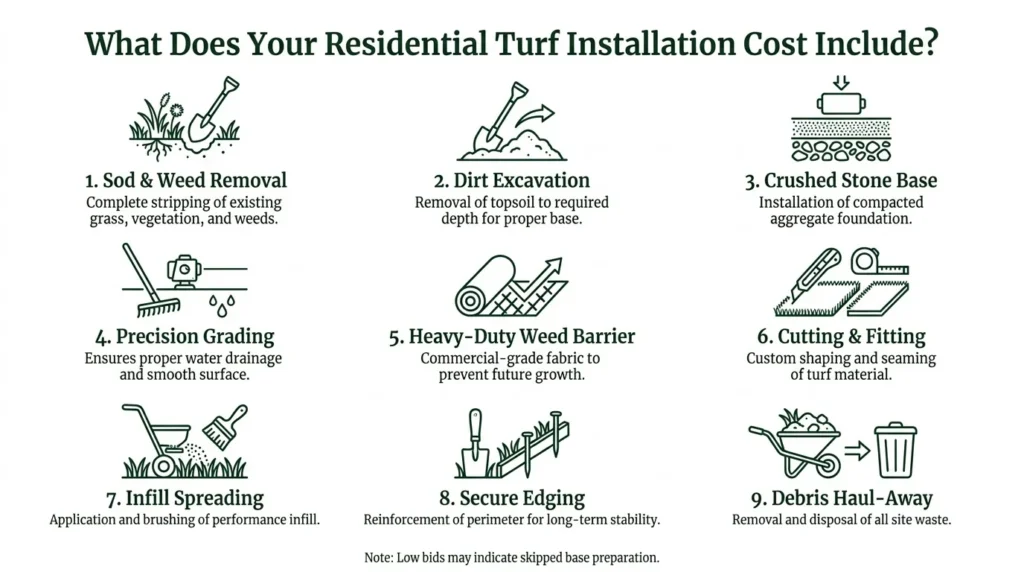
Here’s what a standard quote includes:
- Removal of all existing sod and weeds.
- Excavation of the top few inches of dirt.
- Delivery and compaction of a crushed stone base.
- Grading to ensure water flows away from the home foundation.
- Placement of a heavy-duty weed barrier.
- Cutting, fitting, and securing the turf with professional seams.
- Spreading infill to keep blades upright.
- Installing secure edging or bender boards.
- Hauling away all old dirt and debris.
If a bid seems unusually low, the contractor might be skipping deep base preparation.
What Makes Artificial Turf Cost More?
Local soil and climate conditions affect the final price of a new lawn, and landscaping needs vary a lot from yard to yard.
Clay Soil and Drainage
Heavy clay soil expands and contracts with moisture, so it needs a thicker base to prevent the lawn from shifting or buckling. If a yard has poor drainage, the crew spends more time on grading or installing French drains, which increases labor cost.
Existing Grass, Roots, and Irrigation
Removing established grass like St. Augustine or Bermuda is labor-intensive. Large trees with surface roots or an old sprinkler system can make the prep phase more time-consuming.
Lawn Shape and Accessibility
A rectangular lawn installs fast. But if the crew has to navigate narrow side gates, work around curved flower beds, or carry materials up a steep hill, the price rises.
Square Footage
Large projects have a higher total price but often better per-square-foot value. Very small yards may have a higher cost per square foot because the fixed costs of moving equipment and crews to the site stay the same regardless of lawn size.
Turf Quality and Infill
A premium, high-density blade or a specialized cooling infill costs more. Pet owners often choose antimicrobial infill and specific drainage membranes. These cost more than standard sand infill but help manage odor.
Residential Artificial Turf Cost by Turf Quality
The blade type you choose affects how the lawn feels underfoot and how long it stays looking new.
| Quality Tier | Material Cost (per sq ft) | Installed Cost (per sq ft) | Typical Lifespan | Best For | Key Characteristics |
| Budget / Entry-Level (mostly Polypropylene) | $1.50 – $3.50 | $7 – $12 | 5–10 years | Low-traffic decorative areas, temporary use | Stiffer fibers, shorter pile, lower density, fades faster in Texas sun |
| Standard / Mid-Grade (Polyethylene – most common residential) | $2.20 – $5.50 | $8 – $13 | 12–18 years | Backyards & front yards | Soft feel, realistic look, good drainage, solid UV resistance |
| Premium (Higher-density PE or Nylon blends) | $5.00 – $8.00+ | $11 – $16 | 15–20+ years | High-traffic yards, showpiece lawns | Denser pile (higher face weight), better recovery, superior UV & heat resistance |
| Pet-Rated / Specialty | $3.75 – $7.00 | $9 – $14 | 12–18 years | Homes with dogs | Antimicrobial/zeolite infill, enhanced drainage, odor control |
| Cooling Technology (add-on to mid/premium) | +$1 – $3 | +$2 – $6 | Same as base tier | Sunny yards, kids/pets | Heat-reducing fibers or infill (can drop surface temp 20–30°F) |
Premium options offer better UV resistance, which matters for the intense Texas sun, and usually have a more realistic look. The upfront cost is higher, but the extended warranty and better appearance are worth it after ten or fifteen years.
Residential Artificial Turf Cost by Yard Type
How you plan to use your yard changes the installation specs. Here’s a quick summary of residential turf installation cost by yard type:
| Yard / Project Type | Typical Size | Cost per Sq Ft | Estimated Total Cost | Notes |
| Front Yard | 200 – 800 sq ft | $8 – $13 | $2,500 – $11,000 | Higher per-sq-ft due to smaller size & curb appeal focus |
| Standard Backyard | 500 – 2,000 sq ft | $8 – $12 | $6,000 – $24,000 | Most common residential install |
| Pet Turf / Dog Run | 300 – 1,000 sq ft | $9 – $14 | $3,500 – $14,000 | Antimicrobial infill & enhanced drainage |
| Pool Surround / Perimeter | 300 – 1,200 sq ft | $8 – $12 | $3,500 – $14,500 | UV-stable, chlorine-resistant options recommended |
| Play Area / Kids Zone | 400 – 1,000 sq ft | $10 – $15 | $5,000 – $15,000 | Often includes shock pad for safety |
Front Yard
Front yard projects often focus on curb appeal. These installations might be smaller but need intricate edging against sidewalks and driveways. The goal is an attractive, manicured look that stays green year-round.
Backyard
Backyards are the largest investment. Costs here can go up or down due to access issues and existing patios or trees. Because backyards see heavy foot traffic, homeowners usually choose a more durable, mid-to-premium grade turf.
Pet-Friendly Yard
A yard for dogs needs a specific system, including a more porous backing for liquid drainage and specialized infill to neutralize odors. This adds to the base price, but knowing the cost of pet turf installation upfront helps you choose the right system and keeps the lawn from becoming a source of smells in the summer heat.
Kids’ or Recreation Area
For play areas, homeowners often add a foam pad layer under the turf for extra cushioning. This safety feature increases the cost but provides a safer play zone for children. This residential landscaping turf is different from sports field turf, which uses different pile heights and infill levels.
Artificial Turf vs. Natural Grass: The 10-Year Cost
The initial cost for synthetic grass is high, but the ongoing costs of a natural lawn in North Texas add up.
| Cost Item | Natural Grass (Low) | Natural Grass (High) | Artificial Turf (Low) | Artificial Turf (High) |
|---|---|---|---|---|
| Initial install/sod | $500 | $1,500 | $8,000 – $12,000 | $12,000 – $18,000 |
| Water (irrigation) | $2,400 | $4,800 | $0 – $200 | $0 – $400 |
| Mowing/lawn care labor | $9,600 | $16,000 | $0 | $0 |
| Fertilizer, weed & pest control | $2,000 | $4,000 | $0 | $0 |
| Irrigation repairs/upkeep | $2,000 | $8,000 | $0 | $0 |
| Sod replacement / major repair | $500 | $1,500 | $0 | $0 |
| Turf maintenance (rinse, brush, infill top-up) | – | – | $1,000 | $3,000 |
| 10-Year Total | $17,000 | $35,800 | $9,000 – $13,200 | $15,000 – $21,400 |
Note: the Artificial Turf columns include a range within two line items (initial install and water), which is why the totals themselves show a range rather than one number. Worth simplifying to single representative figures per column if this table gets revised.
In Texas, water rates keep rising, which is why keeping Bermuda grass green through a July heatwave gets expensive. Factor in the cost of lawn service, fertilizer, and sprinkler repairs for a natural lawn, and artificial turf’s return on investment comes sooner than natural grass.
Watch for These Residential Turf Cost Red Flags
Not all quotes are equal. To avoid hidden fees, watch for these warning signs:
- A bid that doesn’t specify the depth of the stone base.
- Unexplained “disposal fees” added after the work starts.
- Quotes that price the grass but not the labor.
- Vague warranties that don’t explain what’s actually covered.
- No mention of how the contractor will handle yard drainage.
Always ask the landscaper for a written scope of work. It should include excavation, base materials, labor, and the brand of turf.
How to Get an Accurate Residential Turf Quote
To make sure you’re comparing similar bids, ask every contractor these three questions:
- How many inches of dirt will you remove and replace with a stone base?
- What is the specific brand and model of the turf, and what is the manufacturer’s warranty?
- Does the final price include all taxes, debris removal, and cleanup?
Getting a quote based on fixed square footage and a specific turf model lets you see which company offers the best value for your money.
Final Thoughts
Investing in synthetic grass is a major decision for any homeowner. The cost of residential artificial turf can change based on turf quality and local factors, such as clay soil, drainage needs, and how much vegetation or tree cover is in the yard. Choose a turf that stays green, drains well, and holds up for years of everyday use.
FAQ
How much does residential artificial turf cost per square foot in DFW?
In most areas, professional installations run $8 to $12.50 per square foot, covering materials, labor, and site prep.
Can you rent artificial grass?
You can’t rent a permanent lawn for your yard, but some event companies offer turf mats or sections for temporary use at parties, trade shows, and similar events. For a backyard installation, the turf is nailed or glued down as a permanent fixture.
How long does residential artificial turf last in Texas?
Premium turf from a professional installer holds up for 15 to 20 years. Texas heat is tough on budget products, but UV-protected grass keeps its color and shape for decades.
How much does it cost to install artificial turf in your backyard?
For a typical 1,000-square-foot backyard, budget roughly $8,000 to $12,000 for a complete professional job.
Does residential artificial turf increase home value?
It won’t guarantee a specific dollar bump, but buyers appreciate the low maintenance and water savings. A well-maintained green yard can help a home move faster in a competitive market.
Disclaimer: The cost figures and tables provided above are approximate market averages compiled from publicly available 2025–2026 pricing data and reports from multiple DFW-area artificial turf installers and industry sources. These include information from companies such as Bearcat Turf & Outdoors, Elite Texas Turf, Cowtown Turf, Outdoor Concepts Dallas, Truhaven Turf, and other local providers, as well as regional cost guides. These costs are not exact pricing from Texas Tuff and should not be treated as formal quotes.