

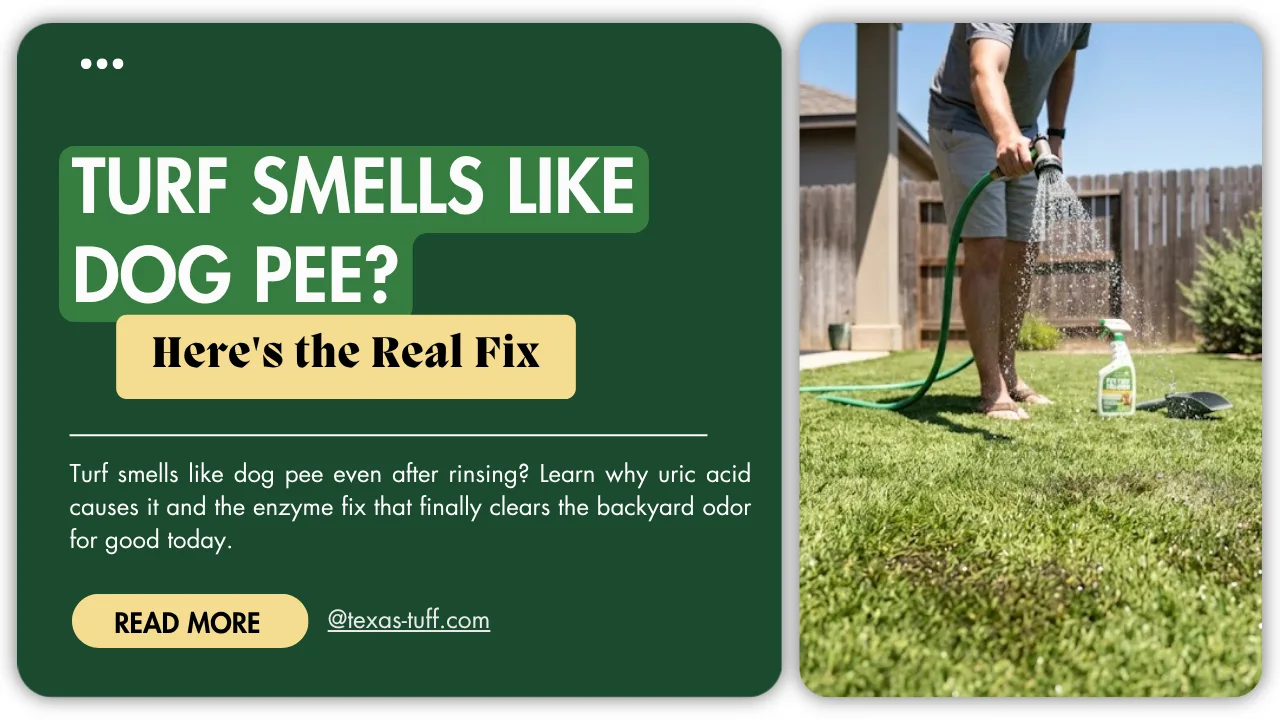
Nobody buys artificial grass expecting it to stink. So when you step out back on a hot afternoon and catch that sour, sharp smell, it stings a little. If your turf smells like dog pee, don’t blame yourself, and don’t blame the dog either.
It’s about what happens to waste sitting on synthetic grass instead of real dirt. The problem tends to get worse in hot weather too, which is why plenty of pet owners end up searching “my turf smells like dog pee” once summer sets in. The cause is pretty simple once you know what’s happening under the blades, and none of the fixes mean tearing your lawn out.
What Actually Causes the Smell
Dog pee is mostly water. But it also carries urea and uric acid, and those two are the trouble. Bacteria hit the urea first and turn it into ammonia. That’s the eye-watering part you catch standing over the spot. Uric acid is problematic. It barely dissolves in water, so instead of rinsing away, it sinks down into the infill and the backing and just settles in.
Dogs make it worse without meaning to. They like to go back to the same spot again and again, so all that waste piles into one corner instead of spreading out.
On a real lawn, you’d never notice. Soil is full of microbes that eat the waste for you. Turf has none of that. Nothing eats it, nothing breaks it down, and it sits there until you handle it yourself. That’s the whole reason a turf smells like dog pee while your neighbor’s grass doesn’t.
Why a Quick Rinse Never Fixes It
Almost everyone makes the same mistake. You spot the mark, hose it down, feel better about it. A day later the smell’s back, and somehow it’s worse.
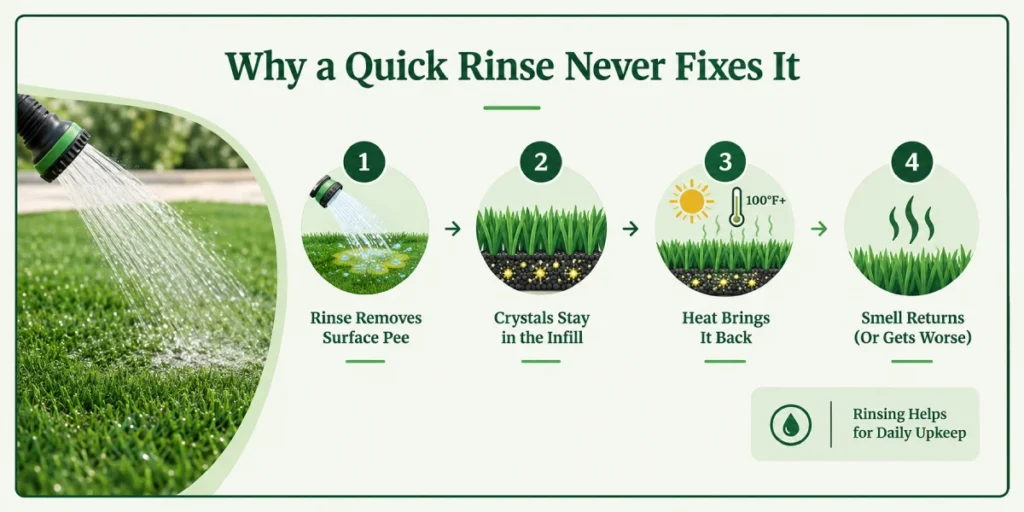
Blame the uric acid again. Water carries off the fresh pee on the surface, sure. The crystallized stuff underneath doesn’t move. It’s tucked in the infill, dry and quiet, until a 100-degree afternoon rolls through and wakes it all back up. Then the yard reeks. That’s why the smell is brutal in July, and you barely notice it in January.
A rinse still earns its keep for day-to-day upkeep. It was just never going to beat a buildup you can’t even see.
How to Remove Urine Smell From Artificial Grass
Clearing set-in odor takes a bit more than a garden hose, but you won’t be renting equipment or calling anyone in yet. The trick is breaking the uric acid apart instead of spraying something nice over the top of it. Go in this order, and don’t rush a step.
Scoop First, Then Rinse the Fresh Stuff
Solids are the easy part. Get them up the same day, since the longer they sit, the more the bacteria have to work with. For fresh pee, a fast rinse right after does most of the heavy lifting. Stay on top of that, and you’ve already handled the bulk of how to get pee smell out of turf before it can dig in.
Use an Enzyme Cleaner for Odor That’s Set In
When the smell keeps crawling back no matter how much you rinse, it’s enzyme time. This is the real answer for how to clean turf from dog pee smell.
Enzyme cleaners are loaded with live cultures that actually eat the uric acid, which is the one job plain water simply can’t do. Soak the spot and then leave it alone. Give it the full dwell time on the bottle, usually ten to fifteen minutes, then rinse if the label says to.
If your how to get dog pee smell out of turf problem has been building for months, don’t count on one pass. Two or three rounds is pretty normal.
Skip the Things That Make It Worse
A lot of the hacks floating around online are useless, and one is downright dangerous. Before you start pulling bottles out from under the sink, know that the wrong product can chew up your turf fibers and burn your lungs on the same afternoon. Steer clear of these:
- Bleach and ammonia cleaners. Mix the two, and you can set off toxic gas. The CDC flatly warns against combining household cleaners for this exact reason.
- Pressure washers. They’ll fire the infill straight out of the turf and shred the blades while they’re at it.
- Vinegar and baking soda as a real cure. They’ll knock a light smell back for an evening, but they do nothing for how to get rid of pee smell on turf once it’s crystallized deep in the base.
How to Keep Turf From Smelling
Once you’ve cleared it, you want it to stay cleared. Most of that comes down to two things: drainage and infill. Good pet turf lets liquid drop straight through to the base so it never pools and turns. If yours went in with the wrong infill, that’s almost always where a stubborn smell starts.
Want the single best upgrade for a busy dog yard? Move to an antimicrobial infill, something like zeolite or a coated product. It grabs the ammonia and holds onto it, then lets go when you rinse, instead of leaving it to hang in the air. Pair that with a steady rinse habit and a simple cleaning routine, and most folks stop noticing the smell at all.
How much cleaning you really need depends on your dog count and how hard the sun is beating down that week.
| Task | One dog | Two or more dogs |
|---|---|---|
| Rinse the potty area | After heavy use | Daily |
| Full-surface rinse | Weekly | 2 to 3 times a week |
| Enzyme treatment | Monthly | Every 1 to 2 weeks |
| Deep or professional clean | Once a year | Every few months |
(Use the table as a starting point and tweak it to your yard. Take these as ballpark, not gospel. One little dog in a shady yard can stretch way past this. Three big dogs baking in full sun will run you ragged if you follow the light schedule. Watch your own yard, and let your nose make the call.)
When Dog Pee Smell Needs a Pro
If the smell comes roaring back a day or two after a proper enzyme treatment, the infill is probably soaked all the way through.
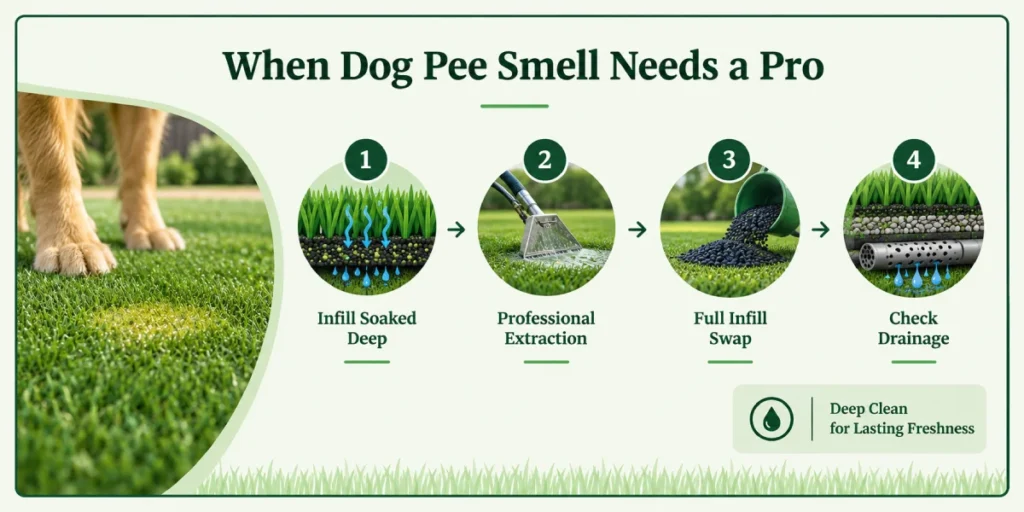
A store-bought cleaner can’t reach that far down anymore. At that point, you’re looking at a professional extraction or a full infill swap. It’s also worth having the drainage checked, since a slow base will keep feeding the problem no matter how many times you scrub the top.
The tell is simple: when the deep smell keeps returning after a real clean, the fix is under the surface, not on it.
Final Thoughts
A yard where the turf smells like dog pee is nearly always a cleaning or infill issue, not some sign you wasted your money on fake grass. Get the solids up early, rinse when you can, hit the deep smell with an enzyme cleaner, and make sure the infill under there was actually meant for pets.
Still fighting it? If the smell keeps winning, the team at Texas Tuff can take a look and tell you straight whether it’s a cleaning job or an install problem.
FAQs
How do I get rid of urine smell on artificial turf fast?
Scoop the solids, rinse the area, then hit it with an enzyme cleaner and give it time to sit. Need it gone before company shows up? A turf deodorizer buys you an hour or two. But when it comes to how to get rid of urine smell on artificial turf for good, the lasting fix is the enzyme soak, not the quick spray.
Will rain wash the dog pee smell out of my turf?
Rain helps with fresh pee, but it can’t dissolve crystallized uric acid, so it’s no substitute for a real clean. Some people swear the yard smells worse right after a storm. They’re not imagining it. The moisture wakes up the old deposits sitting in the base.
Does artificial grass hold odor more than real grass?
It can, yeah. There are no soil microbes down there doing the cleanup for you. That’s not the turf failing you. It just means the job dirt used to do for free now falls on you, and the right infill makes it painless.
Can I fix a smelly yard myself, or do I need a company?
Most of the time, yes, you can handle it with an enzyme cleaner and a tighter rinse habit. But if it bounces back within 48 hours every single time, the infill or the drainage is the real culprit, and that one is worth a pro’s eyes.