
Most homeowners pick lawn turf based on looks alone. That is a costly mistake. The wrong turf type wears down fast, holds heat, or drains poorly. This guide covers every major type of lawn turf, how each one performs in real conditions, and what to choose based on your yard and lifestyle.
Why Turf Type Matters More Than Price
Two lawns can look identical in a showroom photo. But six months later, one holds up, and one does not. The difference is almost always turf type.
Blade shape, fiber material, pile height, and infill (the material packed between the blades) all affect how a lawn feels, how it drains, and how long it lasts. Price per square foot tells you very little without knowing what you are getting.
In the Dallas–Fort Worth area, heat and heavy foot traffic are the two biggest challenges. The types of lawn turf grass that perform here handle both. Below, you will find a clear breakdown of each major category.
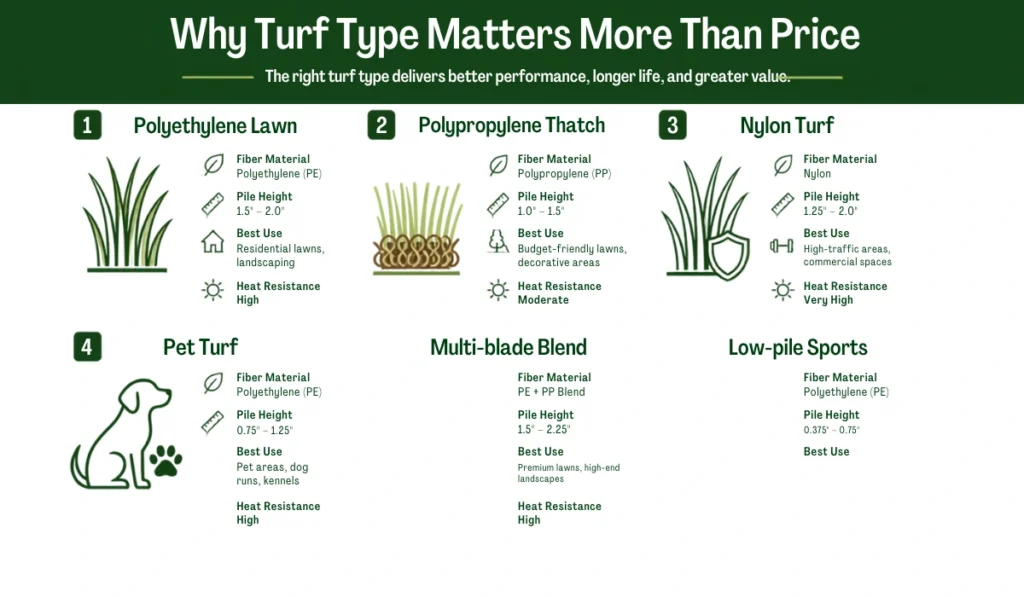
| Turf Type | Blade Material | Pile Height | Best Use | Heat Resistance |
| Polyethylene Lawn | Polyethylene (PE) | 1–2 in | Residential lawns | High |
| Polypropylene Thatch | Polypropylene (PP) | Under 1 in | Base/accent layer | Moderate |
| Nylon Turf | Nylon | 0.4–0.75 in | Putting greens, sports | Very High |
| Pet Turf | PE + antimicrobial | 1–1.75 in | Yards with pets | High |
| Multi-blade Blend | PE + PP mix | 1.5–2 in | Premium residential | High |
| Low-pile Sports | PE or Nylon | Under 1 in | Sports fields | Very High |
The 6 Main Types of Lawn Turf
These are the core categories you will encounter when shopping for artificial lawn turf. Each one suits a different set of needs.
Type 01: Polyethylene Lawn Turf
This is the most common type for residential yards. The blades are made from polyethylene, which is a soft, flexible plastic. It looks natural, drains well, and handles foot traffic without flattening quickly.
Most products in this category include a mix of green shades and brown thatch at the base. That combination mimics the look of real grass far better than single-color turf.
Best for: Front yards, backyards, family use
Type 02: Polypropylene Thatch Turf
Polypropylene is stiffer and more affordable than polyethylene. It is rarely used on its own for full lawns. Instead, it works as a thatch layer in higher-end products, adding realistic depth at the base of the blades.
On its own, polypropylene turf holds heat more than other types and tends to flatten faster under heavy use.
Best for: Budget installs, low-traffic decorative areas.
Type 03: Nylon Turf
Nylon is the most durable fiber used in lawn turf grass. It keeps its shape under extreme heat and heavy use. That is why most high-end putting greens use it.
It is firmer underfoot than polyethylene, so it is not the ideal choice for a play lawn. But for surfaces where performance matters most, nylon wins.
Best for: Putting greens, sports areas, high-traffic commercial
Type 04: Pet Turf
Pet turf is a specific category of polyethylene turf built to handle animal waste, odors, and digging. The main differences are drainage rate, antimicrobial treatment, and blade density.
Good pet turf drains more than 30 inches of liquid per hour. That speed matters. Slow drainage causes odors to build up fast in warm weather.
Best for: Dog runs, pet play areas, yards with multiple animals.
Type 05: Multi-Blade Premium Blend
These products combine multiple blade shapes and colors in a single roll. The result looks far more natural than single-color turf. Blades may use an S-curve or W-shape to stand up better and reduce shine.
Multi-blade lawns cost more per square foot. The investment shows. They are the top choice for homeowners who want a lawn that does not look artificial at first glance.
Best for: Premium residential, high-visibility front yards
Type 06: Low-Pile Sports Turf
Sports turf has a very short pile, usually under one inch. That keeps the surface firm and fast. It handles high foot traffic without breaking down and often includes shock-absorbing padding underneath.
This type is not comfortable for lounging or barefoot walking. It is built for performance, not relaxation.
Best for: Sports fields, game courts, playground surfaces
How Blade Shape Affects the Look and Feel
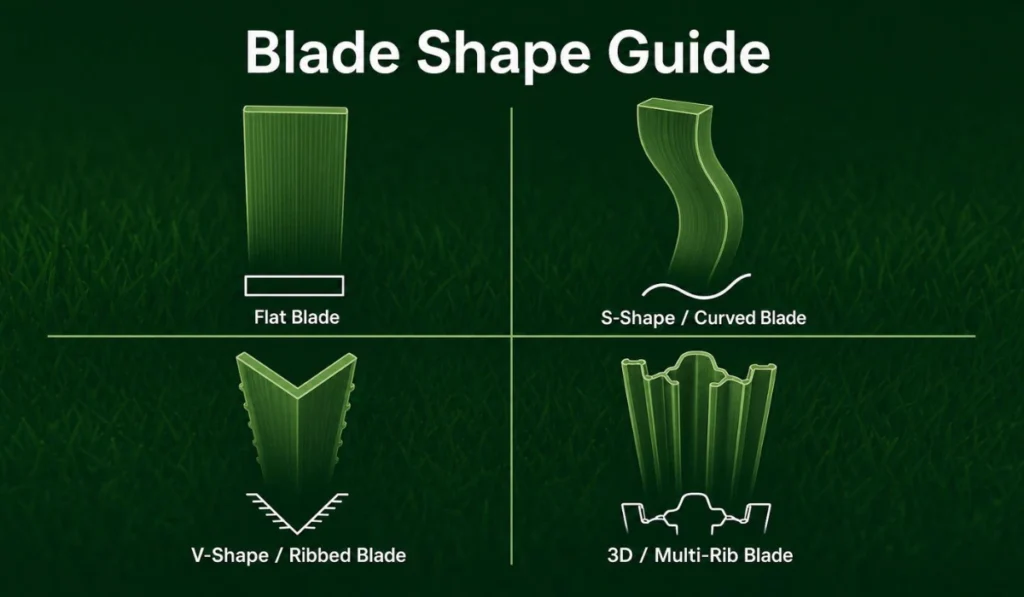
Blade shape is one of the most overlooked factors in choosing lawn turf grass types. It affects how the turf stands, how it reflects light, and how it feels underfoot.
Flat Blade
The most basic shape. It lies down easily under foot traffic. Tends to look less natural and may reflect more light (a “shiny” effect).
S-Shape / Curved Blade
Springs back after foot traffic. Stands upright more naturally. Diffuses light better, so it looks less plastic. Used in premium residential turf.
V-Shape / Ribbed Blade
Excellent spring-back and durability. Holds shape well under heavy use. Common in mid-range residential and sports products.
3D / Multi-Rib Blade
The most natural-looking option. Multiple fibers mimic real grass variation. Found in top-tier products like Rio Grande Deluxe.
Natural Lawn Turf vs. Artificial Turf: Which Should You Choose?
Some homeowners are not sure whether to pick natural grass or artificial turf. Both are real options. Here is a direct comparison to help you decide.
Natural Lawn Turf Grass Types
Three natural grass types dominate most warm regions: Bermuda, St. Augustine, and Zoysia. Each one needs regular watering, fertilizing, and mowing to survive. Hot summers push all three to their limits. Drought restrictions can make irrigation hard.
- Bermuda grass is the toughest of the three. It handles heat well and recovers fast after damage. But it goes dormant and turns brown in winter.
- St. Augustine stays green longer in cool weather but needs more water. It also struggles in heavy foot traffic.
- Zoysia is slow to establish and costs more to install.Once it grows, it is thick and low-maintenance.
Artificial Lawn Turf Types
Artificial turf stays green year-round with no watering. It does not go dormant. It does not need mowing, fertilizing, or pest control. In hot climates, high-quality artificial lawn turf holds its color and shape all year.
The main trade-off is upfront cost. A quality artificial lawn costs more to install than natural grass. But water savings, no lawn care bills, and a 15-year product lifespan typically make it the better investment over time.
What to Check Before You Buy Any Type of Lawn Turf
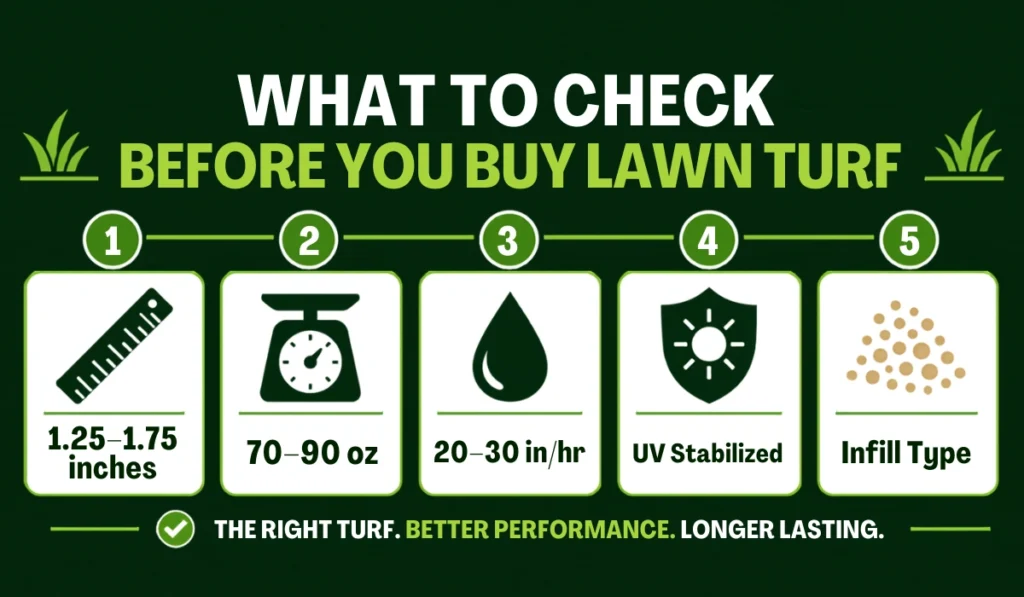
Every turf purchase comes down to five numbers. Get these right, and you will make a solid choice.
Pile Height
Pile height is the length of the blade from the base to the tip. Taller blades (1.5 to 2 inches) look more like a natural lawn. Shorter blades (under 1 inch) suit sports or putting surfaces. For most residential lawns, 1.25 to 1.75 inches is the sweet spot.
Total Weight (Face Weight vs. Total Weight)
Face weight is the weight of the fibers only. Total weight includes the backing. A higher total weight usually means a denser, more durable product. For a residential lawn, look for at least 70 to 90 ounces total weight. Premium products run 100 to 130 ounces.
Drainage Rate
Drainage is measured in inches per hour. You need at least 20 to 30 inches per hour for a standard lawn. Pet areas need more. Poor drainage causes odors, mold, and standing water. Always ask for this number before buying.
UV Stabilization
UV stabilization protects the blades from sun fading. Without it, colors fade within a few years. Every quality artificial lawn turf product sold in DFW should include UV-stabilized fibers. It is not an upgrade. It is a basic requirement in Texas.
Infill Type
Infill is the material packed between the blades after installation. It keeps blades standing upright and adds cushioning. Common types include silica sand, crumb rubber, and organic infill. Each has trade-offs. For pet areas, avoid crumb rubber and use a deodorizing infill instead.
Texas Tuff Turf Products: What We Recommend for Each Use Case
At Texas Tuff, we carry different types of lawn turf matched to specific DFW needs. Here is how our product line maps to the categories above.
For Standard Residential Lawns
Alamo is our entry-level polyethylene lawn turf. It handles medium to high foot traffic well. The blend of green blades with brown and green thatch gives it a natural look at a lower price point. At 72 ounces total weight, it is solid for most residential uses.
Palo Duro Deluxe steps it up with a 3D blade design. It deflects sunlight better and feels softer underfoot. Total weight is 105 ounces. It suits homeowners who want a lawn that holds its shape through heavy DFW summers.
For Premium Front Yards
Rio Grande Deluxe is our top-tier multi-blade product. It uses three blade colors and an S-pattern design. At 127 ounces total weight, it is the densest lawn turf we carry. Nothing in our range comes closer to the look of natural grass.
For Pets
Scooby Deluxe includes antimicrobial technology and drains over 100 inches of liquid per hour. It is the right choice for yards with multiple dogs. Turner and Hooch is the more affordable pet option, draining over 30 inches per hour with good odor resistance.
For Putting Greens
Augusta uses polyethylene fiber for a realistic ball roll. St. Andrews uses texturized nylon for the smoothest roll available. Both carry a 15-year warranty.
Common Mistakes When Choosing Lawn Turf Types
These are the errors we see most often when homeowners shop without guidance.
Choosing pile height by looks alone
A tall, fluffy pile looks great in photos. But very tall blades (over 2 inches) flatten quickly in high-traffic areas. They also cost more and need more infill. Match pile height to how the area is actually used.
Skipping the drainage spec
Every installer will tell you their turf drains well. Ask for the exact number in inches per hour. Then compare it to your area’s average rainfall. In DFW, you need turf that handles heavy rain events without backing up.
Using the wrong turf for pets
Standard residential lawn turf is not built for pet waste. The drainage rate is too slow. Standard turf also lacks antimicrobial treatment. Pet odors become a serious problem within months. Always use a purpose-built pet turf in any area dogs use regularly.
Ignoring the backing
The backing holds the blades in place. Cheap backing splits, buckles, or lets weeds through. Ask about backing layers and whether the product includes a weed barrier. Two-layer polyurethane backing is the current standard for quality turf.
Frequently Asked Questions
What are the main different types of lawn turf grass for residential use?
The main types are polyethylene lawn turf, multi-blade premium blends, and pet turf. Polyethylene is the most common for standard residential yards. Multi-blade blends look the most natural. Pet turf handles animal waste and odors without breaking down.
How long do different types of lawn turf last in Texas heat?
Quality artificial lawn turf with UV-stabilized fibers lasts 15 to 20 years in the DFW climate. Cheaper, non-UV-stabilized turf fades and degrades much faster. All Texas Tuff products carry a 15-year product warranty.
Is nylon turf better than polyethylene for lawns?
Nylon is more durable and holds its shape under extreme heat. But it is firmer and more expensive. For most residential lawns, polyethylene is the better choice. Nylon excels in putting greens and sports surfaces where performance is the priority.
What lawn turf grass type is safest for kids?
Polyethylene turf with a shock-absorbing pad underneath is the safest option for play areas. The pad reduces impact from falls. Avoid polypropylene-only turf for play surfaces, as it is firmer and holds more heat.
How do I know which type of lawn turf is right for my yard?
Start with three questions: How much foot traffic does the area get? Do you have pets? And what is your budget? Those three answers will point you to the right category. From there, pile height, weight, and drainage specs help you compare specific products.
Can I use the same turf type for front yard and backyard?
You can, but it is not always the best move. Front yards are often lower traffic and more visible. A premium multi-blade product makes sense there. Backyards with pets or kids need a more durable, higher-drainage product. Many homeowners use two different turf types across their property.