
Every turf sample in a showroom looks about the same from three feet away. Green, short, fake-grass-shaped. Pick the wrong one anyway, and you’ll find out fast, the first time a ball wobbles instead of tracking straight to the cup.
Choosing artificial grass for putting green projects really comes down to a handful of specs.. Pile height. Density. What’s underneath the turf, not just what’s on top. Get those right, and the green plays the same way in year five as it did on day one. Get them wrong, and you’ve got something that photographs fine and putts like a bad carpet.
What Kind of Grass Is on a Putting Green?
Real greens are bentgrass, or in hot climates, specialized Bermuda cut down to a fraction of an inch. That short, dense cut is basically the whole secret. Not the fertilizer, not the watering schedule. Just an incredibly tight, even cut, maintained daily.
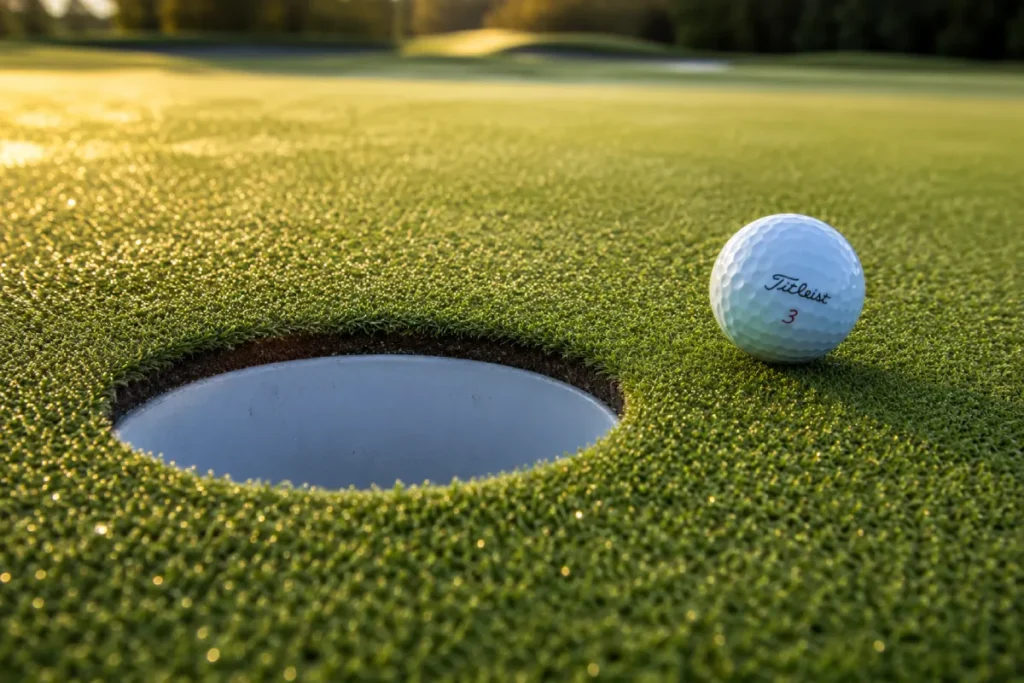
Synthetic turf is trying to fake that without the mower. You get a short, dense fiber engineered to lie flat instead of a living blade that needs mowing every day. Good turf gets close enough that most golfers can’t tell by feel. Cheap turf feels like a doormat, and putts drift because the surface isn’t consistent from one patch to the next.
Pile Height and Stimp Speed: The Two Numbers That Matter Most
Many assume shorter pile is always faster and always better. It’s not quite that simple.
Putting green turf usually sits between a half inch and three-quarters of an inch. Shorter than that, and the ball skips on anything but a dead-flat surface. Taller, and it drags like fringe instead of green.
Stimp speed is the number that tells you how the green behaves under a rolling ball, measured from a standard release point. Most home greens land somewhere around 9 to 11 once the infill and pile height settle in.
| Pile Height | Typical Feel |
| Under 1/2 inch | Fast, but punishing on any uneven ground |
| 1/2 to 5/8 inch | The balance most homeowners end up preferring |
| Over 3/4 inch | Slower, closer to collar or fringe turf |
Density, Face Weight, and Yarn Shape
Two rolls can share the exact same pile height and still play nothing alike. Density and face weight explain why. They describe how much fiber is packed into each square foot, and more fiber usually means a firmer surface with less give under a rolling ball.
Yarn shape matters here too. Diamond and monofilament fibers stand up straighter and hold a truer roll. Flat, ribbon-style blades lay over more easily, which creates a slight grain, not unlike a green that’s been mowed in one direction that day.
If a supplier can’t answer a basic question about face weight or yarn type, take that as a warning sign.
Backing, Drainage, and Base Matter as Much as the Blades
The blades get all the attention. The backing decides how long the green holds up.
A polyurethane-backed turf with proper perforation drains fast after a storm, so there’s no standing water waiting to ruin your next round of practice putts. Underneath that, the base does the heavy lifting. A compacted, well-graded aggregate base keeps everything level and keeps the low spots from creeping in over time.
None of that shows up in a photo. Which is exactly why it’s the part people skip when they’re rushing.
Comparing Turf Types: What “Best” Actually Means Here
Search around, and you’ll find no shortage of lists ranking the best artificial grass for putting green options, most of them comparing the same handful of specs covered above, just repackaged by brand.
When people ask about the best synthetic turf artificial grass on the market, they usually mean fiber material. Nylon holds its shape the longest and resists matting, so it shows up on serious practice greens, though it costs more. Polypropylene and polyethylene blends cost less and still hold up fine for a backyard green that gets moderate use.
Reviews chasing the best artificial turf for putting green installs tend to favor whichever brand keeps the tightest, most consistent stitch count across a full roll. Uneven manufacturing is the fastest way to get an inconsistent roll.
Budget matters too. If it’s the deciding factor, look at what’s marketed as the best synthetic grass for putting green value option. You’ll usually give up a bit of face weight or yarn stiffness for a lower price. Fine trade, honestly, for a green that gets weekend use instead of daily practice.
Sizing and Layout for a Home Green
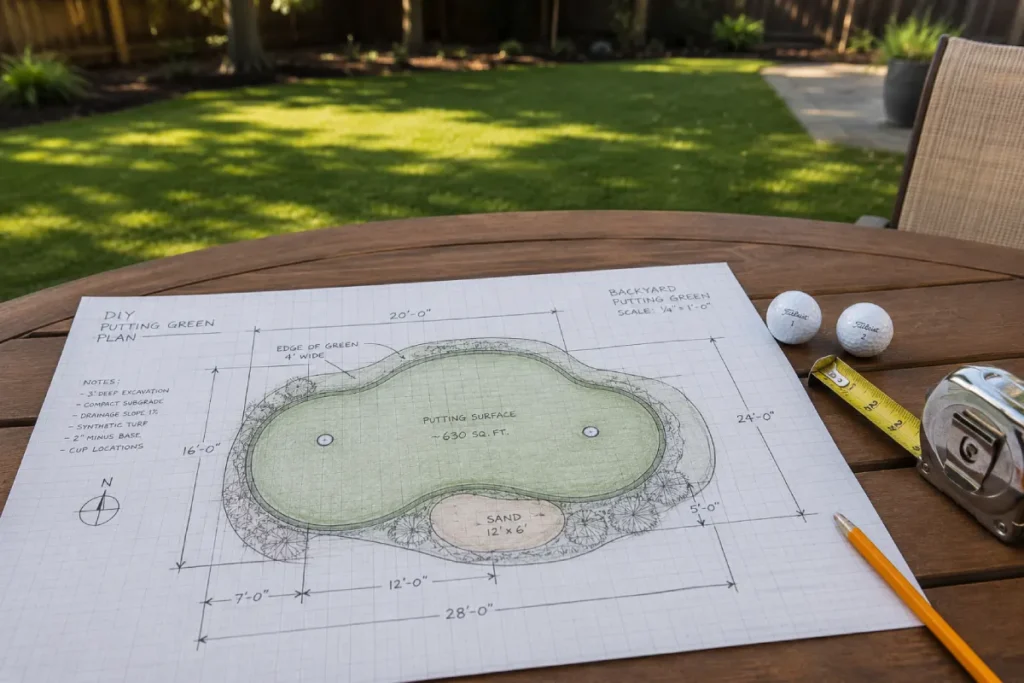
Bigger isn’t automatically better, and most people learn that the hard way after overbuilding. Most golfers spend the bulk of their practice time inside fifteen feet of the cup. A well-shaped green somewhere around 300 to 500 square feet covers realistic practice needs without eating the whole yard.
People chasing the best outdoor putting greens for home setups are usually weighing more than square footage anyway. Slope. Cup placement. How the green ties into the rest of the landscaping. A green tucked near a patio gets used constantly. One stuck in a back corner nobody walks past just sits there.
Cost, Installation, and What to Expect
Quality putting green turf costs more per square foot than standard landscape turf. The manufacturing tolerances are tighter, and that shows up in the price.
Installation cost depends heavily on how much grading and base prep the yard needs before turf goes down at all. A small, flat area is doable as a DIY project. Anything with slope, multiple cup levels, or drainage headaches is worth handing off to someone who installs putting greens specifically. Base mistakes get expensive fast once the turf is glued and seamed into place.
Final Thought on Getting the Right Artificial Grass
None of these specs matter much on their own. High face weight on the wrong pile height still putts poorly. Great yarn on a badly graded base still develops soft spots within a season.
The goal is matching pile height, density, and backing to how you’ll use the green, then trusting a properly built base to keep everything level for years. Skip that matching step, and even premium turf underperforms.
If you’re comparing options for your yard, we’ll walk you through samples and specs side by side, so the choice comes down to how a green will play, not how it looks under showroom lighting.
Frequently Asked Questions
How much infill does a putting green need?
Most putting green turf uses a thin layer of sand infill to help the blades stand upright and add a bit of weight. The exact amount depends on pile height and the manufacturer’s specs.
Can I install a putting green over an existing lawn?
Not directly. The grass and soil need to come out first, so a properly compacted base can go down underneath. That base controls drainage and levelness, not the lawn that used to be there.
How long does putting green turf last?
With a solid base and reasonable care, quality turf typically holds up eight to fifteen years before fading or matting starts affecting play.