

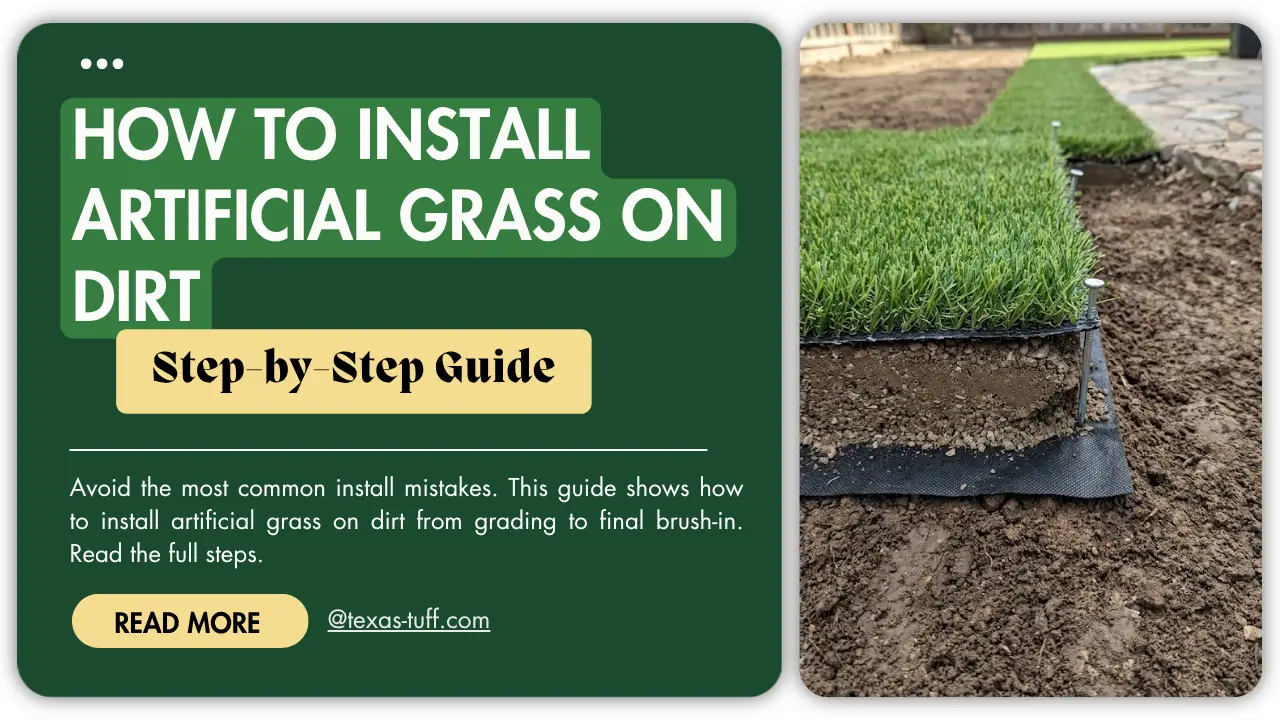
A mostly bare dirt yard can be a surprisingly good starting point for turf, since there’s no sod to cut out first and any low spots or drainage problems are easy to see. Maybe the lawn gave up during a dry summer, or the dogs wore it down, or nobody seeded it after the house went up. Whatever the reason, turf can go right over it with some prep.
That prep is what this guide covers. When people look up how to install artificial grass on dirt, they tend to focus on the turf, but the few inches of ground beneath it end up deciding how the lawn looks years from now. A well-built base can keep turf flat for over a decade, while a rushed one tends to show ripples after the first heavy rain.
Can You Put Artificial Grass on Dirt?
You can, as long as there’s a proper base in between. Turf laid directly on soil might look fine for a few weeks. After that, the ground starts shifting underneath it. The base rock holds everything still and lets rain soak through, and leaving it out is the most common reason homeowners end up redoing a turf job.
Why Bare Soil Needs a Base
Bare ground doesn’t stay put the way most people expect. A wet week can make it swell, a dry spell pulls it back, and anywhere that’s been dug up or walked on a lot will slowly settle lower than the rest of the yard.
So, can artificial turf be installed on dirt with nothing underneath? People do it, and for the first few months it may look okay. By the second season, though, the lumps and dips usually show, and rain starts to sit in the low spots.
Crushed rock fixes that. Packed down tight, the rock carries the weight evenly across the yard (foot traffic, patio furniture, a dog running laps), and rain drains down between the stones instead of sitting on top. It’s the main reason base work takes up the bulk of an install.
How Clay Soil Changes the Job
Clay is a harder soil to work with. Once it’s compacted, it gets very dense, and water takes its time getting through, which is why a clay yard can still be muddy three or four days after a storm. Sandy soil, by comparison, drains almost right away.
Not sure which you have? Try this: pick up a handful of damp soil and squeeze it. If it stays in a sticky ball that holds the print of your fingers, it’s probably clay, and you’ll want to dig a little deeper and be more careful with the slope.
Tools and Materials Checklist
Have everything ready before you start, because figuring out how to lay artificial turf on dirt with tools missing halfway through is frustrating.
A half-compacted base left overnight, especially if it rains, can set you back a day. Here’s what a typical backyard project calls for.
| Item | What It’s For |
|---|---|
| Sod cutter or flat shovel | Removing old grass and roots |
| Plate compactor (rental) | Compacting the soil and base layers |
| Crushed rock or decomposed granite | Building the base |
| Weed barrier fabric | Blocking weeds from below |
| Landscape rake and long level | Grading and smoothing |
| Utility knife with spare blades | Cutting turf |
| Seaming tape and turf adhesive | Joining turf pieces |
| Landscape nails or staples | Securing the edges |
| Infill and a power broom or stiff brush | Weighing down and lifting the fibers |
How much rock and infill you’ll need depends on the yard’s size and soil. A turf supplier can usually work out the amounts from your measurements.
How to Install Artificial Turf on Dirt, Step by Step
The order below is close to what most professional crews do on a typical yard, split into nine steps. Some go quickly. Grading and compacting, on the other hand, can take the better part of a day.
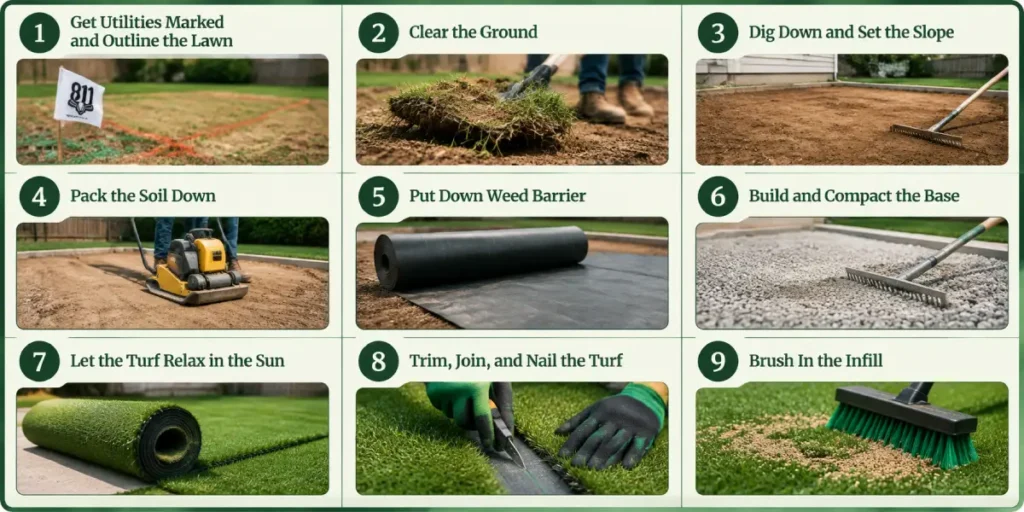
It pays to go slowly on the first few, because any mistake made there ends up hidden under the turf, and digging it back up later is a big job.
Step 1: Get Utilities Marked and Outline the Lawn
Start with a call to 811. The service is free, and it gets local utility companies to come out and flag buried gas, water, and electric lines. Most states ask for a few business days’ notice, so do this before you rent any equipment.
In the meantime, use a garden hose or a can of marking paint to outline where the turf will go, which makes it much easier to picture the finished shape.
Step 2: Clear the Ground
Everything growing in the area has to come out, and that includes the roots, not only what you can see on top. For a large yard, renting a sod cutter will save you hours of work, though a flat shovel does the job on a small patch.
Toss out any rocks or sticks you find along the way. Leftover roots and plant matter rot underground over time, and each one leaves a small soft spot under the turf.
Step 3: Dig Down and Set the Slope
Dig out about 3 to 4 inches of soil below where the finished lawn should end up. As you go, shape the ground so it falls away from the house at roughly a 1 to 2 percent grade.
Over 10 feet, that’s a drop of an inch or two, which is plenty to carry water off the yard without feeling like a slope when you’re standing on it.
Step 4: Pack the Soil Down
Run the plate compactor over the exposed soil before adding anything. Many guides on how to install turf on dirt rush through this part, yet it’s what stops the ground from settling later. Lightly misting dry soil first helps it pack down tighter.
Step 5: Put Down Weed Barrier
Roll out the weed barrier over the compacted soil, letting each strip overlap the next by a few inches. That fabric is what keeps weeds from working their way up through the base. Some installers put it on top of the base instead, directly under the turf. Either spot works, as long as it’s there.
Step 6: Build and Compact the Base
Next comes the base itself: 2 to 4 inches of crushed rock or decomposed granite. Rather than dumping it all at once, add about an inch at a time, wet it down, and compact it before the next layer goes on. A long level or a straight 2×4 will show you any high and low spots.
The finished base should feel almost as hard as a sidewalk. Of everything involved in how to install artificial grass on dirt, this layer does the most to keep the lawn flat.
Step 7: Let the Turf Relax in the Sun
Unroll the turf and give it an hour or two in the sun before you start cutting. The warmth softens the backing, and the creases left from shipping gradually flatten out. Look closely at the blades before you position each piece, because they should all lean the same direction.
First-timers working out how to lay fake grass on dirt get the grain wrong more than almost anything else, and the result is an obvious stripe along the seam.
Step 8: Trim, Join, and Nail the Turf
Trim the edges with a sharp utility knife, working from the back of the turf when possible, and swap in fresh blades as they dull. Join pieces with seaming tape and turf adhesive, keeping the gap between rows tight. Around the outside edge, drive landscape nails about every 6 inches. Larger pieces also need a few nails spaced across the middle.
Step 9: Brush In the Infill
Last, spread infill with a drop spreader and brush it in against the grain using a power broom or a stiff push broom. Two or three light passes spread it more evenly than one heavy one. Infill holds the turf down and keeps the blades upright, and it also protects the backing from UV damage.
How to Lay Artificial Grass on Soil That Drains Poorly
Some yards just don’t drain well, even after careful grading. Low corners, spots below a downspout, and heavy clay are where water tends to collect.
If you’re working out how to install artificial grass on soil like that, the steps stay mostly the same. What changes is how much work the base has to do.
Base Depth for Clay
Going deeper is the main fix. Plenty of installers dig 4 to 6 inches in clay and put a coarser rock at the bottom of the base, which gives water more room to collect and drain away.
So when it comes to how to lay turf on soil that stays wet, depth and slope do most of the heavy lifting.
When to Add a Drain Line
Still seeing puddles after grading? A perforated pipe laid in a gravel trench can move that water to a lower part of the yard or out to the street. Drain lines are common along fences, next to patios, and at the base of a slope. They add to the cost, but nowhere near as much as tearing out a soggy lawn.
Laying Down Artificial Turf Around Trees, Slopes, and Hardscape
Very few yards are perfect rectangles, so expect some cutting around obstacles. With trees, leave a ring of open soil or mulch a few inches wide around the trunk, since roots need air and water too. Slopes need extra nails and a well-packed base, or the turf can slowly creep downhill. Where turf meets a patio or walkway, a metal or composite edging strip gives it a firm stop and covers the cut edge.
Common Mistakes When Learning How to Lay Turf on Dirt
Most turf problems start with a shortcut during the install. On the day it goes in, the lawn usually looks great either way. It’s six months or a year later that bumps appear, water pools, or a seam starts to lift, and fixing it means pulling the turf back up. Keep an eye out for these:
- Leaving roots and organic matter in the soil
- Skipping compaction, or compacting the base in one thick layer
- No slope, so water sits under the turf
- Pieces laid with the grain running in different directions
- Too few nails along the edges
DIY or Professional Installation?
A small, flat area is a reasonable weekend project. Plenty of homeowners learn how to install fake grass on dirt from a few videos and get good results on a patch under 200 square feet. Larger yards are a different story. There’s more base rock to haul, longer seams to join, and more room for grading errors.
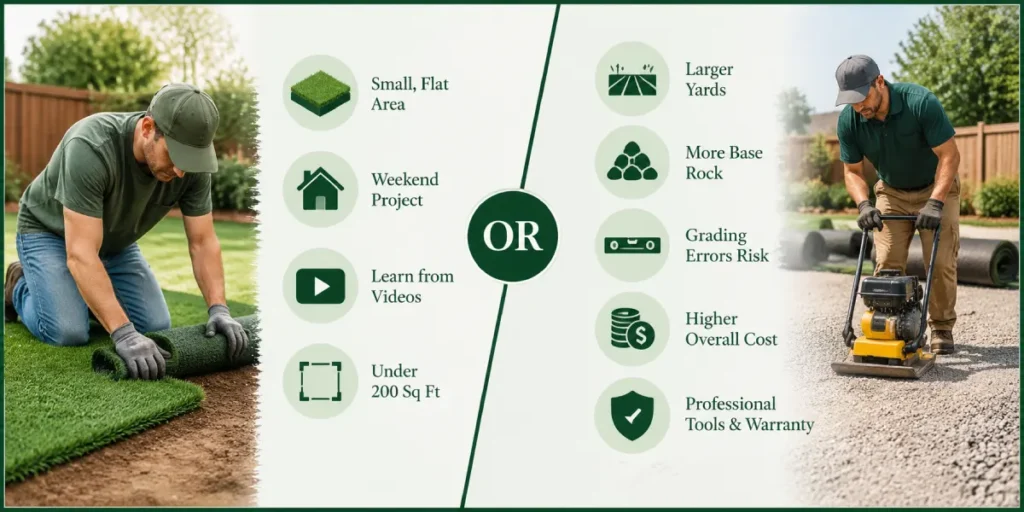
Cost plays a part too. According to Angi, turf materials alone run $2 to $8 per square foot, and professional labor comes on top of that. A crew brings its own compactor and cutting tools, and most installers include a warranty that a DIY job won’t have. Texas Tuff’s guide to how much artificial grass costs breaks the numbers down further.
Final Thoughts
Patience with the ground is most of what how to install artificial grass on dirt comes down to. Clear it, grade it, compact it, and build a solid base, and the turf itself goes down in a few hours. Rush those early steps, and no turf product will hide the result.
The payoff starts right away on the water bill. According to the EPA’s WaterSense program, more than 30 percent of the water an average household uses goes outdoors. If your yard is large, sloped, or sitting on clay that won’t drain, Texas Tuff can take care of the whole job, from digging out the soil to brushing in the last of the infill. A site visit first lets the crew check your soil and drainage before anything gets dug up.
FAQs
How Much Soil Should Be Removed Before Laying Turf?
For most yards, digging out 3 to 4 inches is enough. Clay soil or areas that stay damp need a bit more, closer to 4 to 6 inches, so there’s room for a thicker base that drains better. Whatever depth you choose, the finished turf should sit roughly level with the patio, paths, and other hard surfaces nearby.
Is Weed Barrier Worth Adding Under Turf?
Most installers would say yes. Compacted base rock slows weeds down, but a few will still push through if there’s no fabric in the way. Weed barrier costs little compared to the turf, and it saves a lot of pulling later.
How Long Does a Backyard Turf Install Take?
For a pro crew, most backyards take one to three days, depending on the size and how much prep the ground needs. Doing it yourself takes longer. Plan on a couple of weekends, since digging and compacting by hand goes slowly.