

Homeowners need a consistent routine to keep an artificial lawn looking its best. That means regular debris removal, surface rinsing, and fiber brushing. Synthetic lawns don’t need heavy maintenance, but everyday use can still make them look dull. Food spills, pet urine, and heavy foot traffic all call for routine care. Keeping up with it also helps make sure the lawn stays safe for family and pets.
How Often Should You Maintain an Artificial Lawn?
How often you maintain your synthetic lawn depends on how much it’s used. Use this frequency guide to keep your outdoor space functional. You can also check our artificial turf maintenance guide for more detail.
| Maintenance Frequency | What to Do |
|---|---|
| Weekly | Remove leaves, twigs, dirt, and other debris from the lawn. |
| Every 2–4 Weeks | Brush high-traffic areas and rinse away dust, pollen, and surface dirt. |
| Monthly | Check the lawn, edges, drainage, and areas beneath outdoor furniture. |
| As Needed | Clean food spills, pet waste, stains, and flattened patches promptly. |
| Seasonally | Deep clean the lawn and remove accumulated leaves and garden debris. |
| After Heavy Use | Brush and inspect areas used for parties, play, gatherings, or frequent foot traffic. |
How to Maintain Artificial Lawn During Everyday Backyard Use
Residential lawns are the gathering place for family. Kids run around with pets and siblings, and weekends often bring barbecues and get-togethers. That’s why it matters to maintain the lawn during everyday use, not just after it’s visibly dirty.
Take Care With Outdoor Furniture and Heavy Objects
Placing heavy items, such as wrought iron tables, large planters, or weighted umbrella stands, on synthetic grass can crush the fibers. Use wide furniture coasters or pads. They’ll spread the weight evenly across the turf surface. You can also move these items a few inches every month to keep the infill from becoming overly compacted in one spot.
Give High-Traffic Areas Extra Attention
The path from door to gate is a high-traffic area. These zones are prone to matting, where the grass blades lie flat against the ground. You can avoid this by using a synthetic-bristled brush. Frequent brushing in these zones prevents a flattened, shiny, worn look.
Keep Children’s Play Areas Clean and Clear
Backyard play sets, inflatable pools, and toy bins can trap moisture in the lawn. Move portable toys regularly so the turf can breathe. Also make sure kids don’t bring sharp objects or harsh craft materials onto the lawn. It protects both the turf and the kids.
Manage Food and Drink Spills During Outdoor Gatherings
Barbecues and family dinners often mean sauces, sodas, or grease landing on the grass. Most spills are manageable with a simple mixture of warm water and mild household detergent. Blot up liquids. Don’t rub them deeper into the turf backing.
Keep Your Artificial Lawn Looking Natural
The goal of synthetic turf is to look like a perfectly manicured natural lawn. Keeping that look takes attention to both the physical structure of the blades and the cleanliness of the surface.
Keep Grass Blades Upright
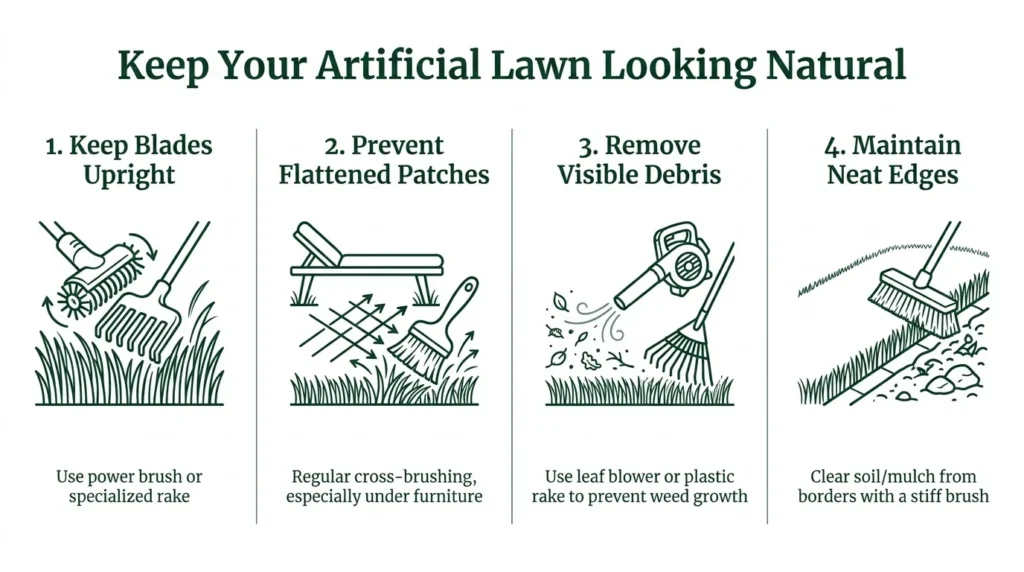
Artificial grass looks most realistic when the blades stand vertically, showing off the different shades of green and tan thatch underneath. Over time, gravity and foot traffic cause the blades to lean. A power brush or a specialized turf rake lets you lift the fibers back up.
Prevent Bare-Looking or Flattened Patches
When fibers stay flattened for months, they can crease permanently. This often happens under heavy trampolines or stationary benches. Regular cross-brushing helps prevent these bald-looking spots from forming. If a patch is especially stubborn, wet it down, then brush aggressively.
Keep the Lawn Free From Visible Debris
Fallen leaves or pine needles break down into a soil-like layer within the turf, creating a medium where weeds can take root. Keep the lawn clear by using a leaf blower on a low setting or a plastic garden rake.
Maintain Clean, Neat Lawn Edges
Soil or mulch from nearby garden beds often washes onto the turf during rainstorms. Use a stiff brush to clear the edges and keep the turf tucked securely against the border.
Seasonal Artificial Lawn Care for Homeowners
Weather changes affect lawn maintenance. Adjusting your routine by season helps prevent long-term damage from heat or debris.
| Season | Artificial Lawn Care |
|---|---|
| Spring | Clear winter debris, remove weeds, brush flattened areas, and check lawn edges and drainage. |
| Summer | Rinse away dust and pollen, clean spills promptly, and give high-traffic areas extra attention. |
| Fall | Remove fallen leaves, twigs, seeds, and other garden debris regularly to keep the lawn clear. |
| Winter | Clear debris, avoid leaving heavy furniture in one spot, and keep drainage areas free of blockages. |
Common Artificial Lawn Maintenance Mistakes
Avoiding these mistakes extends the lifespan of the synthetic lawn. It also keeps the manufacturer’s warranty intact.
Avoiding these mistakes extends the lifespan of your synthetic lawn and helps protect your warranty coverage.
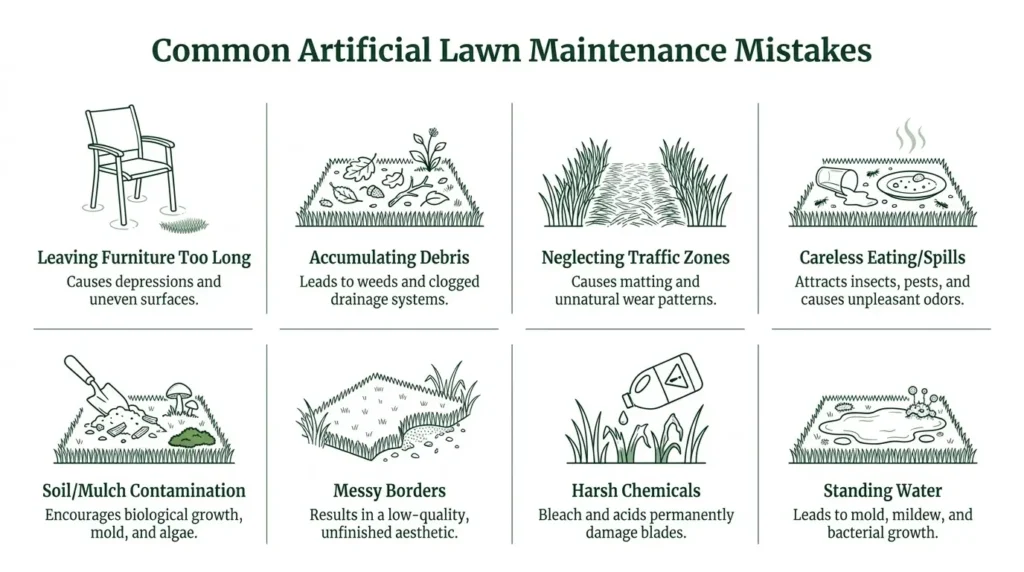
- Leaving outdoor furniture in the same spot too long, which causes permanent depressions in the backing.
- Letting debris and organic matter build up in the yard, which turns into compost, invites weeds, and blocks drainage.
- Skipping regular brushing in high-traffic zones, which leaves the lawn looking matted and worn.
- Eating on the lawn without cleaning up. Sugary or greasy residue attracts insects and can cause odors if not rinsed away.
- Letting soil or mulch get into the lawn, which contaminates the infill, makes it harder to clean, and encourages biological growth.
- Neglecting lawn edges and surrounding landscaping, which makes the entire installation look low-quality.
- Using bleach or acidic cleaners, which can discolor the blades and damage the backing.
- Ignoring clogged drainage. Standing water left too long invites mold.
Proper Maintenance Keeps Your Artificial Lawn Looking Its Best
Consistent care keeps a synthetic lawn attractive and helps homeowners avoid the high cost of professional repairs or early replacement. A well-maintained lawn gives your family a stable surface for everyday activities while keeping the curb appeal of a lush, green yard.
FAQ
Can I use a vacuum cleaner on my artificial lawn?
Vacuum cleaners aren’t recommended for most synthetic turf because they can pull up the infill layer. Use a leaf blower or a turf-specific tool instead to safely remove small surface debris.
What is the best way to remove pet scents from artificial lawn?
Control pet odor by rinsing the spot with water right after your pet goes. Then treat the area with an enzymatic pet deodorizer that’s safe for turf.
Can I use a metal rake on artificial grass?
Avoid metal rakes. They can rip the backing or damage the polyethylene fibers. Stick to a plastic garden rake or synthetic-bristle brush to groom the lawn safely.
If I find a weed in the turf, what should I do?
Pull small weeds by hand. For a recurring weed problem, use a water-based weed killer, but confirm first that it won’t melt or discolor the synthetic fibers.
What’s the best way to get chewing gum off artificial grass?
Hold an ice cube against the gum until it turns brittle, then carefully scrape it off the blades with a dull knife or spoon.
What is infill, and does it need to be replaced?
Infill, made of sand or coated rubber, sits between the grass blades to add stability and cushioning. Heavy use can wash it away or compact it over time, so most lawns need a fresh layer every few years to stay strong.
Will a lot of snow harm artificial grass?
The snow itself won’t harm the fibers, but let it melt naturally rather than forcing removal. Using a metal shovel to clear snow can damage the lawn.