

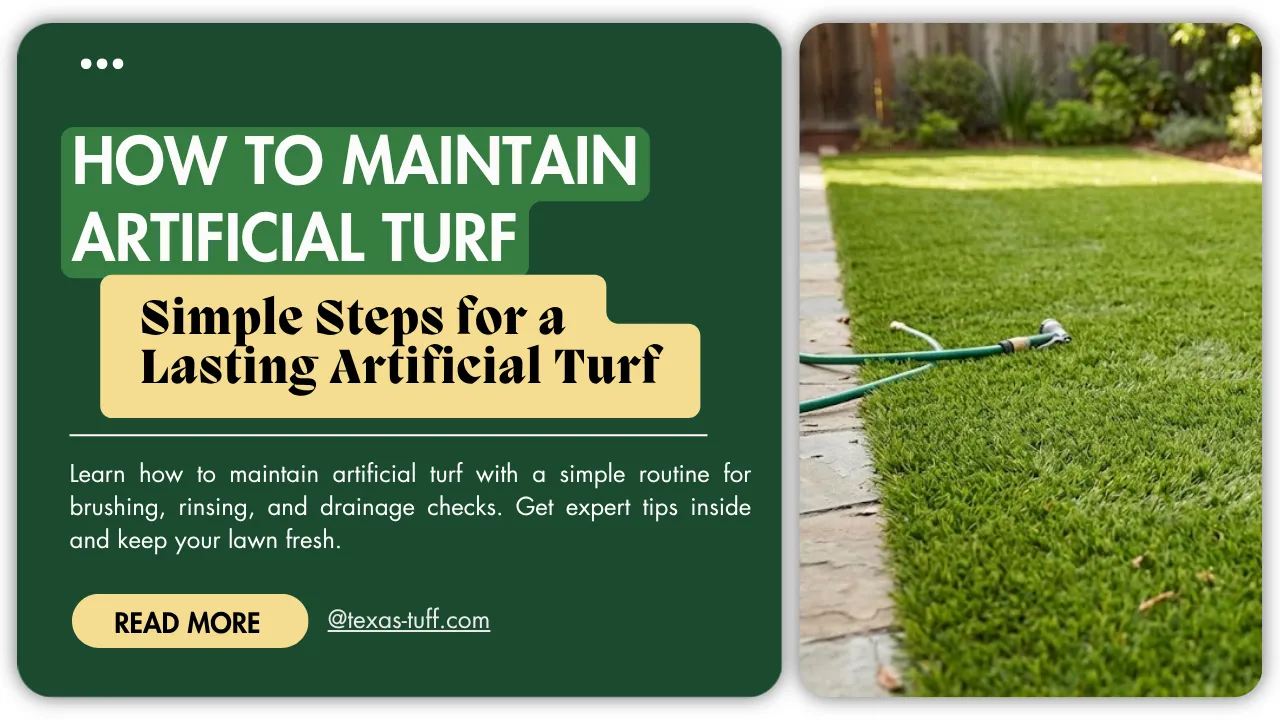
Artificial turf gives homeowners a low-effort alternative to a natural lawn. But “low-effort” does not mean “no effort.” Maintenance still matters. Regular raking, brushing, and rinsing keep the surface looking good and draining properly. Skip these simple jobs and you risk odors, matting, and drainage problems.
Why Artificial Turf Care Matters
Neglected turf loses its color and starts to look dusty. Over time, it can also suffer structural damage. When organic matter, such as leaves, seeds, or dirt, is left to sit, it breaks down and works its way into the turf backing. This forms a “bio-layer,” a buildup that traps water and can feed moss or weeds, even on a synthetic surface.
Heavy foot traffic also flattens the polyethylene blades over time. Without regular brushing, these blades stay matted down. They lose their upright look and soft texture.
For pet owners, rinsing is essential. Skip it, and uric acid from pet urine crystallizes in the infill, creating odors that get harder to remove the longer they sit. Regular maintenance keeps the sub-base working the way it should, so drainage holes stay clear and water does not pool or breed mold.
How Often Should You Maintain Artificial Turf?
There is no one-size-fits-all schedule for turf care. A shaded backyard with three large dogs needs a different routine than a decorative front yard in a dry climate. Use this as a starting framework:
| Maintenance Task | How Often | When to Do It More Often |
|---|---|---|
| Remove leaves and debris | Weekly | After storms or in tree-covered yards |
| Remove pet waste | As needed | Immediately after your pet uses the turf |
| Rinse the turf | Every 2-4 weeks | During dusty, hot, or dry weather |
| Brush high-traffic areas | Monthly | Weekly in heavily used areas |
| Check for weeds and moss | Monthly | In shaded or consistently damp areas |
| Check infill levels | Every 3-6 months | In areas with heavy foot traffic or pets |
| Inspect drainage | Seasonally | After heavy rain or if water starts pooling |
| Deep clean | 1-2 times a year | When odors, stains, or buildup persist |
| Professional maintenance | As needed | For severe matting, odors, buildup, or drainage concerns |
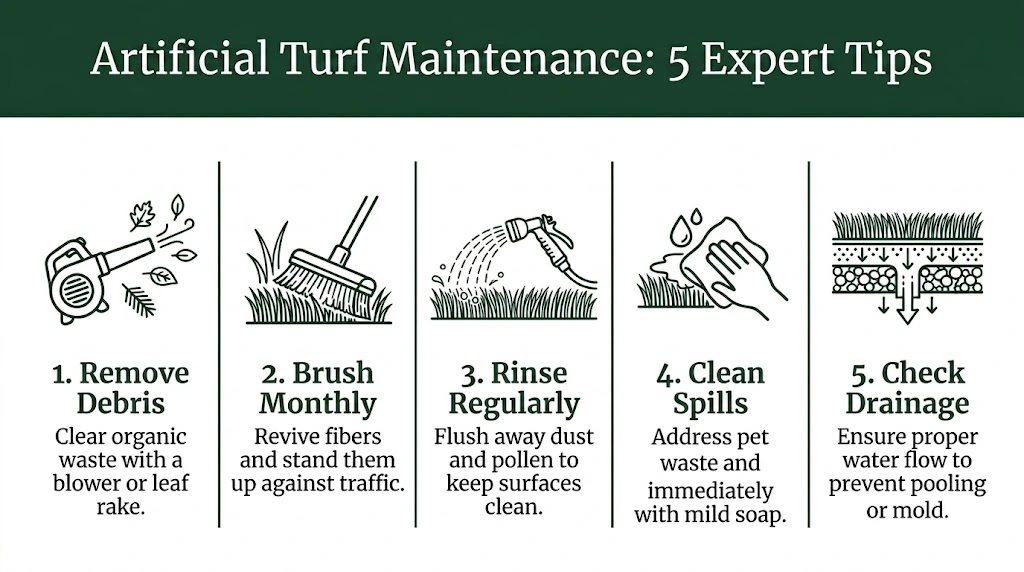
How to Maintain Artificial Turf: 5 Expert Tips
Focus on these five core pillars of care to keep your lawn in peak condition.
1. Remove Leaves and Debris
Organic matter is the main enemy of turf drainage. Use a leaf blower on a low setting, or a synthetic turf rake with plastic tines, to clear fallen leaves, twigs, and blossoms. Avoid metal rakes. Their sharp tips can tear the turf backing or pull out grass fibers. Clearing debris weekly keeps it from breaking down into the surface.
2. Brush High-Traffic Areas
Cross-brushing means brushing against the grain of the turf blades so they stand upright again. Focus on high-traffic zones, such as the path from the sliding door to the patio or the area under a swing set. Do this monthly to keep the fibers from becoming permanently flattened.
3. Rinse Away Dust and Residue
In arid climates like Texas, dust and pollen build up on the blades and dull the green color. Soaking the lawn with a garden hose every few weeks keeps it looking fresh. Rinsing also spreads the infill evenly and flushes small particles into the drainage system instead of leaving them on the surface.
4. Clean Up Spills and Pet Waste Quickly
Pet waste damages turf if it sits too long. Remove solid waste right away to avoid smearing it into the fibers, then flush the area thoroughly. Most turf systems drain well, so a weekly rinse of the “potty area” is usually enough to handle liquid waste. If odors persist, use a turf-safe enzyme cleaner to break down the organic compounds causing the smell, rather than just masking it.
5. Check Infill and Drainage
Infill material, such as silica sand or coated granules, fills the space between the blades. It adds weight and helps the blades stand upright. Heavy rain or activity can push infill out of place over time and create low spots. Check periodically that the infill is level. Also watch your lawn during heavy rain. If water puddles and does not drain within a few hours, the drainage holes may be clogged or the sub-base may have become compacted.
Adjust Your Turf Maintenance for Your Climate
Your local environment shapes your main maintenance concerns.
| Climate or Condition | Main Maintenance Concern | How to Adjust Your Routine |
|---|---|---|
| Hot & Dry | Dust, pollen, and surface heat | Rinse more often and brush high-traffic areas regularly. |
| Humid & Wet | Moisture, moss, and organic buildup | Remove debris quickly and keep drainage paths clear. |
| Coastal | Salt, sand, and moisture | Rinse regularly and inspect drainage and turf edges. |
| Cold & Freezing | Ice, snow, and freeze-thaw conditions | Remove debris gently and avoid harsh tools or excessive force. |
| Heavy Rainfall | Standing water and displaced debris | Check drainage after storms and clear blocked areas promptly. |
| Shaded Areas | Moisture retention and moss growth | Remove leaves frequently and improve airflow around the turf. |
Beyond regional climate, watch for micro-climates in your own yard. Shaded corners stay damp longer and may need more frequent debris clearing to prevent algae. Sunny spots may need more frequent rinsing to manage surface heat during summer.
Common Artificial Turf Maintenance Mistakes
To help your lawn reach its 15-20 year lifespan, avoid these common mistakes:
- Pressure washing too close: High pressure can blow out the infill or damage the turf backing.
- Not cleaning up after pets: Left-on urine allows ammonia to build up, making odors much harder to neutralize later.
- Using metal tools: Metal rakes or shovels can snag the mesh backing and cause costly rips.
- Believing the “no-mow myth”: Thinking the lawn needs zero maintenance often leads to drainage failure within five years.
- Using harsh chemicals: Bleach or acidic cleaners can stain the polyethylene blades. Stick to pH-neutral, turf-safe cleaners.
DIY Maintenance vs. Professional Turf Care: Is It Worth It?
Homeowners can handle the basic routine with tools like a hose and a plastic rake. However, professional maintenance services offer specialized equipment that a homeowner doesn’t have.
DIY Maintenance is best for weekly debris removal, spot-cleaning spills, and light brushing. It is the most cost-effective way to keep a lawn looking “good” on a day-to-day basis.
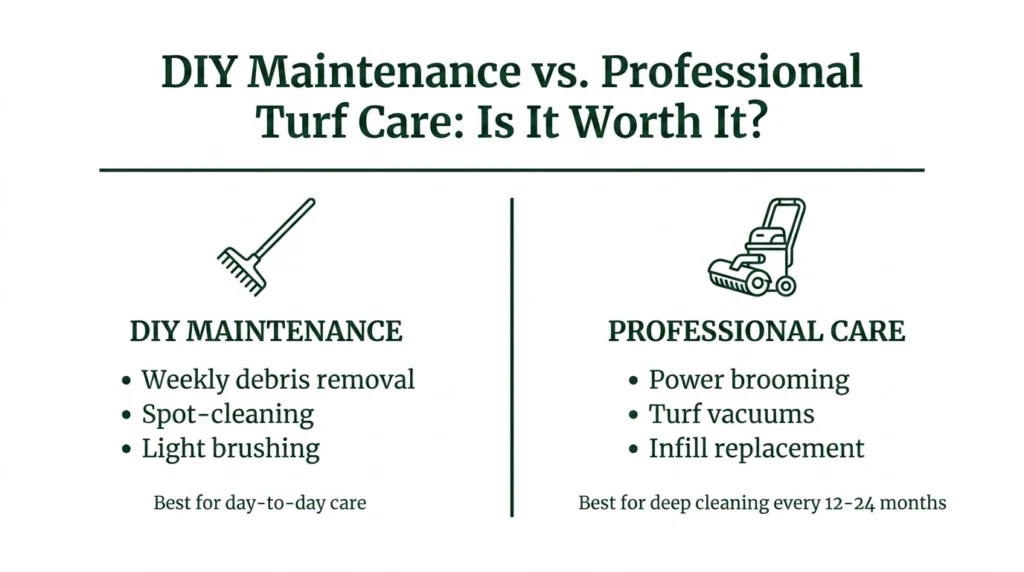
Professional Maintenance is recommended once every 12–24 months or for homes with multiple large dogs. Professionals use “power brooms” that provide a much deeper brush than manual raking. Another one they use is “turf vacuums” that can remove and replace old, compacted infill. If your lawn has developed significant matting or a persistent odor that DIY cleaners can’t fix, a professional deep clean is a worthwhile investment to restore the lawn’s performance.
When Maintenance Isn’t the Real Problem
Some lawn problems cannot be fixed by raking and rinsing. These issues usually point to improper installation, not a lack of cleaning:
- Water stands for more than 30 minutes after rain: The sub-base may be poorly graded, or the wrong material was used underneath.
- Loose seams or edges: The turf is separating because the adhesive failed or the seam tape broke.
- Bubbles in the surface: The turf was not stretched properly during installation, or the anchor spikes have loosened.
- Melted spots: These usually come from sunlight reflecting off nearby low-E glass windows, not from a lack of maintenance.
Conclusion
Artificial turf care is simple once it is routine. Remove debris regularly, rinse and brush high-use areas, check drainage, and handle pet waste or stains right away. Factor in your climate and yard conditions, and call in professional help when deeper cleaning or repairs are needed.
FAQs
When should I brush artificial turf?
Brushing should take place at least once monthly. Brushing may be necessary every two weeks, in high-traffic areas such as walkways or play areas, to keep the lawn looking natural and to avoid matting.
Will I be able to use my normal broom on synthetic turf?
A stiff-bristled synthetic broom will indeed do it for light grooming. Just steer clear of brooms that have metal wires or very soft indoor bristles, which are harmful to the fibers or don’t work well to remove the matted blades.
What would happen if there was no maintenance of artificial turf?
If not maintained, organic debris will break down and help weed growth. Over time, the blades will roll over and flatten, and pet urine can create undesirable odors that become permanent within the infill.
Is it easier to maintain artificial turf than natural grass?
Yes, it’s much simpler to maintain artificial turf. You don’t need weekly mowing, fertilizing, aerating, and heavy watering. This saves the average homeowner dozens of hours of work and hundreds of gallons of water annually.
Do I need to hire someone to clean artificial turf?
Absolutely. Homeowners can care for their lawn with a leaf blower, garden hose, and plastic rake. Only a professional can be used for deep cleaning, replacement of infills, or when there is significant pet odor.