

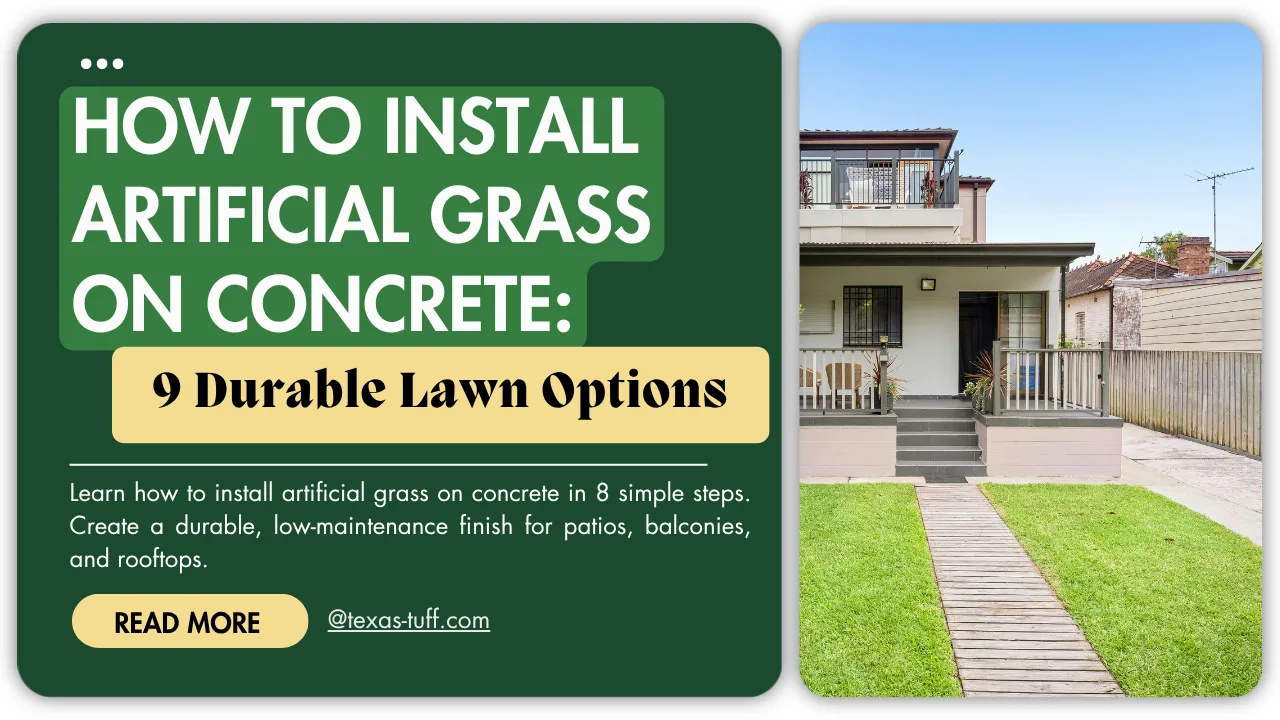
More homeowners now cover concrete with artificial grass. It turns a bare balcony, patio, or rooftop into a soft green space you actually want to use. If you are considering DIY artificial turf installation, proper surface preparation is especially important when installing over concrete.
The look is only part of the win. Turf stays low-maintenance year-round, hides tired concrete, and holds up to kids and pets.
Pet owners love the quick cleanup. A rinse with the hose keeps the surface fresh, and modern turf drains fast.
Still, a good result depends on prep. Skip the prep and your turf can lift, smell, or wear out early. Do it right, and the lawn lasts 15 years or more.
This guide shows how to install artificial grass on concrete step by step. We keep the language simple and the steps clear so you can start this weekend.
Why Install Artificial Grass on Concrete?
Concrete patios, balconies, and slabs often look dull and feel hot in summer. Artificial grass turns those hard spaces into soft, green areas your family can enjoy year-round. If you’re considering turf near a pool, choosing the best artificial grass around pools can also help create a comfortable, low-maintenance outdoor area.
Turf also cuts glare and heat bounce near the house. That means cooler rooms and lower AC bills in summer.
Kids get a safer play zone. The foam pad under the turf softens falls and takes the sting out of stumbles.
Pet owners win too. Turf drains fast, resists stains, and rinses clean with a hose in minutes.
Learning how to install artificial grass on concrete is simpler than most homeowners think. The job needs care, but it does not need heavy machinery or deep digging.
Can You Lay Artificial Grass Directly on Concrete?
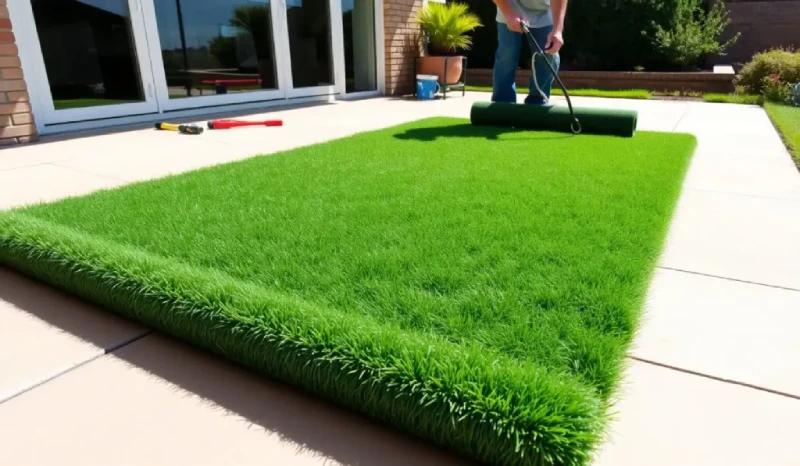
Yes. You can lay artificial grass on most solid concrete surfaces. The concrete must be sound, mostly flat, and able to drain water.
Old cracks and small dips are fine. Deep holes, standing water, or crumbling edges must be fixed first.
Check the slab for hollow spots by tapping with a hammer. A dull thud means loose concrete that needs a patch or a full repair.
A foam shockpad underlay is a smart add-on. It adds cushion, hides small bumps, and helps your turf feel more like a real lawn.
Skip the underlay only on small balconies where height matters. Even then, a thin 5mm pad still improves comfort.
Tools and Materials You Will Need
A smooth install starts long before you roll out the turf. The right artificial grass installation tools save hours of frustration and stop small mistakes from turning into costly do-overs.
Lay everything out in one spot near the work area. This way, you are not running to the garage every ten minutes, and you can spot missing items before the glue is open.
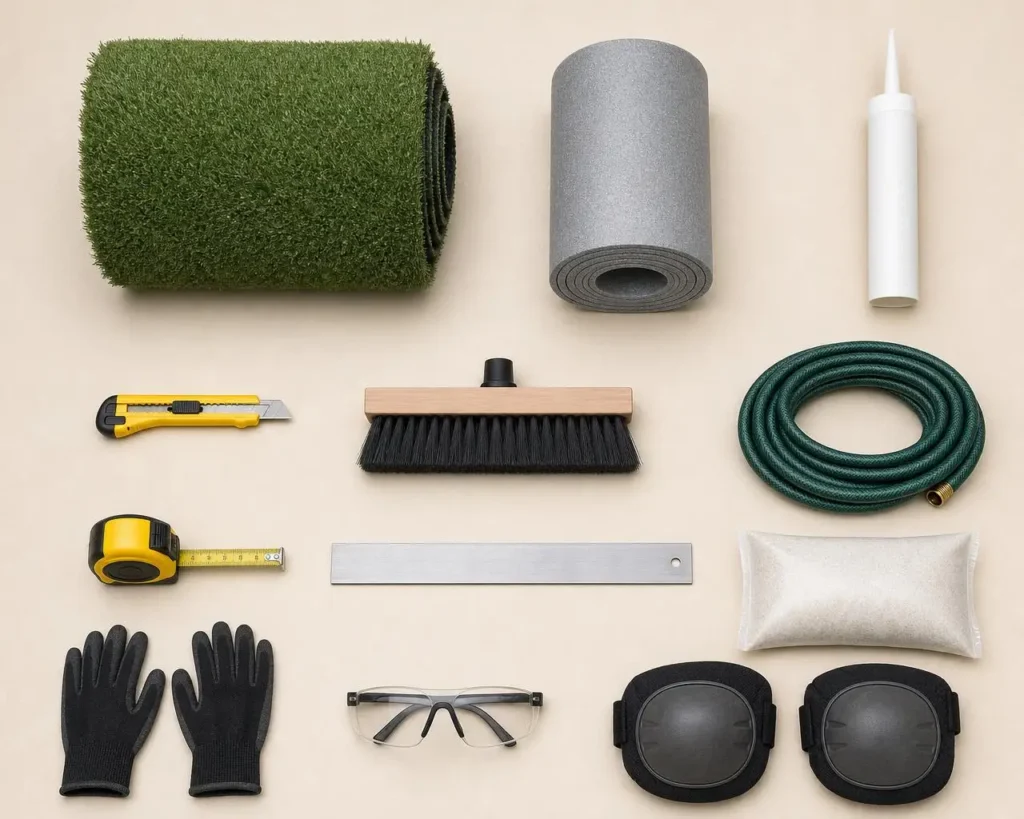
Here is the full kit our Texas Tuff crews load into the truck for a standard concrete install.
- High-quality artificial turf roll (we recommend Texas Tuff turf)
- Foam shockpad underlay, 10mm or thicker
- Outdoor turf adhesive or double-sided turf tape
- Sharp utility knife with spare blades
- Stiff broom or power brush
- Pressure washer or garden hose
- Tape measure and chalk line
- Straight edge or long ruler
- Silica sand infill (optional but helpful)
- Gloves, knee pads, and safety glasses
A few notes on quality. Cheap turf backing splits in heat within a season or two, so spend where it counts. Always buy 20 percent more turf than your measured area to cover trim waste and future patch jobs.
For adhesive, pick an outdoor polyurethane turf glue rated for wet conditions. Household construction adhesive fails fast under sun and rain.
Keep spare utility blades close. A dull blade tears the backing and leaves ragged seams that never sit flat.
Step-by-Step Installation Guide
This section walks you through the full process from start to finish. Each step builds on the last, so follow them in order for the best result. Take your time with prep work, since a solid base is what makes the finished lawn look and feel professional.
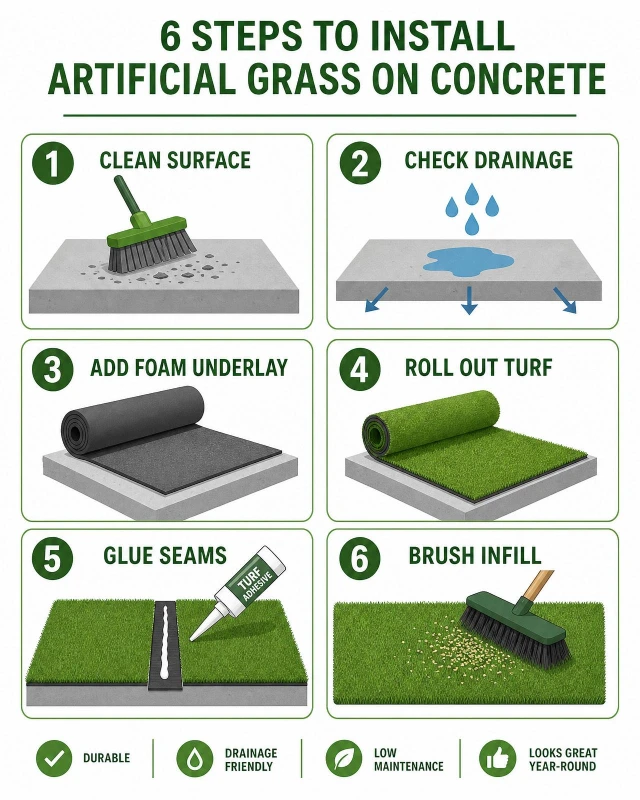
You do not need advanced skills to complete these steps. With the right tools, a clear plan, and a little patience, most homeowners can finish a standard patio in one weekend. Read each step fully before you start so you know what to expect.
Step 1: Clean the Concrete Surface
Start with a clean slab. Sweep away loose dirt, leaves, and old debris. Then wash the concrete with a pressure washer or hose. Scrub off oil stains, moss, and paint. Any grease left behind will weaken your glue bond later. Let the surface dry fully before the next step. Damp concrete can trap moisture under the turf.
Step 2: Check and Improve Drainage
Water must have a path off the slab. Pour a bucket of water on the concrete and watch where it goes. If water pools in one spot, you have two options. Drill small drainage holes every 6 to 8 inches in low areas, or add a self- leveling compound to create a gentle slope.
Good drainage stops mold, smells, and slippery patches. It also protects your turf backing from long-term damage. This step is key when you plan how to install artificial grass on concrete slabs in shaded or low-lying yards.
Step 3: Repair Cracks and Level the Surface
Fill wide cracks with a concrete patch. Smooth the patch with a trowel and let it cure per the label.
For uneven areas, use a self-leveling compound. Pour it over the low spots and let gravity do the work. A flat base means a flat lawn. Every bump under the turf will show through once the grass is down.
Step 4: Install a Foam Shockpad Underlay
A foam underlay is the secret to a soft, natural feel. It also hides small flaws in the concrete.
Roll the foam across the slab. Cut it to fit tight against walls and edges with your utility knife.
Tape the foam seams together with turf tape. Do not overlap the foam, since that creates ridges.
Step 5: Measure, Cut, and Lay the Turf
Measure the area twice before you cut. Add 2 to 3 inches of extra turf on each side for trimming.
Roll the turf out on the foam. Let it rest for at least one hour so the backing can relax and flatten.
Check that all pieces face the same direction. The blades have a natural grain, and mixed direction will look patchy in sunlight. Cut from the back of the turf, not the top. Use a sharp blade and follow the stitch rows for a clean edge.
Step 6: Join and Glue the Seams
Push turf edges tight together. The seam should almost vanish when you look straight down.
Lift the edges and place seaming tape underneath. Apply outdoor turf adhesive to the tape in a steady bead. Press the turf down onto the glue. Weigh the seam with heavy books or planks until the glue cures.
Step 7: Secure the Perimeter
Glue the outer edges of the turf to the concrete. This step stops wind, pets, and foot traffic from lifting the lawn. Run a bead of adhesive along the concrete under the edge. Press the turf firmly and hold with weights until dry. Along fences and walls, cut the turf to a snug fit. A clean edge gives a finished, pro-level look.
Step 8: Brush and Add Infill
Brush the turf against the grain with a stiff broom. This lifts the blades and gives a full, upright look. Spread silica sand infill across the surface. Use about 1 to 2 pounds per square foot, depending on turf pile height. Brush again to work the sand into the base. Infill weighs the turf down and keeps blades standing tall.
How to Install Artificial Grass on a Concrete Floor Indoors
Indoor jobs follow most of the same steps. The main difference is glue choice and moisture control.
When you plan how to install artificial grass on a concrete floor inside a garage, sunroom, or gym, use a low-VOC adhesive. Skip the sand infill, since it can spread onto other floors.
Test the slab for moisture first. Tape a square of plastic to the floor for 24 hours and check for droplets underneath.
If the concrete sweats, seal it with a concrete primer before you lay the turf. This stops mold under the backing. Ventilate the room well while the glue cures. Open windows and run a fan for at least 24 hours.
Frequently Asked Questions
How long does artificial grass last on concrete?
A quality turf install lasts 15 to 20 years on concrete. Good prep, drainage, and infill push the lifespan to the top of that range.
Do I need to glue artificial grass to concrete?
Yes, at least along the edges and seams. Glue stops the turf from lifting in wind and keeps seams tight over time.
Will water pool under the turf?
Not if the concrete drains and the turf backing is perforated. Add drainage holes to any slab that holds water for more than a few minutes after rain.
Can I install turf on a cracked patio?
Yes, if the cracks are hairline or filled. Patch wide cracks and level any lifted sections before you lay the turf.
How much does it cost to install artificial grass on concrete?
DIY costs run about 4 to 8 dollars per square foot for turf, foam, and glue. Pro installs run 10 to 15 dollars per square foot with labor and warranty.
Is artificial grass safe for pets?
Yes. Modern turf is non-toxic, drains fast, and rinses clean. Look for lead-free turf with an antimicrobial infill for pet areas.
Does turf get too hot in the sun?
Turf runs warmer than real grass on hot days. A light rinse or a cool-blade turf line lowers surface temps fast.
Final Thoughts
Now you know how to install artificial grass on concrete from start to finish. The job rewards careful prep and patient work. If you prefer to have the project handled by experienced professionals, professional artificial turf installation can help ensure proper preparation, drainage, seams, and finishing.
Clean the slab, plan for drainage, glue with care, and brush the blades tall. Do those four things well, and your lawn will look sharp for years.
Ready to start your project? Choose a turf that fits your space and your climate, then follow the steps in this guide. If you would rather have the work done for you, Texas Tuff offers artificial turf installation services for a professionally installed result.