

A green, low-maintenance lawn is easy to get. You do not need to wait for grass seed to grow. You do not need to water it every day. Artificial turf gives you a perfect lawn all year long. This guide shows you exactly how to install turf in backyard spaces, from planning to the final brush-out.
We wrote this guide for homeowners who want real answers. No fluff. No guesswork. Just clear steps you can follow this weekend.
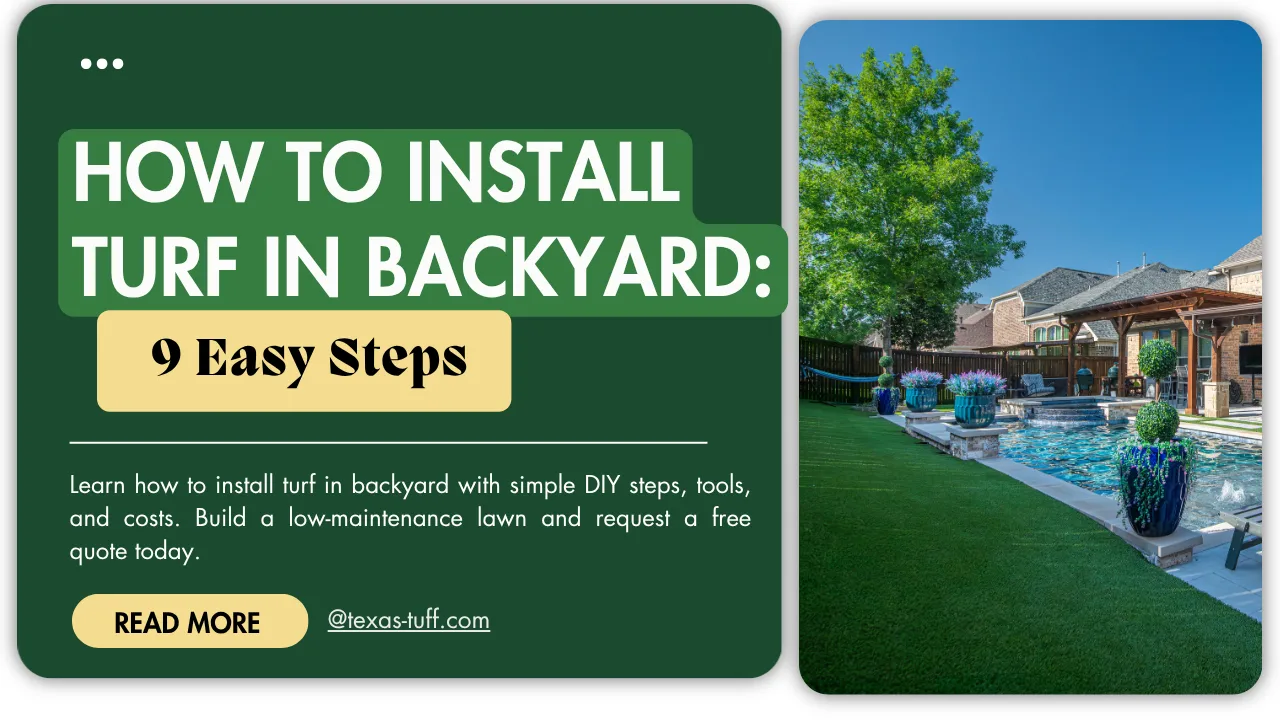
A finished backyard turf installation with clean edges and a natural look.
Why Homeowners Choose Artificial Turf
Artificial turf solves problems that real grass cannot fix. It stays green through droughts. It does not need mowing. It does not attract as many pests. For busy families, this saves hours every month.
Turf also holds up well under heavy use. Kids can play on it. Dogs can run on it. It will not turn into mud after rain. This makes it a smart choice for backyards that get daily use.
How Much to Install Turf in Backyard: Planning Your Budget
Before you start, you need a budget. Most homeowners ask how much to install turf in backyard spaces before they commit to the project. The answer depends on a few things: the size of your yard, the type of turf, and whether you hire a pro or do it yourself.
On average, artificial turf costs between $8 and $20 per square foot when installed by a professional. This price covers materials and labor. If you install it yourself, you can cut costs by 40% to 50%, but you will still need to buy the tools for artificial grass installation, turf, base materials, and other supplies needed for proper installation.
So how much does it cost to install turf in backyard projects overall? For a typical 500 square foot backyard, expect to pay between $4,000 and $10,000 for professional work. A DIY project of the same size may cost $2,000 to $5,000 in materials alone.
If you are wondering how much is it to install turf in backyard areas that are smaller, like a 200 square foot patch, costs drop to around $1,600 to $4,000 with a pro. Small areas are a great way to start if you are new to turf installation.
Tools and Materials You Will Need
Good preparation makes the job go faster. Here is what you need before you begin:
- Artificial turf rolls (measured for your yard size)
- Class II road base or decomposed granite
- Weed barrier fabric
- Turf infill (sand or rubber granules)
- Landscape staples or nails
- Utility knife
- Plate compactor (rent this if you do not own one)
- Stiff push broom
- Wheelbarrow and shovel
Gather your tools and materials before you start digging.
How to Install Turf in Backyard Spaces: Step-by-Step
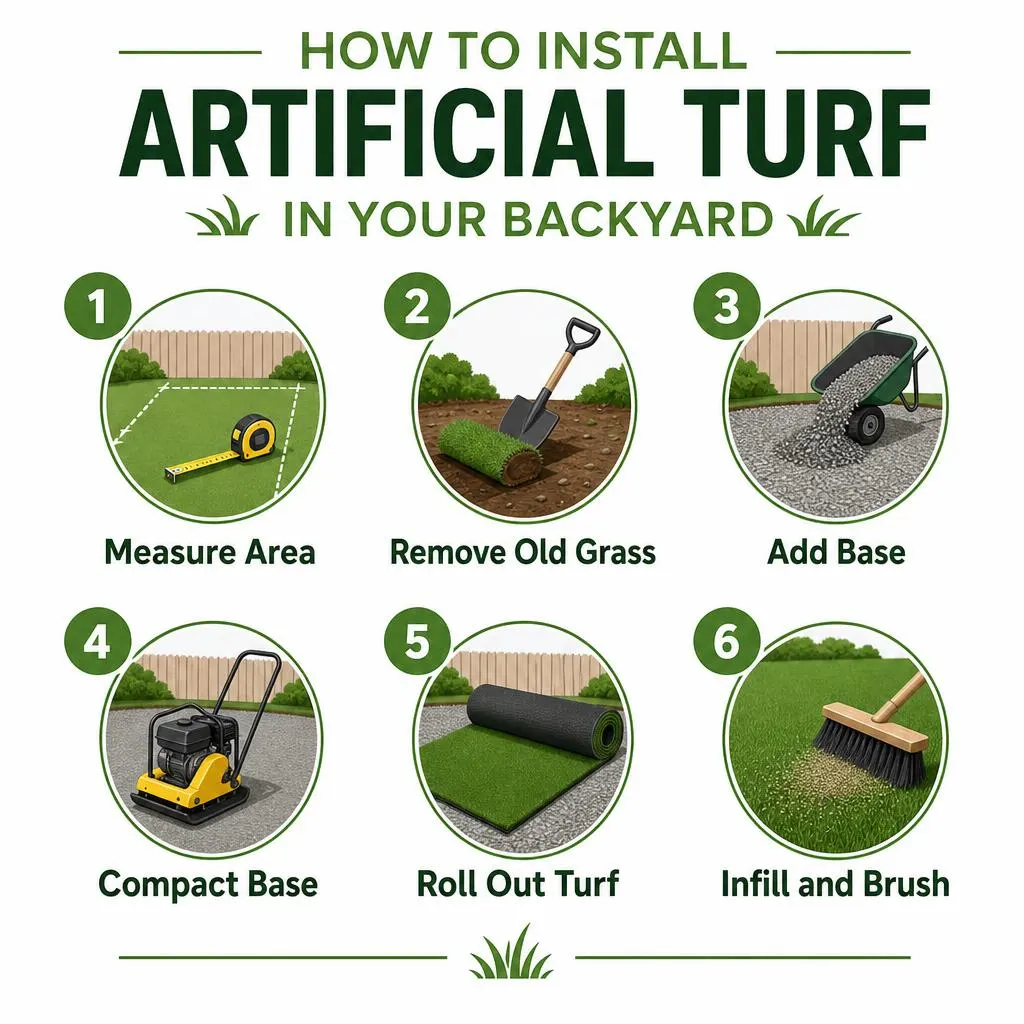
Step 1: Measure Your Space
Start by measuring the length and width of your yard. Multiply these numbers to get the square footage. Add 10% extra to your turf order. This covers cuts and mistakes.
Step 2: Remove the Old Grass and Soil
Dig out the existing grass and about 3 to 4 inches of soil. Use a sod cutter for large areas. This tool saves time and effort. Remove roots, rocks, and any debris you find.
Step 3: Grade the Ground
Check the slope of your yard. Water needs somewhere to drain. Aim for a slight slope away from your house. This step matters most in areas with heavy rain.
Step 4: Add and Compact the Base Layer
Spread 2 to 3 inches of road base across the area. Water it lightly, then run the plate compactor over it. Compact in multiple passes. This creates a firm, stable surface for your turf.
Step 5: Install a Weed Barrier
Lay weed barrier fabric over the compacted base. Overlap the edges by a few inches. This stops weeds from growing up through your new lawn. Secure the fabric with landscape staples.
Step 6: Roll Out the Turf
This step answers a common question: how to install artificial turf in backyard areas without seams showing. Roll out your turf and let it sit in the sun for an hour. This helps it relax and lie flat. Trim the edges to fit your yard shape using a utility knife.
If you are working with more than one roll, match the grain direction. All blades should point the same way. This keeps the color and texture looking natural from every angle.
Step 7: Secure the Edges
Fold back the edges of the turf and nail down the seams every 6 inches. Use galvanized nails so they do not rust. Press the turf flat as you go. Check for any gaps or lifted corners.
Step 8: Add Infill
Spread infill evenly across the surface. Infill keeps the blades standing up. It also adds weight to hold the turf in place. Use a drop spreader for even coverage.
Step 9: Brush and Rinse
Use a stiff push broom to brush the turf against the grain. This lifts the blades and gives your lawn a full, natural look. Rinse the area with water to settle the infill.
How to Install Turf Grass in Backyard Areas With Slopes or Curves
Not every yard is flat and square. If you are figuring out how to install turf grass in backyard spaces with slopes, add extra base material on the low end. This keeps the surface level. For curved edges, cut the turf in small sections. Test the fit before you nail it down.
How to Install Putting Green Turf in Backyard Spaces
A backyard putting green is a fun upgrade for golf fans. Learning how to install putting green turf in backyard areas takes a few extra steps. You will need to shape the base with slopes and cup locations before laying the turf. Putting green turf is shorter and denser than regular lawn turf. This gives the ball a true, smooth roll.
Work with a professional installer for this type of project. Cup placement and green speed need careful planning. A small mistake in the base can throw off the whole surface.
How to Install Turf in Your Backyard: DIY vs Hiring a Pro
Many homeowners want to know how to install turf in your backyard without hiring help. DIY installation is possible for small, flat yards. It saves money but takes time and physical effort. You will need to rent equipment and follow each step closely.
Hiring a pro makes sense for larger yards or complex layouts. Professionals have the right tools and experience. They can also spot drainage issues before they become problems. Most projects finish in one to three days with a trained crew.
How Much to Install Artificial Turf in Backyard Projects: Cost Factors
Several things affect your final price. Understanding how much to install artificial turf in backyard spaces will cost helps you plan better:
- Turf quality: Higher-end turf costs more but lasts longer.
- Yard size: Larger areas cost more in total but often have a lower price per square foot.
- Ground condition: Rocky or sloped yards need more prep work.
- Removal costs: Removing old concrete or thick sod adds to labor time.
- Extras: Putting greens, borders, and drainage systems raise the total cost.
Get quotes from a few installers before you decide. Ask what is included in the price. Some quotes cover only materials, while others include full labor and cleanup.
Caring for Your New Turf
Artificial turf needs very little care. Rinse it once a week to clear dust and pollen. Brush the fibers every few months to keep them standing tall. Remove pet waste right away and rinse the spot with water.
Avoid placing heavy furniture on turf for long periods. This can flatten the blades. If you grill nearby, keep hot coals and sparks away from the surface. Most turf products resist heat but are not fireproof.
Common Mistakes to Avoid
Many DIY installs fail because of rushed prep work. Skipping the compaction step leads to a bumpy, uneven lawn. Using too little infill causes the blades to lie flat over time. Poor drainage planning can trap water under the turf, leading to bad smells and mold.
Take your time on the base layer. This is the part that determines how your lawn looks and feels for years to come.
Frequently Asked Questions
How long does artificial turf last?
Most quality turf lasts 15 to 20 years with proper care and installation.
Can I install turf over concrete?
Yes. You will need a foam underlayment and proper drainage holes drilled into the concrete first.
Does turf get too hot to walk on?
Turf can get warm in direct summer sun. Rinsing it with water cools it down quickly.
Do I need a permit to install turf?
Most cities do not require a permit for residential turf. Check your local rules to confirm before you start.
Final Thoughts
Now you know how to install turf in backyard spaces from start to finish. The process takes planning, the right materials, and careful base work. Whether you tackle it yourself or hire a professional team, a well-installed lawn will save you time and water for years to come.
Ready to upgrade your backyard? Contact Texas Tuff today for a free quote and see what a professional turf installation can do for your home.