

Is turf slippery when wet?
In most cases, no. Well-installed artificial turf with proper drainage handles rain, sprinklers, and splashing without becoming slick. Problems usually trace back to the wrong product, poor slope design, or lack of maintenance.
If you have ever watched kids run across wet artificial turf and wondered whether someone is going to slip, you are not alone. It is one of the most common questions we hear at Texas Tuff.
Here is the short answer: artificial turf is not slippery when wet if it is installed correctly and the right product is used. Most quality turf drains fast, stays grippy after rain, and performs better than natural grass in many wet conditions.
But there is more to it than that. Not all turf is the same. Poor installation, bad drainage, or the wrong product can make any surface slippery. This guide breaks down exactly what affects traction on wet turf and what you can do about it.
Does Artificial Turf Get Slippery When Wet?
Most modern artificial turf is designed specifically to handle water. The fibers sit upright, water flows through the backing, and the surface stays firm underfoot. That is very different from a wet tile floor or a patch of natural grass with poor drainage.
That said, there are situations where artificial turf can feel slick. Here is when it actually happens:
- Water is pooling on the surface because the base was not graded properly.
- The turf fibers have flattened from heavy foot traffic with no brushing or maintenance.
- Algae or mold has built up on turf that does not get enough sun or airflow.
- The turf was not made for outdoor use and has a very smooth fiber texture.
- There is a soap or chemical residue left behind after cleaning.
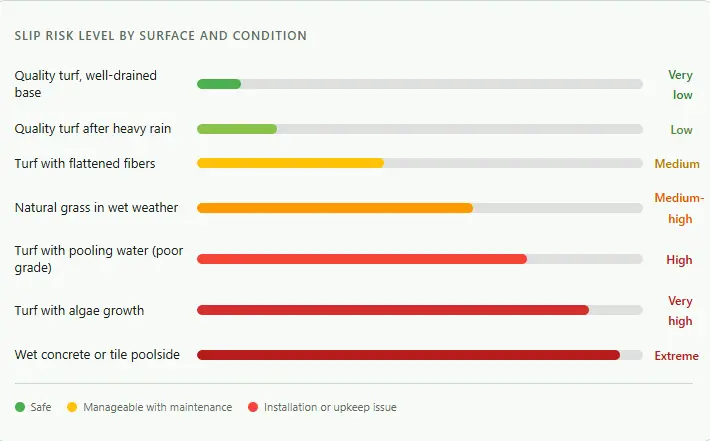
Slip risk by scenario
Not every wet-turf situation carries the same risk. Here is how common scenarios stack up, from nearly zero risk to genuinely hazardous.
In Texas, we deal with heavy rain events and high humidity. At Texas Tuff, every installation we do is graded for proper water movement. When that step is done right, standing water is rarely a problem.
Can Turf Get Wet Without Becoming Unsafe?
Yes, and this is one of the strongest advantages artificial turf has over natural grass. Natural grass turns muddy and slick when waterlogged. Artificial turf drains fast and stays usable within minutes of a heavy rainstorm.
Quality turf products are built with perforated backing. Water passes straight through and into the base layer, which is usually compacted crushed aggregate. From there it drains away just like water through gravel.
In most cases, turf is usable again within minutes of heavy rain. That is a real benefit for homeowners with kids, pet owners, and anyone with an outdoor activity space.
Here is how water actually moves through a properly installed turf system:
How water drains through a turf system (cross-section)
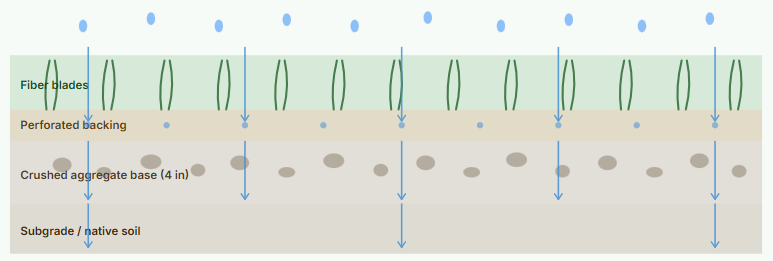
How it works:
Rain hits the blades, flows down to perforated backing, drains through aggregate, exits into subgrade. Premium turf drains 30+ inches per hour per sq yd. Most surfaces are ready to use within minutes.
What Affects Traction on Wet Artificial Turf?
Not every turf installation performs the same way in wet conditions. Several factors determine how grippy the surface stays when it rains.
1. Fiber Shape and Texture
Flat, ribbon-shaped blades tend to hold water on their surface and can feel slick underfoot. Turf with W-shaped, C-shaped, or twisted fiber designs channels water away faster and provides better grip. When we help homeowners choose the right turf product, fiber shape is one of the first things we talk about.
2. Pile Height
Very short pile turf (under one inch) can feel firmer and grippy, which works well for sports or putting greens. Longer pile turf (2 to 3 inches) looks more natural but needs proper infill to stay upright and maintain traction when wet.
3. Infill Material
Infill is the material packed between the turf blades. It keeps the fibers standing up, adds cushion, and affects drainage. Crumb rubber, silica sand, and organic infill products all perform differently when wet. The right choice depends on how the turf will be used.
4. Base Preparation and Slope
This is probably the single biggest factor. Even the best turf in the world will hold water if the base underneath is flat or dips inward. Every Texas Tuff installation is graded so that water moves away from the center of the turf and does not pool.
5. Backing Permeability
Higher-end turf products have drainage rates of 30 to 40 inches of water per hour per square yard. That means even during a heavy Texas rainstorm, the water is moving through and out, not sitting on top.
Artificial Turf vs Natural Grass When Wet
Most people assume natural grass is always safer underfoot. In wet conditions, that is often not true. Here is how the two compare side by side:
| Factor | Artificial Turf | Natural Grass |
|---|---|---|
| Drainage speed | Fast (minutes) | Slow (hours to days) |
| Mud formation | None | Common in wet weather |
| Surface consistency | Stays firm and level | Becomes soft and uneven |
| Slip risk from pooling | Low with proper install | High with poor drainage |
| Usable after heavy rain | Almost immediately | Hours to days |
| Algae risk if shaded | Possible without maintenance | Possible without maintenance |
Surface drainage speed comparison (inches per hour)
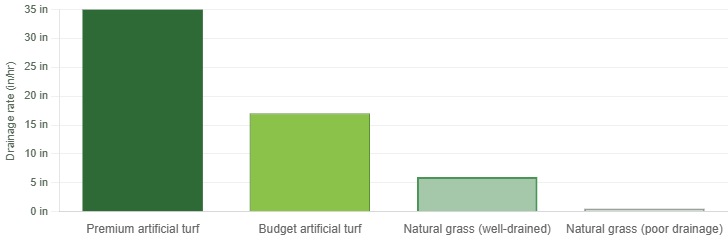
In a well-drained setup, artificial turf wins for wet-weather safety across the board. Natural grass that gets waterlogged is genuinely hazardous. Soggy turf can pull up, bunch, and cause ankle injuries that well-installed synthetic turf simply does not create.
Is Artificial Turf Safe for Kids and Pets When Wet?
Yes, with the right product and installation. This is a common concern for parents and pet owners, and it is a fair one.
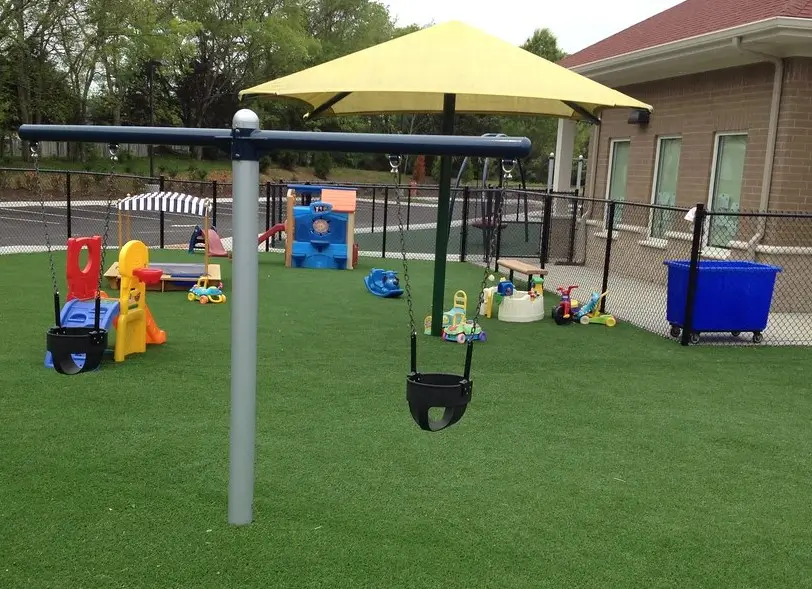
For play areas, the key factors are cushioning and drainage. Turf installed over a shock-absorbing pad offers a safer fall surface than concrete or compacted dirt. And because the surface drains fast, kids are not slipping on water that has nowhere to go.
For dogs, wet turf is actually easier to manage than wet natural grass. There is no mud tracked into the house, no paw prints on the floors, and no patchy areas where the grass has died. If you have been wondering whether turf is a good option for dogs, wet-weather safety is one of the strongest arguments in its favor.
Installer Tip
For pet areas and play zones, we always recommend a turf product with a high-flow drainage backing and at least a 2% grade slope built into the base. That combination keeps the surface safe and clean in any weather.
When Artificial Turf Does Become Slippery
There are real scenarios where is artificial turf slippery when wet becomes a yes. Knowing what causes it helps you avoid those situations.
Algae Growth
Turf that sits in heavy shade and stays damp for long periods can develop a thin layer of algae. Algae is genuinely slippery and green enough that it can be hard to spot on green turf. This is the number one cause of actual slip incidents on artificial turf. The fix is regular cleaning and improving airflow or sunlight to the area.
Flattened Fibers
After years of foot traffic, especially in high-use areas like gates, pathways, or goalmouth zones, the turf fibers can mat down. Flat fibers offer less grip than upright ones. Periodic brushing with a stiff broom or a power broom brings them back up and restores traction.
Soap Residue
If someone cleans the turf with soapy water and does not rinse it thoroughly, the residue left behind can make the surface slick. Always rinse cleaning agents off completely and let the surface drain before use.
Standing Water From Poor Grading
A flat or poorly graded base traps water. Even turf with excellent drainage backing cannot overcome water that has nowhere to go. This is an installation problem, not a product problem, and it is one reason choosing an experienced installer matters.
Common Mistake
We see homeowners buy turf online and lay it flat on an existing concrete patio without any slope. Water pools, algae grows, and the surface becomes unsafe. Always account for drainage before installation, not after. For more common installation issues and how to avoid them, see our guide on common artificial grass installation mistakes and how to avoid them.
How to Keep Your Turf Safe and Grippy in Wet Weather
Maintaining traction on wet artificial turf is not complicated. It comes down to a few habits done consistently.
That said, there are situations where artificial turf can feel slick. Here is when it actually happens:
- Check for algae in shaded areas. If part of your turf sits under a tree or in a permanently shaded spot, inspect it after stretches of wet weather. A diluted white vinegar solution or a turf-safe cleaner removes algae effectively.
- Brush the turf regularly. A stiff broom or power broom keeps the fibers upright. Do this every few months in normal-use areas and more often in high-traffic zones. Upright fibers grip better than matted ones.
- Rinse the surface with clean water. A quick rinse every couple of weeks washes away dust, pollen, and any residue that could reduce grip. After rinsing, give it time to drain before heavy use.
- Remove debris after storms. Leaves, twigs, and organic matter that sit wet on turf hold moisture and create conditions where algae can grow. Clearing debris after a storm takes minutes and prevents a bigger problem.
- Inspect your drainage regularly. Look at the edges of your turf after rain. If water is backing up or pooling in any spot consistently, it may need attention. Catching it early is much easier than fixing an established drainage issue.
Pool Areas and High-Moisture Zones
Artificial turf around pools is one of the most popular applications we install at Texas Tuff. The surface is softer than concrete, cooler than tile in the Texas sun, and it looks great year-round. But poolside turf takes a lot of water.
For pool surrounds, we use turf with the highest drainage ratings available. We also pay close attention to the slope so that water from the pool drains outward, not back toward the structure. Proper design here makes a significant difference in both safety and longevity.
One thing to avoid around pools: using turf with a rubber infill. Wet rubber infill can become slightly slick under foot. Silica sand infill or a no-infill turf product designed for pool surrounds works better in these conditions.
For more details on selecting the right turf for pool areas, see our guide on best artificial grass around pools.
Common Mistake
Homeowners sometimes buy turf online and lay it flat on an existing concrete patio with no slope adjustment. Water pools, algae grows, and the surface becomes unsafe. Always design drainage before installation. It is far harder to fix afterward.
What to Look for When Buying Turf for Wet Areas
If you are specifically buying turf for an area that gets a lot of water, whether that is a pool area, a Texas backyard that floods after summer storms, or a dog run that you hose down daily, look for these features:
- Drainage rate of at least 30 inches per hour per square yard.
- Polyethylene fibers, which are softer and more water-resistant than polypropylene.
- W-shaped or C-shaped blade design for better grip and water channeling.
- Perforated or open-weave backing rather than solid backing.
- UV stabilization so the fibers do not degrade and flatten in direct sunlight.
- A manufacturer warranty that covers the specific conditions you are installing it in.
If you are not sure which product fits your situation, the team at Texas Tuff can walk you through the options based on your specific yard, climate, and use case. Knowing what questions to ask before you buy saves a lot of headaches later.
Frequently Asked Questions
Is turf slippery when wet after heavy rain?
Not typically. Quality turf drains fast and the surface returns to normal within minutes of a heavy rain event. The main exception is when the base is not properly graded and water pools on the surface instead of draining through it.
Can turf get wet from a hose or sprinkler without becoming slick?
Yes. Hosing down artificial turf is actually a recommended maintenance practice. It rinses away dust and debris. As long as the surface drains correctly, it will not become slippery. Avoid leaving any soap residue and always rinse cleaning products off fully.
Is artificial turf slippery when wet around a pool?
Pool surrounds are one of the best applications for artificial turf. When the right product is selected (high drainage backing, no rubber infill) and the base slope is correct, the turf stays safe and grippy even with constant poolside splashing.
What makes artificial grass slippery if it does happen?
The main culprits are algae growth in shaded areas, flattened fibers from heavy foot traffic, standing water from poor drainage or flat grading, and soap or chemical residue left on the surface after cleaning.
Is wet turf safe for kids?
Yes. Play area turf installed with proper drainage and a shock-absorbing underpad is safe for children in wet conditions. It is actually safer than natural grass that has become muddy and waterlogged, and far safer than concrete or hard surfaces.
How do I get rid of algae on my artificial turf?
A diluted solution of white vinegar and water or a turf-specific cleaner applied to the affected area works well. Brush the area, let the solution sit for a few minutes, then rinse thoroughly. Preventing algae long-term means improving airflow to the area and keeping debris off the surface after storms.
The Bottom Line
Is artificial turf slippery when wet? For the vast majority of homeowners with a properly installed system, the answer is no. Modern turf drains fast, grips well, and holds up through Texas rain events without turning into a safety hazard.
The problems that do exist come from avoidable mistakes: flat grading, the wrong product for the use case, lack of maintenance, or letting algae build up in a shaded spot. All of these are preventable with good planning upfront.
If you are thinking about artificial turf for your backyard, pool area, pet run, or play space and you want to make sure it is done right the first time, understanding the installation process is a great starting point. And if you would rather have a local team handle it from base prep to final blade brushing, Texas Tuff provides professional artificial turf installation services across the Dallas-Fort Worth area with that exact level of detail.
Texas Tuff installs artificial turf across the DFW area with proper drainage and base prep built into every project. Get a free quote and talk to a local expert.