
Is Artificial Turf Flammable?
What Artificial Turf Is Made Of
Artificial turf is not a single material. It is a layered system, and each layer reacts differently to heat and fire.
The visible part is the fibers (blades), made from plastic materials:
Below the fibers is the backing layer, usually polypropylene, which holds the blades in place. It is coated with latex or polyurethane to secure the structure.
| Fiber | Common Use Cases | Softening Point | Melt / Burn Point | Fire Class | Relative Cost |
|---|---|---|---|---|---|
| Polyethylene (PE) | Residential lawns, landscape turf, pet areas | 200-230 F | 260-320 F | Moderate | Low-Mid |
| Polypropylene (PP) | Entry-level and indoor turf products | 190-210 F | 240-270 F | Lower | Low |
| Nylon PA6 / PA66 | Sports fields, putting greens, high-traffic areas | 380-420 F | 450-500 F | High | High |
| PE + FR Additive Blend | Playground, commercial, fire-rated products | 220-250 F | 300+ F (self-extinguishes) | High | Mid-High |
Next is the infill, which fills the space between blades. Common types include crumb rubber, silica sand, and organic materials like cork. Each type reacts differently to fire and heat.
At the bottom is the base layer, made of compacted gravel or crushed stone. It provides drainage and stability and does not burn.
Key Distinction
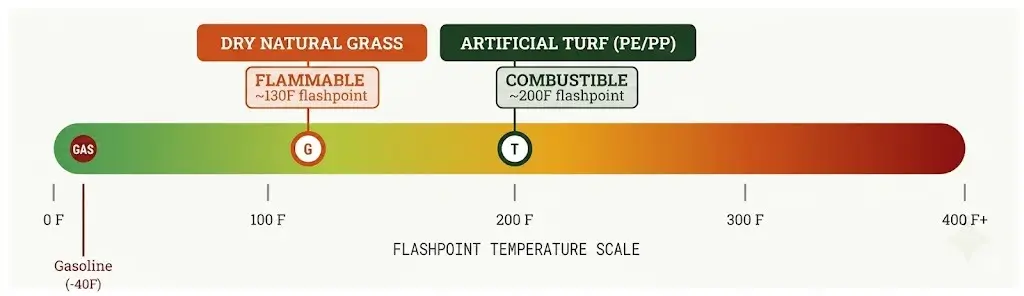
Flammable = ignites easily from low heat. Combustible = can burn but requires significant heat to start. Artificial turf is combustible, not flammable. This distinction matters in Texas where summer surface temperatures can reach 150-180 F on their own.
Flammable vs. Combustible
People often mix up these terms, but in fire safety they mean different things.
According to the National Fire Protection Association (NFPA), the difference depends on the flashpoint (the temperature needed for ignition).
Artificial turf is combustible, not flammable. This means it does not catch fire easily from normal outdoor heat, but it can burn if exposed to strong heat or flames.
| Type | Flashpoint | What it means | Examples | Artificial Turf? |
|---|---|---|---|---|
| Flammable | Below 100°F | Catches fire easily at low heat | Gasoline, alcohol | No |
| Combustible | Above 100°F | Needs higher heat or flame to burn | Wood, paper, plastic | Yes |
| Artificial Turf | ~200°F+ (softening point) | Burns only with strong heat or direct flame | PE / PP / nylon fibers | Combustible |
On hot days, turf can reach 150–180°F, which is hot but still not enough to make it melt or burn.
Fire usually happens only when there is a strong heat source, like a grill, fire pit, or focused sunlight from glass.
Flammability Classification Spectrum
Melt and Burn Temperature
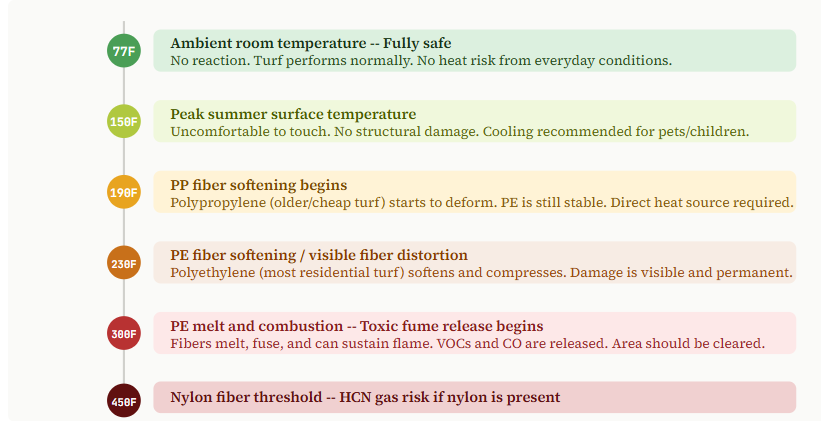
Temperature data is where this question gets very practical for Texas homeowners. On a hot Texas day, the surface of dark-colored artificial turf can reach 150 to 180 degrees Fahrenheit. That is well below the melt point for polyethylene turf (around 250 F), so ambient summer heat alone will not melt your turf.
The real danger comes from concentrated heat sources. A magnifying glass effect from low-E windows, a falling ember, a discarded cigarette, or a BBQ grill placed too close can all push surface temperatures above the critical threshold.
What Happens at Each Temperature
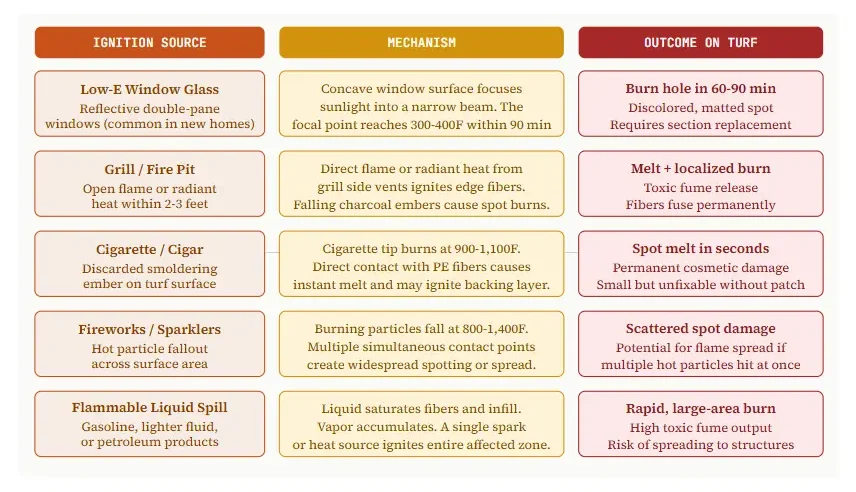
How Artificial Turf Actually Catches Fire
Artificial turf doesn’t overheat randomly. Damage usually comes from a few clear, preventable sources:
Most common causes:
- Window reflections – Low-E or double-pane glass can focus sunlight onto one spot, creating enough heat to melt turf.
- Grills and fire pits – Placed too close, they expose turf to sustained high heat or stray embers.
- Cigarettes and cigars – A lit butt can burn or melt fibers on contact.
- Fireworks and sparklers – High temperatures and sparks easily damage turf.
- Direct flame – Any open flame (torches, matches, etc.) will melt or burn turf quickly.
Less common:
- Chemical reactions – Fuels, solvents, or certain cleaners can lower ignition temperature or generate heat.
Turf damage almost always comes from concentrated heat or flame, not ambient weather, and is preventable with proper placement and care.
Cause and Effect Analysis
The Window Reflection Problem
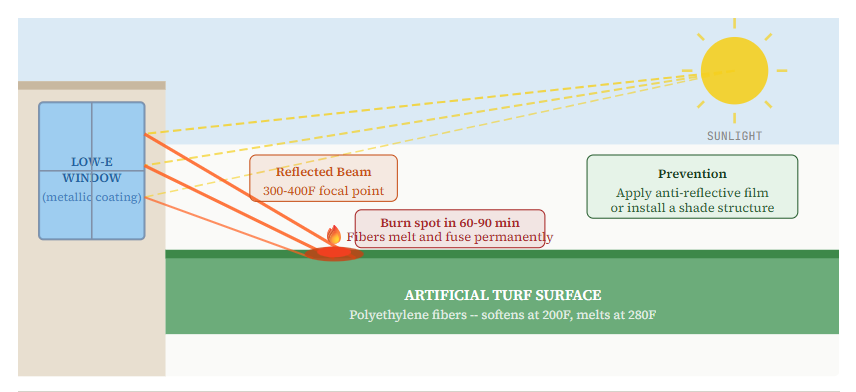
One of the most overlooked causes of artificial turf damage is window reflection, especially from modern low-emissivity (low-E) double-pane windows. These energy-efficient windows reflect heat back into the home, but they can also reflect and intensify sunlight outward.
When sunlight bounces off these windows and hits artificial turf, it can concentrate heat like a magnifying glass. This focused beam can reach temperatures of 300–400°F, which is enough to melt turf fibers that begin softening around 200°F.
The damage usually appears as small oval or elliptical burn spots where the turf looks flattened, fused, and discolored. These spots may shift location depending on the time of day or season due to the sun’s angle.
This issue is surprisingly common and often misunderstood. The most effective solutions involve addressing the window itself, such as applying anti-reflective film or adding shade structures like awnings or pergolas.
Low-E Window Reflection Effect
Check Before You Install
Before installing artificial turf, check if any low-E windows face the area. On a sunny day, walk around and look for bright reflected light on the ground where turf will go. If you see a strong reflection, add window film or install shade before or right after installation. This quick check can prevent costly damage later.
Toxic Fumes from Burning Artificial Turf
When artificial turf burns, it can release harmful smoke. This is one of the most important safety concerns.
Natural grass, when it burns, mostly gives off carbon dioxide, carbon monoxide, water vapor, and small particles. These can still be harmful, but they are more common and simpler gases.
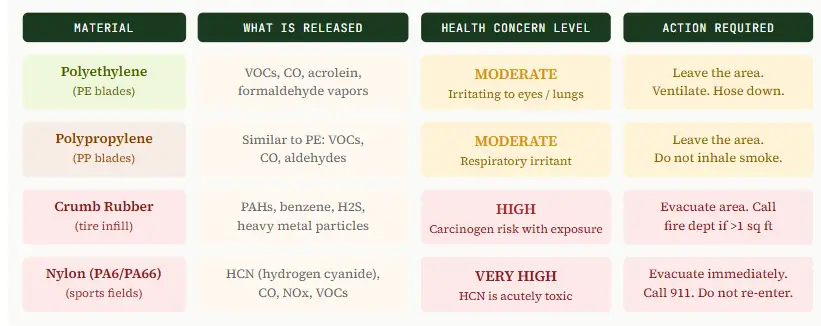
Artificial turf is made from plastics, rubber, and other synthetic materials. When these burn, they can release more dangerous chemicals. These may include gases called VOCs, carbon monoxide, and other harmful substances. Some turf also has rubber pieces (from recycled tires), which can make the smoke even more toxic when burned.
Breathing this smoke is not safe. It is best to stay away from it.
What Artificial Turf Burns and What It Releases
Health Warning
Smoke from burning artificial turf is dangerous, especially if it contains crumb rubber. Never breathe in the smoke, move away quickly and stay upwind. Do not return until the smoke is gone and the area is cooled. If the fire is more than a small spot, call 911.
How Artificial Turf and Natural Grass React to Fire
A fair comparison between artificial and natural grass depends on how wet or dry the grass is. Healthy, wet natural grass is hard to burn because it contains a lot of water, so it is often safer than artificial turf in that condition. But when natural grass becomes dry or dead, it can catch fire easily and spread flames quickly. Artificial turf does not change with the seasons and behaves the same all year.
In areas where wildfires are a risk, artificial turf can help reduce fire spread near buildings. However, if it does burn, it can release harmful smoke and cannot grow back after damage. Natural grass may burn when it is dry, but it can regrow again after a fire.
| Topic | Natural Grass | Artificial Turf |
|---|---|---|
| Wet/healthy condition | Hard to burn because it has high moisture (75–80%) | Can still melt or be damaged by heat (e.g., cigarette) |
| Dry condition | Very easy to catch fire and spread flames quickly | Fire behavior stays more consistent year-round |
| Wildfire risk | High when dry or dead grass is present | Lower because it reduces flammable material around homes |
| Fire spread | Can spread fire rapidly in dry conditions | Does not spread fire like dry grass |
| After damage | Can regrow after fire | Damage is permanent and needs repair |
| Smoke when burning | Produces natural smoke and ash | Can release toxic fumes when burning |
If you want it tighter, you can strip it down to the core idea like this:
Fire resistance in artificial turf is engineered through material choice, chemical additives, and infill, not an automatic property of synthetic grass.
If you want it even sharper:
Artificial turf is fire-resistant only when it’s specifically engineered to be so, using materials, treatments, and infill choices.
Tell me the tone you’re aiming for (technical, marketing, or plain explanation) and I can refine it further.
Fire-Retardant (FR) Additives in the Polymer
Fire-retardant (FR) additives are added directly into the polymer during fiber manufacturing to improve fire resistance. They work by disrupting combustion, reducing flammable gases, cooling the heat zone, or forming a protective char layer that slows burning.
Common FR systems include halogen-based compounds (especially bromine types) and phosphorus-based alternatives. Phosphorus-based additives are increasingly preferred because they are considered more environmentally friendly and produce fewer toxic byproducts when exposed to fire.
Nylon Fiber Selection
Nylon fibers offer better inherent fire resistance because their melting point (450–500°F) is much higher than polyethylene (260–320°F). This makes them more suitable for areas exposed to heat or higher fire risk.
For commercial or high-risk settings, nylon or nylon-blend fibers improve fire safety even without added flame-retardant chemical treatments.
Polyurethane vs. Latex Backing
Polyurethane and latex backings affect how artificial turf reacts to fire. Latex backings are more common and cheaper, but they are generally more combustible than polyurethane.
Polyurethane backings perform better in fire resistance tests because they tend to char instead of melt and drip. This helps slow flame spread compared to latex systems.
Infill Material
The infill between fibers significantly affects how turf behaves in a fire scenario. Sand is non-combustible and can actually serve as a partial fire barrier between fiber sections. Crumb rubber, by contrast, is combustible and adds fuel load to a fire situation.
Infill Type and Fire Risk
Infill plays a major role in artificial turf fire safety, even though it is often overlooked compared to fibers. The type of infill affects how much fuel is available if a fire starts.
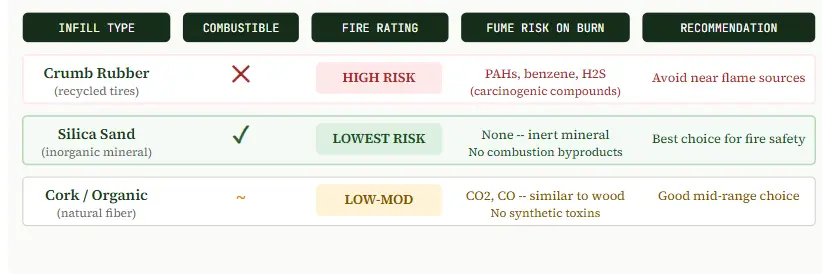
Crumb rubber, made from recycled tires, is common but combustible and can release toxic compounds when burned. Silica sand is non-combustible and reduces fire risk because it does not burn or add fuel. Cork and other organic infills are a middle option with lower fuel content than rubber, while thermoplastic elastomer (TPE) infills vary in performance depending on their exact formulation and should be checked with suppliers.
Infill Materials
How to Prevent Turf Fire Damage
Most artificial turf fire damage is preventable. The following checklist is organized by when preventive action can be taken: during the planning phase before installation, during the installation process, and after installation as ongoing maintenance. Each item corresponds to a specific risk that was described earlier in this guide.
Turf Fire Safety -- Prevention Decision Flowchart
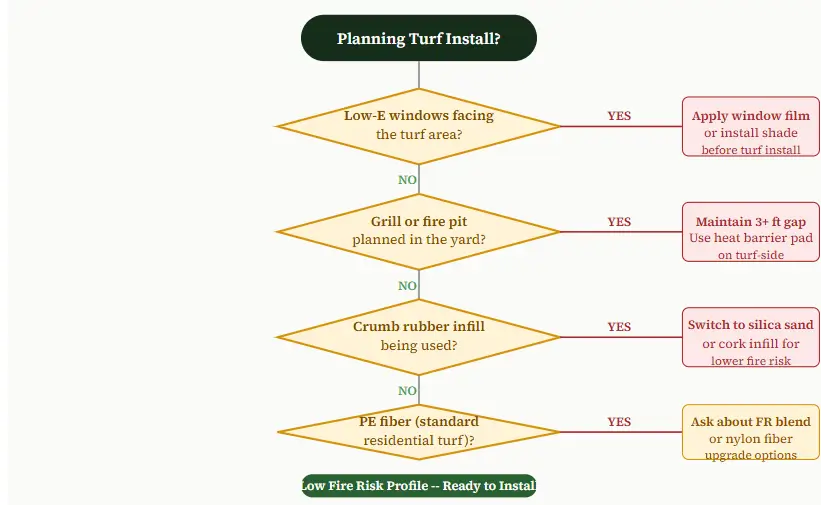
Before Installation
- Walk the planned turf area on a sunny day and check for reflected light from any windows, glass doors, or mirrored surfaces. Mark any areas where a reflected beam hits the ground.
- If low-E windows face the turf area, apply anti-reflective window film before installation begins. This is less expensive than repairing a burn spot after the fact.
- If a grill or fire pit is planned in the yard, mark the turf layout so the edge of the turf stays at least 3 feet from where the grill will be located. Do not overlap turf under or behind a grill, even on a patio surface.
- Request fire test documentation for the turf product being installed. Ask specifically which ASTM standard the product has been tested under and what class it achieved.
- If the installation is near a playground, pet area, or location where smoking is likely, specify a fire-retardant fiber blend or nylon-based product rather than standard PE.
- Discuss infill options with the installer. Specify sand or cork infill rather than crumb rubber if fire safety or toxic fume risk is a concern. In most residential applications, the performance difference is negligible.
During and After Installation
- If pergolas, shade sails, or awnings are being installed alongside the turf, plan them to also cover any window reflection pathways identified in the pre-install walkthrough.
- Post no-smoking signage for turf areas where guests may congregate, or enforce a no-smoking policy in any outdoor area where turf is present.
- Keep all open flame sources at least 3 feet from any turf edge. This includes fire pits, grills, outdoor heaters, tiki torches, and chimineas. Even heat that radiates off the side of a grill can damage nearby fibers.
- Never store gasoline, lighter fluid, or other flammable liquids near or on turf surfaces.
- Keep fireworks, sparklers, and similar pyrotechnics away from all synthetic turf surfaces. This applies to the area of fallout, not just the launch zone.
- Place a heat barrier pad or paving stone buffer between any fire pit base and the nearest turf edge to intercept radiant heat at ground level.
- Rinse turf with water during extreme heat events to reduce surface temperature and add a temporary moisture buffer that makes ignition from a stray spark significantly less likely.
- Inspect the turf surface twice a year, including once in mid-summer when the sun angle changes, looking for any small melt spots that could indicate a new window reflection problem from a seasonal angle shift.
- If a melt spot is found, trace the reflection source before scheduling a repair. Repairing the turf without removing the reflection cause will result in another burn spot in the same location.
- Keep a garden hose accessible during outdoor gatherings where grilling or open flames are present. A quick spray of water extinguishes most small turf burns before they become significant.
What to Do if Your Turf Catches Fire
Even with precautions, fires can still occur. A quick and correct response can limit damage and prevent spread.
These steps apply to a small, localized turf fire that has not reached buildings, vehicles, or nearby vegetation.
Step 1: Move people away from the smoke immediately.
The first priority is to get everyone, including pets, upwind of the burning area. Turf smoke contains compounds that are harmful to breathe. Do not stand downwind of a burning synthetic surface for any amount of time.
Step 2: Assess the size of the fire.
If the burning area is smaller than a few square feet and is clearly localized, a garden hose can extinguish it quickly and safely. If the fire is large, spreading, or producing heavy smoke, do not attempt to extinguish it yourself.
Step 3: Use water if the fire is small.
A standard garden hose delivers enough water volume to extinguish a small turf fire. Direct a steady stream at the base of the flame, not at the top. Continue wetting the area for several minutes after the flame is out because synthetic materials can smolder and reignite.
Step 4: Call 911 for fires that are not immediately extinguishable.
If a hose does not extinguish the fire within 30 to 60 seconds, or if the fire is spreading to other materials, call the fire department. Do not re-enter the area to retrieve belongings.
Step 5: After the fire is out, ventilate the area before re-entering.
The residual fumes from cooled burned turf can still be irritating. Allow the area to air out before walking on or near the burn site.
Step 6: Document the damage and identify the cause before arranging a repair.
Take photographs of the burn area and note its location relative to windows, structures, and heat sources. This information is needed to identify the cause and prevent recurrence. Contact your turf installer or manufacturer to discuss repair options. Most heat damage to artificial turf requires section replacement rather than spot patching.
Frequently Asked Questions
At what temperature does artificial grass melt?
It depends on the fiber type. Polypropylene starts softening around 190–210°F and melts at 240–270°F. Polyethylene, the most common type, softens at 200–230°F and melts at 260–320°F. Nylon is more heat-resistant and melts at about 450–500°F.
On a hot day, turf usually reaches only 150–180°F, which is not enough to melt it.
What toxic fumes does burning artificial turf release?
It depends on the materials burning. Polyethylene and polypropylene can release harmful gases like carbon monoxide and other irritants. These can be dangerous to breathe.
Crumb rubber infill can release more toxic chemicals, including benzene and PAHs. Nylon fibers may release hydrogen cyanide, which is very toxic.
The safe rule is simple: never breathe in smoke from burning artificial turf and move away immediately.
What ASTM standard applies to artificial turf fire safety?
Three main standards are used. ASTM E648 measures how easily fire spreads across turf and classifies it as Class I or II.
ASTM E84 measures flame spread and smoke and rates materials from Class A (best) to Class C. NFPA 701 tests how fast textile-like materials burn, including turf backing.
When choosing turf, ask for test reports showing these ratings.
Can window reflections really burn artificial turf?
Yes. This can happen in some homes with large or low-E windows. These windows can reflect sunlight and focus it into a small, strong beam.
If the heat becomes strong enough, it can reach temperatures high enough to melt artificial turf and leave a burn spot. This usually happens on clear sunny days when the sun hits the window at the right angle.
It can be prevented by using window film, adding shades, or blocking the reflection path before installing turf.
Is Astroturf flammable?
Astroturf is not highly flammable, but it can melt or burn if it gets very hot or touches a flame. Older Astroturf was made from nylon, which can handle more heat than most modern turf made from polyethylene. Today, “Astroturf” usually means artificial grass in general. Its fire safety depends on the materials used, so it’s important to check the product details instead of the name.
Key Takeaway
Artificial turf is not highly flammable, but it can still melt or burn when exposed to strong, concentrated heat like flames, reflected sunlight, or high-temperature objects. Normal outdoor heat will not ignite it, but once its temperature limits are exceeded, damage is permanent.
Fire risk is mostly about design choices. Nylon fibers, flame-retardant additives, polyurethane backing, and sand infill all improve safety. Crumb rubber and untreated polyethylene increase heat and fire risk.
Most turf fires are preventable with simple steps: keep distance from heat sources, manage window reflections, and choose safer materials during installation.
Texas Tuff installs fire-resistant artificial turf across DFW, Fort Worth, Plano, McKinney, and surrounding areas. Our team reviews your specific site for reflection and heat risks before installation begins.