


Do you need a green yard? Installing a turf lawn can be the fastest and easiest way to do it. No more waiting for months, just lay it down and you’ve got a lawn.
The installation process is not complicated, but beginners often mess it up. Small mistakes like poor soil prep or wrong watering are enough to ruin the whole thing. So the question is: How to install a turf lawn?
Let’s start from the basics. We will discuss everything from what turf lawn actually is and how you install it properly. So, stick to the end to know everything you need to know before installing a turf lawn.
What Is Turf Lawn and Why Do People Install It?
Turf lawn, also known as sod, is pre-grown grass that comes in squares or rolls. Farmers grow the grass on farms, cut it with the roots attached, and deliver it. You get it as “ready to install” instantly.
But why do people prefer turf lawn when they can grow grass from seeds themselves?
Sod is already mature grass that you can install instantly. It establishes much faster than seeds. The U.S. Environmental Protection Agency also agrees and reports that turf grass sod is already mature, establishes faster, and creates an instant lawn compared to seed planting.
Here is a list of reasons why people install it:
- Instant greenery
- Reduces soil erosion
- Prevents patchy lawns
- Establishes faster than seeds
Required Tools and Materials For Turf Lawn Installation
There are some common tools and materials you need to complete the installation.
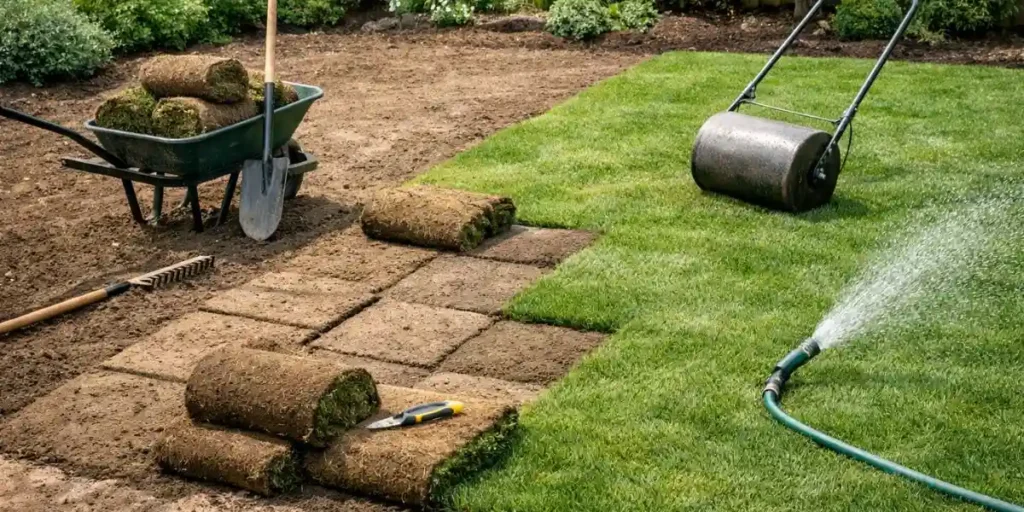
- Lawn rake
- Garden shovel
- Wheelbarrow
- Utility knife
- Lawn roller
- Garden hose or sprinkler
- Topsoil or compost
Finally, you need the most important thing, the turf rolls. You can source it from any trusted provider or online.
[Pro Tip: Install the turf the same day you get it. These are living plants that can dry out if you are late.]
How To Prepare The Soil For Turf Lawn Installation?
Here comes the point where most of the beginners mess up. Soil prep is a crucial step that impacts the growth and success of your turf installation. Let’s see how you do it right.
- Remove ild grass, weeds, and rocks
- Loosen soil about 4 to 6 inches deep
- Add compost or topsoil
- Use a rake to level the whole area
- Lightly water the soil before installing turf
Your grass needs water, oxygen, and nutrients from the soil to grow & sattle.
Leveling the soil is also important. The turf is like a natural grass carpet on the lawn. If the soil is uneven, the carpet will look bumpy and poor quality.
Step by Step Process of Installing Turf Lawn
After the soil is ready, the fun part begins. If you can execute the following steps correctly, your lawn will look professional.
Step 1: Start Along a Straight Edge
Start laying turf along the driveway, walkway, or fence. Following the straight line will help you keep the layouts aligned.
Step 2: Lay Turf Pieces
Make sure to lay every piece tightly against each other. There should be neither overlapping nor empty space. You can install the turf pieces like brickwork; it will bring a unique texture to the ground.
Step 3: Trim The Edges
Use a sharp utility knife to cut the turf around trees, flower beds, and edges. Make sure the cuts are clean and align with the object.
Step 4: Press The Turf Into Soil
Roll your lawn evenly with a lawn roller. Ensure there are no air pockets, or the geass will not come in contact with the soil properly. It will result in uneven growth and look bad.
Step 5: Water Immediately
Water the turf immediately after installation. Experts suggest watering the lawn around an inch within the first 30 minutes of installation. It initiates the bonding between the roots and soil.
Turf Lawn Installation Timeline
Here is a basic turf lawn installation timeline that outlines the turf’s progress and your responsibilities over time.
| Stage | What Happens | What to do |
| Day 1 | Turf is installed | Water immediately |
| Week 1 | Roots start attaching | Keep the soil moist |
| Week 2 | Turf begins rooting | Reduce watering gradually |
| Week 3 – 4 | Lawn stabilizes | First mowing possible |
How To Water A Newly Installed Turf?
Watering the turf is the most important step after installation. Wondering why?
Did you know that lawn grasses can contain 75-85% water by weight? That means the lawn grass is almost entirely made of water. Now you know why watering is so important!
Follow this watering schedule:
- First 10 – 14 days: Water daily
- Week 3: Water every other day
- After establishment: Water about an inch every week
Remember, the target is to keep the soil moist, not to flood the lawn. Too much water can slow down root development, so be careful.
It may sound like a big hassle sometimes. If you want an easier way to a green lawn, you can go for artificial turf. They don’t need watering or serious maintenance.
Common Mistakes To Avoid In The Installation Process
Most of the turf lawn installations fail because of some common & avoidable mistakes. Watch out for the mistakes below:
- Installing turf in dry soil
- Not installing the turf immediately
- Leaving gaps between turf pieces
- Too much waking on fresh turf
- Irregular watering
- Over/Underwatering
- Uneven soil leveling
If you avoid these common mistakes, your lawn turf installation will be successful.
Final Thoughts
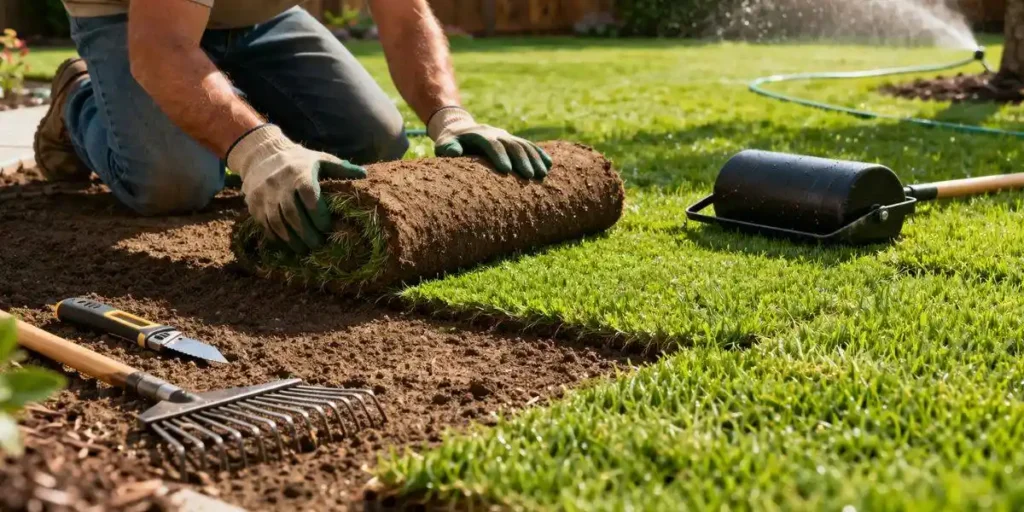
Installing turf lawn is actually easier than many people think. The key steps are simple: prepare the soil well, lay the turf tightly, and water it properly.
If you follow the process carefully, your turf can root in about two weeks and start looking like a permanent lawn. Just avoid the common beginner mistakes and give the grass time to establish.
FAQs
How long does it take for turf to root?
Turf usually begins rooting within 10–14 days if it receives proper watering and soil contact. Full establishment typically takes 3–4 weeks.
Can I install turf myself?
Yes. Turf installation is DIY-friendly if you prepare the soil properly, lay the pieces tightly, and water immediately after installation. If you’re considering installing artificial turf yourself, learn more about the process before getting started.
How often should you water new turf?
Water turf daily for the first 10–14 days, then reduce to every other day. After establishment, about 1 inch of water per week is enough.